Financial Analyst

Develop essential financial analyst skills to interpret data, evaluate performance, and support strategic decisions. Learn budgeting, forecasting, financial reporting, and analysis techniques to enhance career prospects in finance.

Financial Analyst
cpdacree aoth ukrlp 24hs fullonline 14days

Get access to 5000+ courses including this for only £49. Learn More.

Overview of Financial Analyst

Financial Analyst is designed to build practical expertise in Financial Analysis, Financial Planning, Financial Reporting, and Business Finance. Learners will explore financial management, budgeting fundamentals, balance sheets, income statements, cash flow statements, and stockholders’ equity. The course develops essential skills for interpreting financial information and understanding how different financial statements connect within an organisation.

Throughout the course, learners will strengthen their knowledge of Budget Analysis, Data Analysis, Financial Forecasting, and Risk Analysis while exploring international financial management and the UK taxation system. Topics include income tax, payroll and wages, VAT, corporation tax, capital gains tax, inheritance tax, and import and export processes relevant to modern financial operations.

The Financial Analyst course also develops practical understanding of double-entry accounting, management accounting, and Investment Analysis. Learners will gain confidence in evaluating financial performance, analysing business data, identifying financial risks, and supporting informed decision-making. These skills can enhance knowledge of financial management and provide valuable preparation for further development within finance, accounting, and business-related fields.

The course was audited and updated on: 20th August, 2026

Learning Outcomes of Financial Analyst

Certification

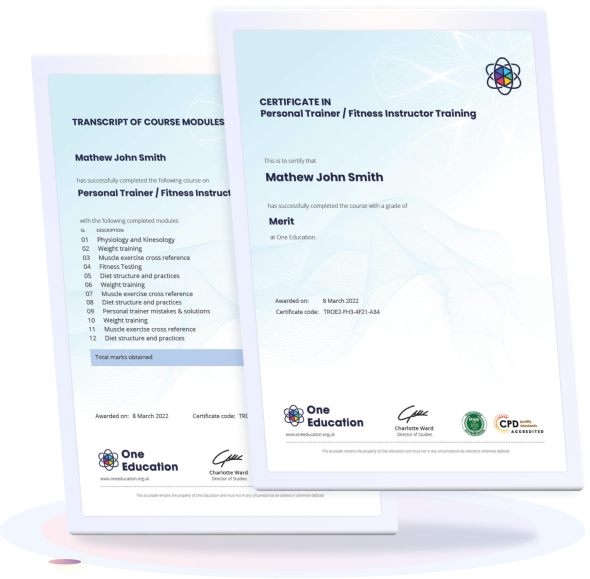
one education Certificate

After completing the Financial Analyst course assessment, you will be eligible to receive a CPD-accredited certificate worth £9 from One Education to demonstrate your achievement.

The certificate is also available as a printed hard copy delivered by post for £15.

Why Study This Financial Analyst Course?

Financial Analysts play an important role in evaluating financial performance and supporting informed business decisions. This course develops knowledge of Financial Analysis, Financial Reporting and Data Analysis, helping learners understand financial statements, business performance and key financial information.

Developing analytical expertise can support professional growth across finance and business environments. Learners will explore Financial Planning, Budget Analysis, Financial Forecasting, Risk Analysis and Investment Analysis, gaining practical knowledge for evaluating opportunities and supporting effective Business Finance decisions.

Course Duration

The Financial Analyst Course has a total study time of 6 hours and 50 minutes. Learners can progress through the course at their own pace, giving them the flexibility to develop essential knowledge of financial analysis, budgeting, reporting, forecasting, and financial decision-making while fitting their studies around existing commitments.

Requirements

The Financial Analyst course has straightforward requirements and is suitable for beginners and aspiring finance professionals. Basic numerical skills and an interest in business finance are beneficial, but previous experience is not essential. Learners need an internet-enabled device to explore financial statements, budgeting, forecasting, reporting, taxation, and financial analysis techniques.

Career Path

Frequently Asked Questions

What does a financial analyst do?
A financial analyst reviews financial data, evaluates business performance and prepares forecasts or reports to support investment, budgeting and strategic decision-making.

What skills are needed to become a financial analyst?
Key skills include financial modelling, data analysis, budgeting, forecasting, accounting knowledge, Excel proficiency and the ability to interpret and present financial information clearly.

What financial statements does a financial analyst use?
Financial analysts commonly work with balance sheets, income statements and cash flow statements to assess profitability, liquidity, financial position and overall business performance.

What is financial modelling?
Financial modelling involves creating structured calculations, usually in spreadsheets, to forecast financial performance, assess different scenarios and support business or investment decisions.

Why is financial forecasting important?
Financial forecasting helps organisations estimate future revenue, expenses, cash flow and profitability, allowing managers to plan resources and prepare for possible financial challenges.

Where can financial analysts work?
Financial analysts can work in banks, investment firms, insurance companies, corporate finance departments, consultancy firms and other organisations that rely on financial planning and analysis.

Course Curriculum

Module 01: Introduction to Financial Management
Introduction To Financial Management 00:10:00
Module 02: Fundamentals of Budgeting
Fundamentals Of Budgeting 00:10:00
Module 03: The Balance Sheet
The Balance Sheet 00:15:00
Module 04: The Income Statement
The Income Statement 00:12:00
Module 05: The Cash Flow Statement
The Cash Flow Statement 00:14:00
Module 06: Statement of Stockholders’ Equity
Statement of Stockholders’ Equity 00:12:00
Module 07: Analysing and Interpreting Financial Statements
Analysing and Interpreting Financial Statements 00:50:00
Module 08: Inter-Relationship Between all the Financial Statements
Inter-relationship between All the Financial Statements 00:16:00
Module 09: International Aspects of Financial Management
International Aspects of Financial Management 00:28:00
Module 10: Tax System and Administration in the UK
Tax System and Administration in the UK 00:25:00
Module 11: Fundamental of Income Tax
Fundamental of Income Tax 00:22:00
Module 12: Advanced Income Tax
Advanced Income Tax 00:39:00
Module 13: Payee, Payroll and Wages
Payee, Payroll and Wages 00:18:00
Module 14: Value Added Tax
Value Added Tax 00:24:00
Module 15: Corporation Tax
Corporation Tax 00:17:00
Module 16: Capital Gain Tax
Capital Gain Tax 00:24:00
Module 17: Inheritance Tax
Inheritance Tax 00:29:00
Module 18: Import and Export
Import and Export 00:20:00
Module 19: Double Entry Accounting
Double Entry Accounting 00:11:00
Module 20: Management Accounting and Financial Analysis
Management Accounting and Financial Analysis 00:14:00
Order Your Certificate
Order Your Certificate Now 00:00:00
Financial Analyst
top