Lean Six Sigma

Lean Six Sigma improves organisational efficiency by reducing waste, minimising variation, and enhancing quality. It combines data-driven analysis with structured problem-solving to deliver measurable performance gains and sustained customer satisfaction.

Lean Process and Six Sigma

Get access to 5000+ courses including this for only £49. Learn More.

Overview of Lean Six Sigma

Lean Six Sigma is a powerful methodology for Process Improvement that combines Lean Principles and Six Sigma techniques to enhance Operational Efficiency. It focuses on Waste Reduction, improving Quality Control, and streamlining workflows. Organizations use it to eliminate inefficiencies and deliver consistent results through structured Continuous Improvement practices and Variation Reduction techniques.

Lean Six Sigma relies on the DMAIC Method—Define, Measure, Analyze, Improve, and Control—to drive structured problem solving. It emphasizes Root Cause Analysis and Statistical Tools to identify defects and reduce Variation Reduction in processes. This approach strengthens Quality Control, supports data-driven decisions, and ensures sustainable Continuous Improvement across operations effectively.

Lean Six Sigma training equips professionals with skills to drive Process Improvement using Lean Principles and advanced Statistical Tools. It enhances Operational Efficiency by promoting Continuous Improvement, Waste Reduction, and strong Quality Control. Learners gain expertise in applying DMAIC Methodologies to solve real-world problems and improve organizational performance across industries.

The course was audited and updated on: 31st May, 2026

Learning Outcomes of Lean Six Sigma

Method Of Assessment​

Learners can complete a mock exam to practice and assess their understanding before taking the final exam. The final multiple-choice exam is automatically marked, and learners must achieve at least 60% to pass. Successful learners receive a CPD-certified certificate.

Certification

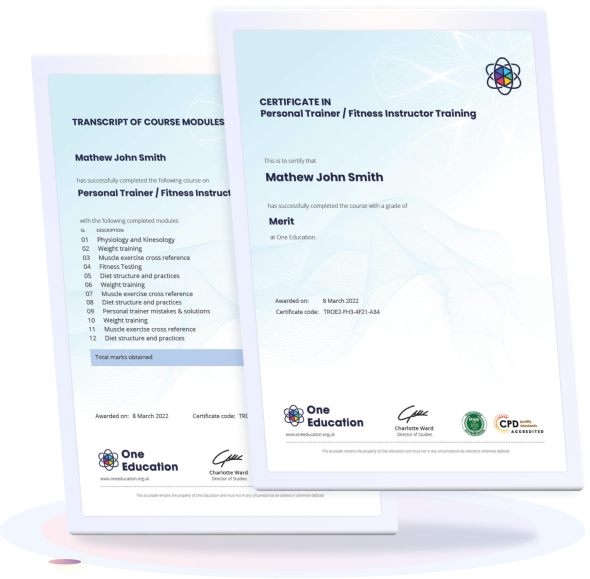
one education Certificate

After completing the Lean Six Sigma course assessment, you will be eligible to receive a CPD-accredited certificate worth £9 from One Education to demonstrate your achievement.

The certificate is also available as a printed hard copy delivered by post for £15.

Why Study This Lean Six Sigma Course?

Why Study This Lean Six Sigma Course? Lean Six Sigma is widely used across industries to improve efficiency, reduce waste, and enhance product and service quality through data-driven process improvement methodologies.

Studying this course develops skills in process analysis, problem-solving, and quality improvement techniques. It strengthens analytical thinking and supports professionals in driving operational excellence and continuous improvement within organisations.

Course Duration

The Lean Six Sigma Course has a total study time of 4 hours, 10 minutes. Learners can complete the programme at a flexible, self-paced schedule, allowing them to develop essential understanding of process improvement, efficiency, and quality management principles in a way that fits comfortably around their availability and learning needs.

Requirements

The Lean Six Sigma course requirements are suitable for learners seeking process improvement expertise in any industry. Applicants should have basic numeracy skills, analytical thinking ability, and an interest in quality management and efficiency. Access to a computer or internet-enabled device is required for flexible, self-paced online learning.

Career Path

Frequently Asked Questions

Lean Six Sigma is a process improvement methodology that combines Lean (reducing waste) and Six Sigma (reducing variation and defects) to improve efficiency and quality in organisations.

It is suitable for managers, quality professionals, process improvement teams, engineers, analysts, and anyone involved in operational or business improvement.

You will learn about the DMAIC framework (Define, Measure, Analyze, Improve, Control), process mapping, root cause analysis, data-driven decision-making, and quality improvement tools.

No, beginners can start with introductory levels, although higher levels (Green Belt, Black Belt) may require prior experience.

It helps organisations reduce costs, improve quality, increase efficiency, and enhance customer satisfaction through structured problem-solving.

Belts indicate skill levels: White/Yellow (beginner), Green (intermediate), Black (advanced), and Master Black Belt (expert/leadership level).

Course Curriculum

Lean Six Sigma
Module 1: Understanding Lean FREE 00:22:00
Module 2: The Lean Culture 00:19:00
Module 3: The Five Principles of Lean 00:10:00
Module 4: Value and Waste 00:19:00
Module 5: Value Stream Mapping (VSM) 00:19:00
Module 6: The Principles of Flow and Pull 00:14:00
Module 7: Overview of Six Sigma 00:11:00
Module 8: The Define Phase 00:18:00
Module 9: The Measure Phase 00:21:00
Module 10: The Analyse Phase 00:22:00
Module 11: The Improve Phase 00:21:00
Module 12: The Control Phase 00:14:00
Mock Exam
Mock Exam – Lean Six Sigma 00:20:00
Final Exam
Final Exam – Lean Six Sigma 00:20:00
top
Home Courses Search