How Many Litres in a Gallon? Quick Conversion Explained

April 06, 2026 | 12 minutes | 744 Readers

Ever tried following an online recipe, filling up your car abroad, or reading a fuel label, only to realise the measurements don’t match what you’re used to? You’re not alone. One of the main sources of confusion is the humble gallon, which surprisingly does not mean the same thing everywhere. The key issue is the difference between the US gallon and the UK (Imperial) gallon. Although they share the same name, they represent different volumes. This can lead to mistakes

How Many Litres in a Gallon?

Ever tried following an online recipe, filling up your car abroad, or reading a fuel label, only to realise the measurements don’t match what you’re used to? You’re not alone. One of the main sources of confusion is the humble gallon, which surprisingly does not mean the same thing everywhere.

The key issue is the difference between the US gallon and the UK (Imperial) gallon. Although they share the same name, they represent different volumes. This can lead to mistakes in cooking, travel planning, or even understanding fuel efficiency.

Here’s the simple breakdown you need to remember:
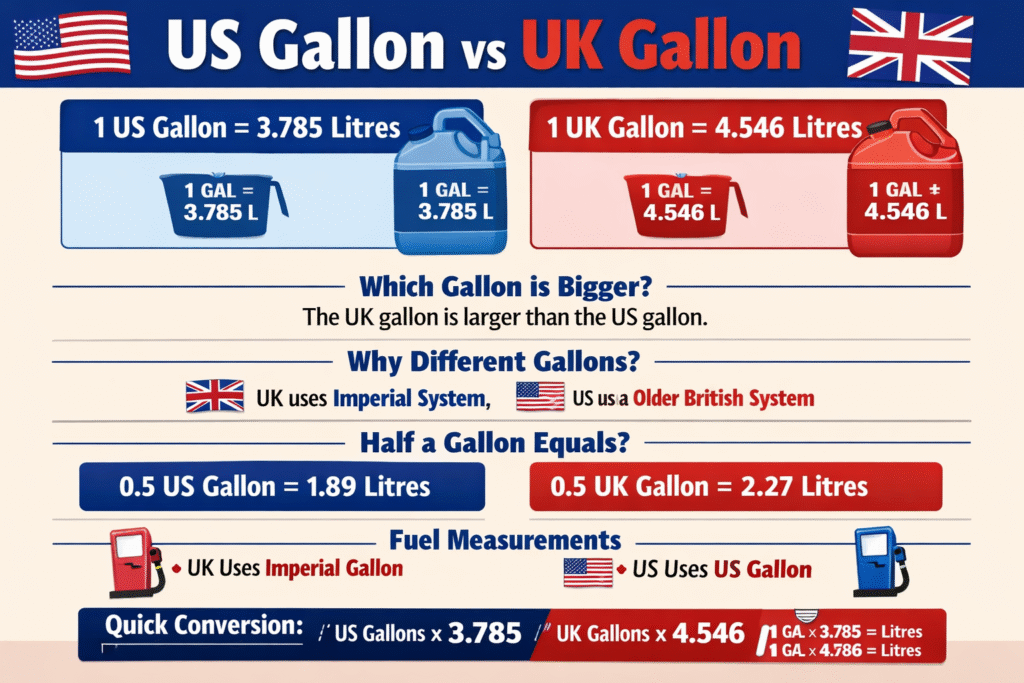
♦  1 US gallon = 3.785 litres
♦  1 UK (Imperial) gallon = 4.546 litres

That is quite a difference, nearly a full litre. So, when converting gallons to litres, always check which type of gallon is being used.

US vs UK Gallon Explained

Understanding the difference between the US gallon and the UK gallon (also known as the Imperial gallon) is essential for accurate conversions in travel, cooking, fuel measurements, and international trade. Although both are called “gallons,” they represent different volumes, which often leads to confusion.

US Gallon

  • ♦  Used in the United States
  • ♦  Smaller than the UK gallon
  • ♦  1 US gallon = 3.785 litres
  • ♦  Commonly used for fuel (petrol), beverages, and liquid measurements

UK (Imperial) Gallon

  • ♦  Used in the United Kingdom and some Commonwealth countries
  • ♦  Larger than the US gallon
  • ♦  1 UK gallon = 4.546 litres
  • ♦  Traditionally used for fuel economy (miles per gallon) and liquid measurements

Key Differences at a Glance

Feature US Gallon UK (Imperial) Gallon
Region Used United States United Kingdom & others
Volume (Litres) 3.785 litres 4.546 litres
Size Comparison Smaller Larger
System US Customary System Imperial System

Why Are There Two Different Gallons?

The reason we have two different gallons goes back to history. Before measurements were standardised, different regions used their own systems based on local needs. In Britain, several types of gallons existed for different goods like wine and grain. To simplify things, the UK introduced the Imperial system in 1824, creating a single standard gallon.

However, by that time, the United States had already become independent and was using older British measurements. Instead of adopting the newer Imperial system, the US continued using its existing version, which later became known as the US customary system.

As a result, the UK (Imperial) gallon and the US gallon are not the same. The UK gallon is larger, while the US gallon is smaller. This difference still exists today, especially when measuring liquids like fuel or beverages.

In simple terms, the two gallons exist because the UK updated its system after the US had already gone its own way—leading to two standards that are still used today.

US gallon vs UK gallon comparison

Common Conversions Table

Understanding everyday unit conversions is essential for tasks such as cookingtravelling, fuel measurement, and academic work. One of the most commonly searched conversions is between gallons and litres, especially since the US and UK use different gallon measurements. Having a clear and practical conversion table saves time and improves accuracy in real-life situations.

Practical Gallon to Litre Conversion Table

Gallons Litres (US) Litres (UK)
1 3.785 L 4.546 L
2 7.57 L 9.09 L
5 18.93 L 22.73 L

Why This Matters

Using the correct conversion is important because the US gallon and UK (imperial) gallon are not the same. This difference can affect measurements in fuel efficiency, recipes, and liquid storage. For example, fuel economy in the UK is calculated using the imperial gallon, which is larger than the US gallon, leading to different mileage figures.

Quick Tip

If you want a fast estimate:

  • ♦  Multiply US gallons by 3.785 to get litres
  • ♦  Multiply UK gallons by 4.546 to get litres

This simple table improves usability and helps readers quickly find accurate conversions without needing a calculator—making it highly effective for both learning and everyday use.

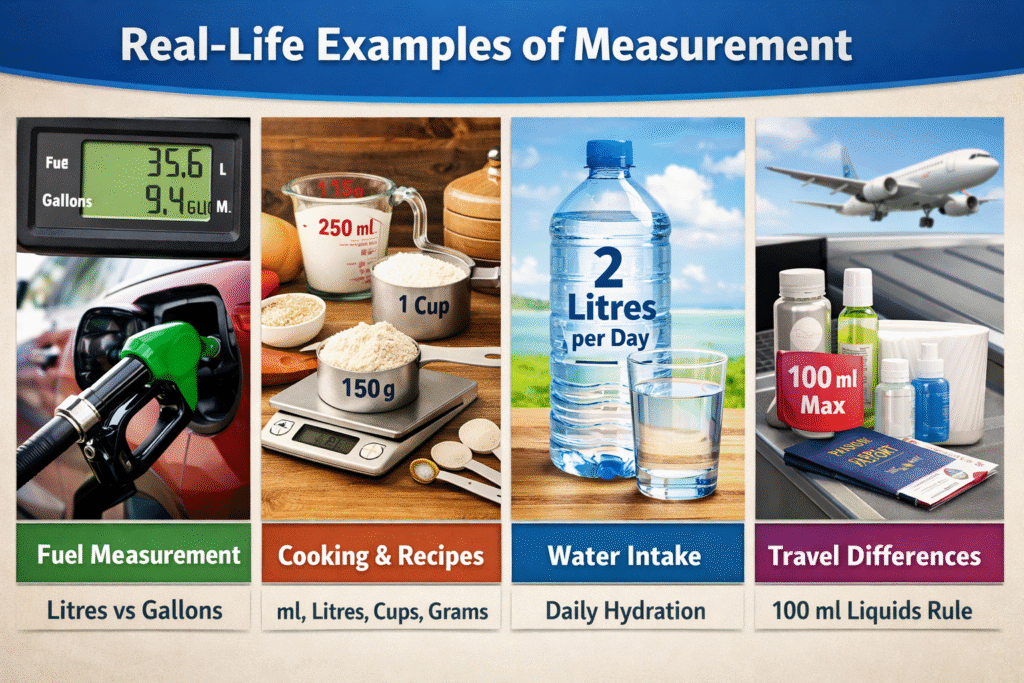
Real-life measurement examples in everyday life

Real-Life Examples of Measurement

Understanding measurements becomes far easier when you connect them to real-life situations. Whether it’s filling your car, preparing meals, staying hydrated, or travelling abroad, measurements play a vital role in daily decision-making.

Fuel Measurement (Petrol/Diesel)

When you visit a petrol station, fuel is usually measured in litres in most countries. However, in places like the United States, fuel is measured in gallons. This difference can affect how you understand fuel prices and consumption, especially when comparing costs internationally.

Cooking & Recipes

Recipes often require accurate measurements to achieve the best results. In the UK and many other regions, ingredients are commonly measured in millilitres or litres, while some international recipes use cups or ounces. Knowing how to convert between these units helps ensure consistency and better cooking outcomes.

Water Intake

Health guidelines often recommend drinking a certain number of litres of water per day, typically around 2 litres for adults. Understanding litre measurements makes it easier to track your daily intake and maintain proper hydration.

Travel Differences

When travelling internationally, you may encounter different measurement systems. For example, airport security rules usually limit liquids to 100 millilitres per container. Some countries also use gallons instead of litres, which can impact how you understand fuel, drinks, and other liquid quantities.

Understanding different measurement systems is essential when travelling—our Travel Agent and Consultant Training prepare you for real-world global scenarios.

Why These Examples Matter

Real-life examples make measurements more practical and easier to understand. By recognising how litres, millilitres, and gallons are used in everyday situations, you can make informed decisions, avoid confusion, and adapt confidently in different settings.

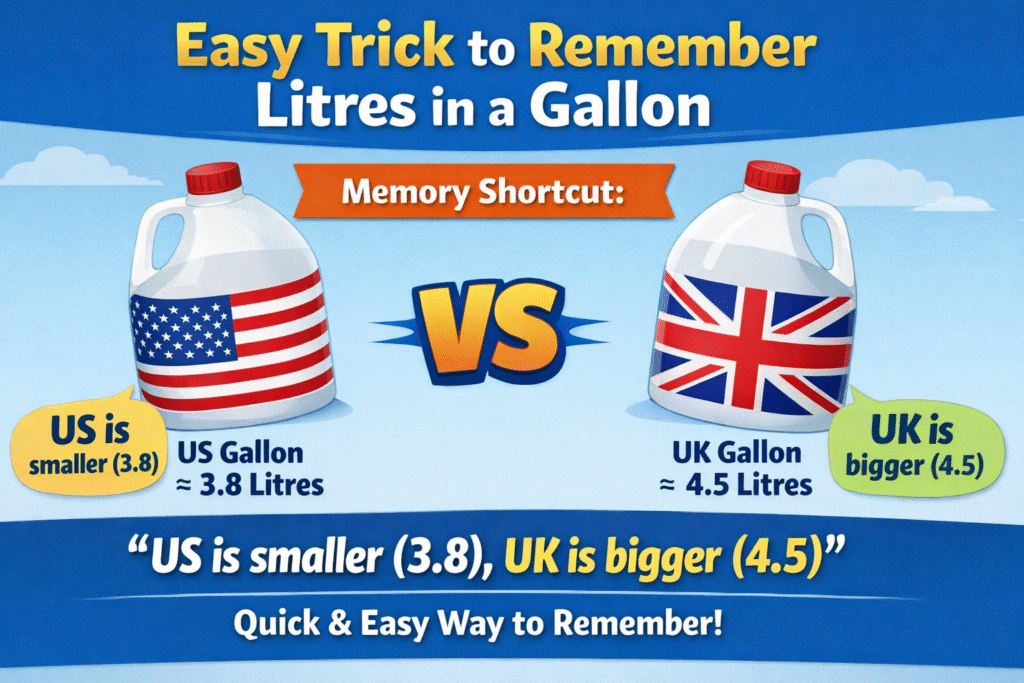
Gallon size comparison_ US vs UK

Easy Trick to Remember Litres in a Gallon

Remembering conversions can be tricky, but a simple shortcut makes it much easier. Instead of memorising exact figures, round them for quick recall and everyday use.

👉 Memory Shortcut:

  • ♦  US gallon ≈ 3.8 litres
  • ♦  UK gallon ≈ 4.5 litres

Think of it this way:
“US is smaller (3.8), UK is bigger (4.5)” — this quick comparison helps you instantly recall which value is higher.

This trick improves retention because it simplifies numbers while keeping them close enough for practical use. Whether you are studying, travelling, or working with measurements, this method helps you remember conversions without confusion.

How to Convert Gallons to Litres (Step-by-Step)

Converting gallons to litres is a simple but essential skill, especially when dealing with fuel, cooking measurements, or international standards. The key thing to remember is that there are two types of gallons—US gallons and UK (Imperial) gallons—and each uses a different conversion value.

If you want to confidently handle unit conversions like this, consider improving your practical maths skills with our Functional Skills Maths Level 2 course.

Step 1: Identify the Type of Gallon

Before converting, check whether you are using US gallons or UK gallons. This is important because the values differ significantly:

  • ♦  US gallon is smaller
  • ♦  UK gallon is larger

Step 2: Use the Correct Formula

Apply the appropriate conversion formula:

  • ♦  US Gallons to Litres
    Litres = Gallons × 3.785
  • ♦  UK Gallons to Litres
    Litres = Gallons × 4.546

Step 3: Multiply the Value

Simply multiply the number of gallons by the correct figure to get the result in litres.

Quick Examples

  • ♦  Example 1 (US Gallons):
    5 US gallons × 3.785 = 18.925 litres
  • ♦  Example 2 (UK Gallons):
    5 UK gallons × 4.546 = 22.73 litres

Helpful Tip

If you are unsure which gallon measurement is being used, check the country or context. The United States uses US gallons, while the UK and some Commonwealth countries use Imperial gallons.

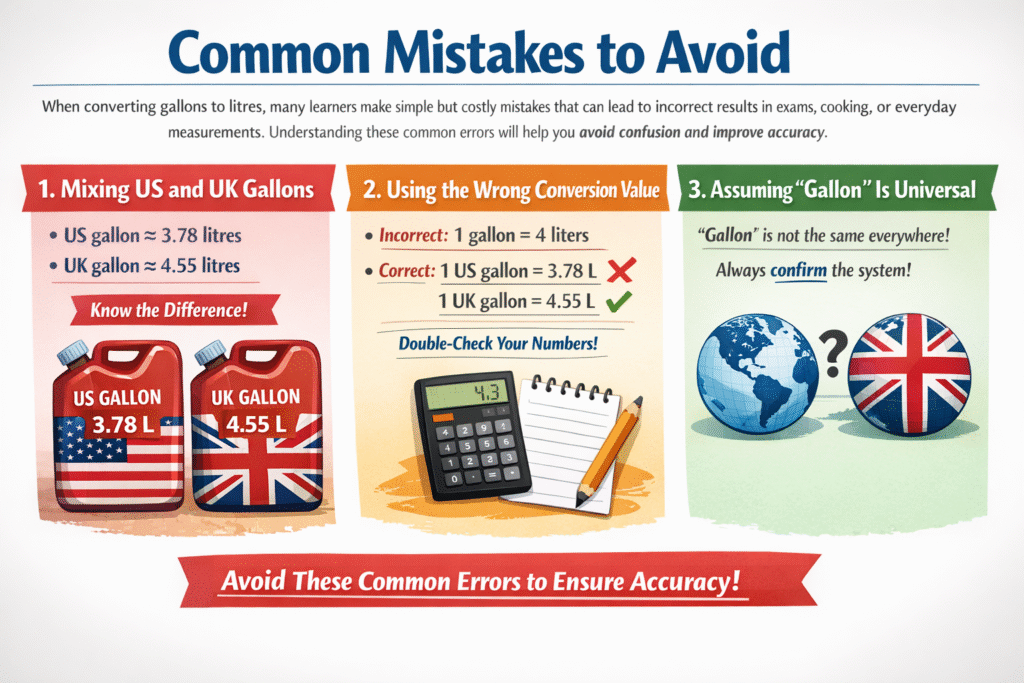
Common gallon conversion mistakes explained

Common Mistakes to Avoid

When converting gallons to litres, many learners make simple but costly mistakes that can lead to incorrect results in exams, cooking, or everyday measurements. Understanding these common errors will help you avoid confusion and improve accuracy.

1. Mixing US and UK Gallons

One of the most frequent mistakes is confusing the US gallon with the UK (Imperial) gallon. They are not the same:

  • ♦  US gallon ≈ 3.78 litres
  • ♦  UK gallon ≈ 4.55 litres

Using the wrong type can significantly change your final answer, especially in recipes or calculations.

2. Using the Wrong Conversion Value

Another common issue is memorising the incorrect conversion or rounding it too much. In exams or precise tasks like cooking, even small errors can lead to wrong answers. Always double-check the correct value before applying it.

3. Assuming “Gallon” Is Universal

Many people assume that the term “gallon” means the same everywhere. In reality, different countries use different systems. For example, the US uses US gallons, while the UK traditionally uses Imperial gallons. Never assume—always confirm which system is being used.

Conclusion

understanding how many litres are in a gallon comes down to one key takeaway: not all gallons are the same. The US gallon (≈3.79 litres) and the UK/Imperial gallon (≈4.55 litres) differ significantly, and recognising this distinction is essential to avoid costly or confusing mistakes in everyday situations.

By remembering simple conversion figures or using quick tricks, you can estimate values with confidence. However, for accuracy and convenience, using reliable conversion tools can save time and ensure precision, especially when dealing with measurements in cooking, travel, or professional tasks.

FAQs — How Many Litres in a Gallon? Quick Conversion Explained

  1. 1. How many litres are in a gallon of water?
    A US gallon equals approximately 3.785 litres, while a UK (imperial) gallon equals about 4.546 litres. The value depends on which measurement system you are using.
  2. 2. Is a UK gallon bigger than a US gallon?
    Yes, a UK gallon is larger than a US gallon. It contains about 4.546 litres compared to 3.785 litres in a US gallon.
  3. 3. Why do the US and UK use different gallons?
    The difference comes from historical measurement systems. The UK uses the imperial system, while the US follows an older version of the British system that was standardised differently.
  4. 4. How many litres are in half a gallon?
    Half a US gallon is about 1.89 litres, while half a UK gallon is approximately 2.27 litres. Always check which gallon type is being used.
  5. 5. Which gallon is used in fuel measurements?
    In the UK, fuel economy is measured using the imperial gallon. In the US, fuel measurements use the US gallon, which is smaller.
  6. 6. How can I quickly convert gallons to litres?
    To convert, multiply US gallons by 3.785 or UK gallons by 4.546. This simple calculation helps you estimate volumes quickly and accurately.

Article by

Sam Walker

Sam Walker is an education specialist and author at One Education, bringing over 4 years of experience in creating practical resources and strategies to support teachers and enhance student learning.

top

Hear What Our Learners Say About Us

Home Search Cart