
Table of Content
Share this Resource


Interpersonal skills are also known as soft skills in an individual. They define someone’s inner-self and helps them connect with others. Therefore, there is a great importance of interpersonal skills in the workplace. Surprisingly, some employers prefer them over the technical skills of an employee. Thus, we can conclude how important they are in a workplace setting.

As an employer, this is one of the most sought after qualities for evaluating applicants. No matter what kind of position you are recruiting for, interpersonal skills are always relevant. For this reason, there is immense importance of interpersonal skills in the workplace. Employees must get along with their employees, bosses, clients and salespeople in any organisation.
For getting a job, interpersonal skills are essential. Thus, before getting in-depth into the importance of interpersonal skills in the workplace, let us look at some crucial interpersonal skills.
1. Communication Skills
Communication is telling someone to do something and getting help and instruction from others in a team. Indeed, communication is a two-way skill. By communicating with someone, you are providing information as well as getting information. This is how the knowledge and information within the organisation are shared.

On the other hand, communication has different features, such as verbal communication, non-verbal communication and written communication. Therefore, for getting the best output, a combination of oral and written communication is essential.
Thus, for specific jobs, oral communication takes precedence over written communication. Whereas, for others, written communications happen to be more critical. But balancing both aspects of communication is always essential. For instance, Service centres jobs require verbal communication with the clients to solve their problems. But at the end of the day, they must submit their reports in writing.
2. Empathy
Empathising someone is an essential aspect of being a professional. Therefore, every employer should look for the presence of empathy in their new hires. Whenever a co-worker needs to share their issues, responding with empathy is likely to help them. This will result in co-creating a culture of compassion.

Moreover, an empathetic individual is effective in improving his teamwork and also enhances team performance. Empathy is a valuable trait that allows employees to communicate with co-workers by showing-
- Compassion
- Sensitivity
- Diversity and inclusion
- Kindness
- Patience
- Respect
3. Leadership Skills
Leadership is a necessary quality in any professional today. Leadership means having the ability to make a decision and guide the other members of the team. Moreover, Leadership stands for the ultimate productivity of the organisation.

Leadership experience involves the following traits-
- Ability to motivate and inspire others
- Ability to instruct and influence others
- Management skills
- Encouraging nature
- Positive reinforcement.
4. Conflict Management
Regardless of whether you hire a supervisor or an employee, they will have to face conflicts at some stage in their job. For example, there is a conflict between you and an employee or between the client and one of the staff members. In that case, you must ensure that the employees listen carefully to both sides and use innovative problem-solving to resolve the conflict.

Some conflict management skill involves-
- Conflict resolve
- Criticism
- Mediating
- Problem-Solving
5. Teamwork
Teamwork plays a crucial part when it comes to interpersonal skills. They still have to cooperate with others, even though the task needs independent work. Effective coordination, listening to others, peer motivation, and collaborative dispute resolution are essential components of teamwork.

Additionally, teamwork means working and achieving goals together. Teamwork can mitigate any problem within due time with the help of team members. But any individual will have to find the solution all by themselves, which will take more time.
Teamwork involves-
- Employee collaboration
- Group discussion etc.


6. Positive Attitude
You want to recruit someone as an employee who makes your workplace better. Optimistic people are polite and keep their behaviour amicable. They guarantee that they do not engage in any office gossips and do not degrade the workplace culture.
Also, positive attitudes refer to maintaining a cordial relationship with colleagues and being honest in the workplace.

Therefore, positive attitudes include-
- Rapport creation
- Helpfulness
- Humour
- Creating network
- Social skills development
7. Listening Skills
Listening skills are essential for every profession. Therefore, every professional should practice active listening. It will improve their communication level with everyone and make the other person feel heard.
Thus, it would be best if you made sure that the employees also listen diligently to the viewpoints of others when expressing their views. Additionally, hearing is a critical skill that brings exposure to customers and co-workers, and as a Supervisor, you must be able to listen to and appreciate your workers.

Moreover, listening skills help us understand each other. It helps maintain a very healthy relationship with colleagues in the workplace.
8. Negotiation Skills
For certain positions, the ability to negotiate is important. That could include written arrangements or contracts with the clients or assisting colleagues. Additionally, negotiation is also vital in solving a problem and identifying a solution, depending on the specificity of the work.

Moreover, an effective negotiator can be identified by studying their listening capabilities, inventive problem-solving abilities, and how they arrive at a result that meets everyone’s needs.
9. Body Language
Non-verbal communication is often overlooked, but it should not be. You ought to have an eye for details as an employer and should not hesitate to understand the language and gestures of the employees.
Similarly, a person’s body language also determines the ability to communicate verbally. Their body language has the most effect on their verbal abilities.

Also, body language is non-verbal communication. This is about reading people’s motives by looking at their body gestures.
Thus, body language includes-
- Facial expressions
- Gestures
- Body position
Perhaps, there is no doubt about the importance of interpersonal skills in the workplace. Some important aspects of interpersonal skills are- communication, leadership, teamwork, conflict management etc.

1. Interpersonal Skills Foster Productivity by Promoting Effective Communication
Every successful company is built on effective communication, and you need interpersonal skills to be a good communicator. In addition, you need to develop connections between you and your fellow employees so that concepts, knowledge and expertise can be shared mutually.

In addition, every employee needs to have mutual appreciation and respect for the viewpoint of each other. This type of communication allows for the more fluid performance of services, better task management, and timely fulfilment of homework.
2. Real-time Work Feedback
To function successfully, you would need a transparent and positive feedback loop in most organisations. Which will efficiently respond to external and internal influences.
Let me know that it is simply the continued contact between a task-giver and a task-completer. First, the person doing the job will ask for feedback as he completes the steps. Then, the supervisor will either inform the employee that they are doing well or that the appropriate changes are needed. This is a continuous cycle or loop.
There can be some initial breakdown sometimes. Behind this breakdown, there will be some reason. These reasons include-
- Either one of them (task giver or taker) is failed to approach one another
- One of them is not ready to initiate communication
- Ineffective supervisory
Related:
1. Communication And Interpersonal Skills in Food And Beverage Service
2. ow to Improve Your Interpersonal Communication Skills
3. 5 Interpersonal Skills That Every Manager Needs

An immensely harmful and too common behaviour is the supervisor authorising the task and not providing feedback afterwards, especially if the employee has already requested it and been refused. After all, there’s nothing worse than a person spending hours on a job just for a boss to come and knock it down. This will harm the productivity, morality and efficiency of the work done.
Thus, real-time feedback plays an essential role in building the essence of interpersonal skills in the workplace.
3. Building Opportunities for Employees

You will gain access to more competitive opportunities at work and in your area of interest through connections with superiors and colleagues. For example, when you have a positive impression of your manager, they might give you good references or even bump you to a higher place with more roles and benefits. This is an excellent advantage to your career growth, of course.
4. Building Social Awareness

Interpersonal skills confirm that you care for the well-being of your employee and clients. You are in the process of earning their loyalty and faith. A clear sense of awareness and emotional intelligence can assist you in operating in a challenging social situation. Strategic experience can also help you in making the best choices and judgments on important work-related matters. So, it builds the vital importance of interpersonal skills in the workplace.
5. Maintain Fruitful Relationships within the Workplace
When interpersonal skills foster healthy relationships, they are most successful, helpful, and satisfying. Therefore, it is crucial to develop intimate relationships in the workplace and keep these relationships within professional boundaries. Thus, even maintaining relationships contribute to the importance of interpersonal skills in the workplace.

Also, it can be much more challenging to maintain such relationships than to establish them because several factors such as continuity, follow-up and continuing empathy are involved. As a result, the most effective way to sustain intimate relationships at work is to make them real.
6. Develop Leadership Skills

The importance of interpersonal skills for good management and leadership is standard in every discussion on workplace interpersonal skills. This is because a successful leader can encourage interpersonal interactions, build trust and communicate effectively. Conversely, a disconnected leader will eventually lose in the long run, while helpful team members will likely jump over the ship in the near term. In this case, production will be forfeited, and new jobs will be placed on the remainder of the workers.
Interpersonal skills play a prominent role in all relationships. Be it at your workplace or home. The truth is, we all need interpersonal skills to communicate. Thus, let us look at some tips to improve them:
1. Controlling Emotions
You cannot be overly emotional at work. Thus, all of your emotions need to be toned down. It is for the betterment of maintaining workplace sanity.

But, since you are a human being, it is pretty evident that you would have mood changes. No one can stay in a constant mood. Anger, sadness, irritation- all of these are a part of us. However, at work, you need always to stay calm. You should never make your colleagues uncomfortable or threatened through your emotions.
2. Assertiveness

Assertiveness kills conflict and unfairness at the workplace. It gives you the power to voice your opinions. But, at the same time, maintain a good relationship with everyone. Thus, it makes you confident enough to demand your needs calmly. This practice keeps your relationship with others intact.
3. Maintaining Relationships

Life becomes a lot easier when you get along with your co-workers. These are the people with whom you spend most of the day. So try to connect with them and build a bond. Also, maintaining relationships with managers and co-workers can excel your career.
Related:
1. A Definitive Guide To Basic Interpersonal Communication Skills
2. I nterpersonal Skills: A Complete Guide for Newbies
4. Give Compliments

Try to find the good sides of everyone and give them compliments. Compliments can go a long way in making someone’s day. It helps to brighten up moods and provides an instant confidence boost. Also, remember that you will also be in their “good books” if you make someone’s day!
5. Be Empathetic
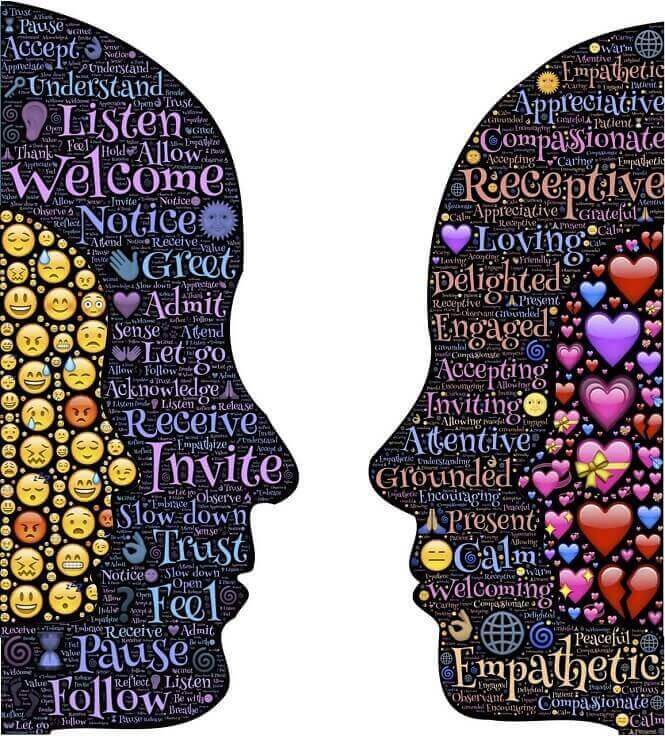
Lastly, empathy is very important. It not only helps to build connections but also gives someone a shoulder to cry on. For example, if you notice that someone is having a rough day, reach out to them. Then, try to listen to them and share any of your stories if that relates. This would make the other person feel light. They will feel heard and understood.

 May, 11, 2026