Online Safeguarding Training: A Guide for UK Professionals
November 23, 2026 | By Clare Henderson | 5 minutes | 33 Readers
Explore online safeguarding training for UK professionals. Understand child protection, adult safeguarding, reporting procedures and relevant learning options.

Online safeguarding training introduces responsibilities when people face potential harm. Professionals encounter different concerns across education, care and community services. A nursery worker’s duties differ from those of care staff. Yet both may need clear reporting pathways and appropriate responses. This guide explores safeguarding topics and relevant training choices. It examines One Education’s Safeguarding: All-Profession Training Library without promising competence.
What Is Online Safeguarding Training?
Safeguarding means protecting people’s wellbeing, rights and safety from harm. Training introduces possible abuse, neglect, exploitation and reporting responsibilities. Online learning may use videos, reading materials and knowledge checks. However, generic lessons cannot replace an organisation’s reporting procedures. Professional competence also depends on experience, supervision and appropriate assessment. Requirements differ across occupations and the UK’s four nations. Check current guidance rather than relying on course titles alone.
Who Needs Safeguarding Training?
Education staff regularly encounter children and young people. Care workers may support adults with additional protection needs. Youth workers, volunteers and community practitioners also encounter safeguarding concerns. Managers may oversee policy, recruitment and escalation arrangements. Training should reflect actual responsibilities, not job titles alone. New starters need relevant induction alongside suitable subject knowledge. Existing employees may need updates when guidance or duties change. For schools in England, review current education safeguarding requirements.
What Does Safeguarding Training Cover?
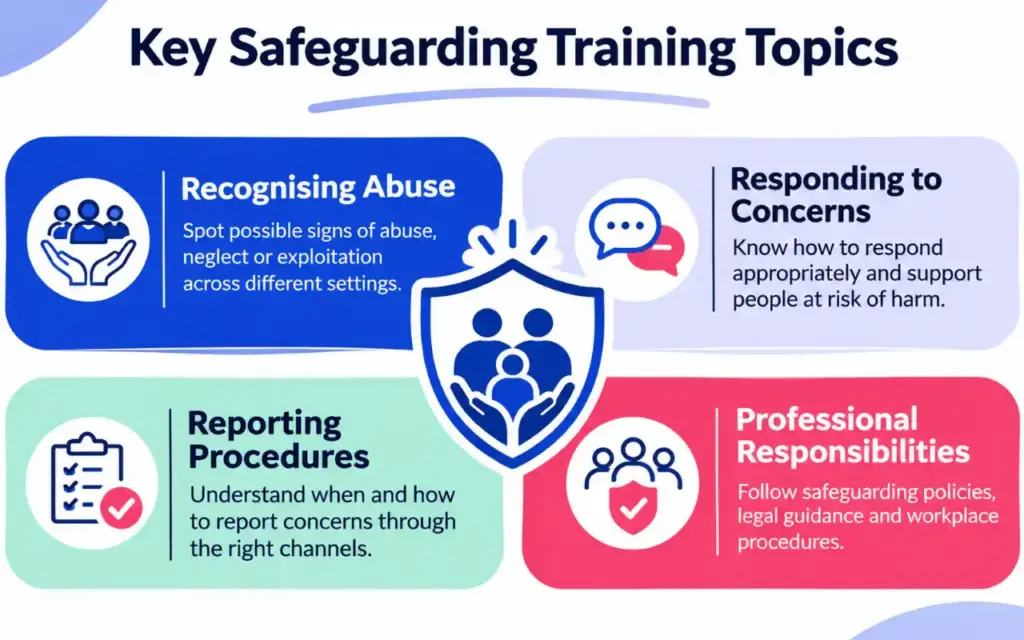
Subjects vary by course, workplace and professional responsibilities. Consider these core areas when comparing online safeguarding training.
Key benefits of effective recruitment strategies
Child protection involves recognising potential abuse and supporting appropriate safeguarding responses. Warning signs may include disclosures, injuries or behavioural changes. England’sKeeping Children Safe in Education 2026 outlines school responsibilities. Staff must follow their organisation’s safeguarding procedures and escalation routes.
Adult safeguarding also considers individual wishes, dignity and consent. England’sCare Act guidance describes relevant adult protection arrangements. Respecting personal choices remains important when assessing possible risks.
Exploitation, Reporting and Professional Responsibilities
Relevant topics include grooming, modern slavery and domestic abuse. Online harms and county lines exploitation also warrant attention. Professionals should know how to document concerns accurately. Avoid promising confidentiality when information must protect someone from harm. Report promptly through the appropriate workplace or statutory route. Immediate danger requires urgent contact with emergency services.
How to Choose Online Safeguarding Courses
First, identify your responsibilities and the people you support. Compare course content against current workplace requirements and policies. Check whether examples concern children, adults or both groups. Review legislation carefully because rules differ across UK nations. Ask about assessments, certificate terms and relevant learning support. Confirm whether your employer requires particular training or qualifications. Suitable online lessons may complement induction and practical instruction. They cannot independently appoint someone to a safeguarding leadership role.
Explore One Education's Safeguarding Training Library
One Education’sSafeguarding: All-Profession Training Library brings related courses together. Its published curriculum includes child protection and adult safeguarding. Other subjects cover domestic abuse, exploitation and online safety. Safer recruitment, whistleblowing and mental capacity also feature. The landing page advertises online assessments and digital completion certificates. It also lists twelve months’ access with learner support.
Compare related individual courses before selecting your learning route. One Education offers Safeguarding and Safeguarding Vulnerable Adults. Its Child Protection & Safeguarding course covers children’s specific risks. Individual course conditions may differ from bundle arrangements. Completion certificates do not replace regulated qualifications or workplace authorisation.
Choose Training Around Your Responsibilities
Begin with the people you support and relevant safeguarding risks. Compare learning topics with organisational procedures and current UK guidance. Clarify assessment and certificate conditions before making decisions. Explore theonline safeguarding training bundle for related learning options. Keep workplace supervision and reporting responsibilities central throughout.
Safeguarding training introduces ways to recognise abuse, neglect and exploitation. It explains appropriate responses and reporting responsibilities. Training needs depend on professional roles and workplace requirements.
Yes, many safeguarding awareness courses are available online. These courses explore safeguarding principles, reporting procedures and professional responsibilities. Some roles also require specialist instruction or practical experience.
Training requirements depend on job responsibilities and relevant safeguarding guidance. Employers must consider applicable legal duties and workplace risks. Some professional roles require specific safeguarding training and regular updates.
There is no universal expiry period for all safeguarding training. Refresher requirements depend on sector guidance and employer policies. Additional training may be necessary when safeguarding responsibilities change.