Teaching Assistant Courses Online: How to Choose in the UK

November 24, 2026 | By Michael Hansen | 17 minutes | 335 Readers

Compare teaching assistant courses online in the UK. Explore course levels, recognition, placements, costs and how to choose suitable training.

Choosing an online teaching assistant course should be straightforward. Yet with different course levels, certificates and qualification types available, knowing where to start can be surprisingly difficult.

The best teaching assistant courses online depend on what you want to achieve. If you’re exploring a career in education, an introductory course may be suitable. If you’re looking for a formal qualification, you’ll need to consider regulated programmes and their assessment requirements.

Before enrolling, check five things: course recognition, learning content, placement requirements, study flexibility and total cost. This UK guide explains how to compare your options, avoid common misunderstandings and choose training that fits your circumstances.

Not sure where to start? Take our 1-minute course-fit quiz.

What Types of Online Teaching Assistant Courses Are Available?

Not every teaching assistant course serves the same purpose. Some introduce classroom support skills, while others assess learners against formal qualification requirements.

Understanding these differences will help you narrow your options.

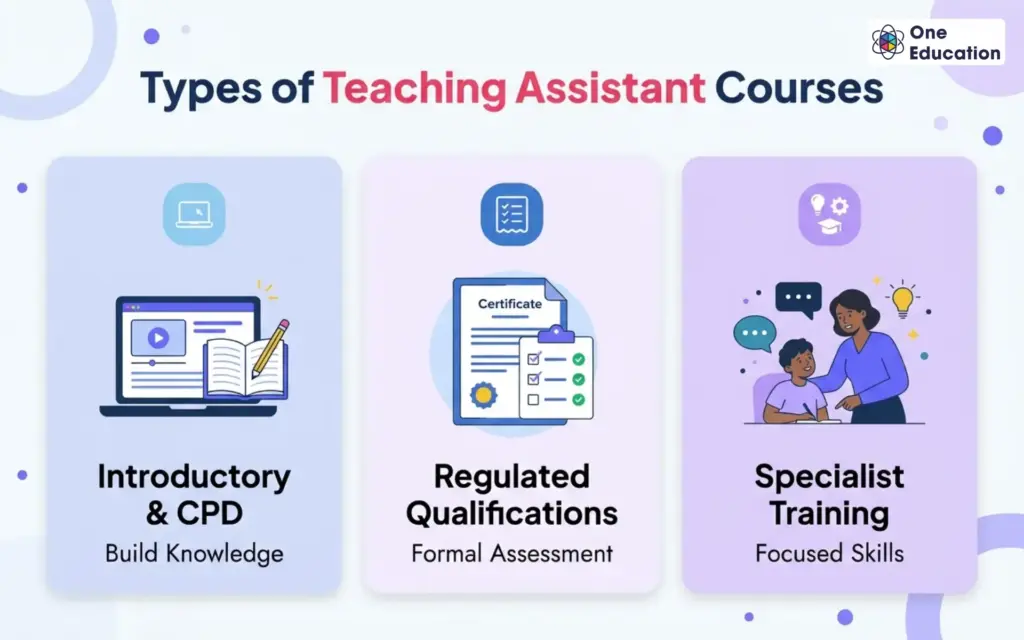
Introductory and CPD Teaching Assistant Courses

Introductory courses focus on the knowledge needed to support teachers and pupils. Topics commonly include child development, safeguarding, classroom communication and learning support.

Safeguarding is an essential part of working in schools. The Department for Education’s Keeping Children Safe in Education 2026 sets out statutory safeguarding guidance for schools and colleges in England.

Continuing Professional Development (CPD) courses can also help existing school staff refresh or expand their knowledge.

These courses often offer flexible, self-paced study and may award a certificate after successful completion. However, a CPD certificate is not automatically a regulated qualification.

They’re particularly useful for exploring the profession or developing specific skills.

Regulated Teaching Assistant Qualifications

Regulated qualifications follow defined standards set by recognised awarding organisations. Examples include qualifications in Supporting Teaching and Learning offered by organisations such as NCFE CACHE and TQUK.

Depending on the qualification, learners may complete written assignments, portfolios, practical assessments or workplace observations.

These programmes may suit individuals who need a specific qualification for an employer or career-development goal.

The distinction between these learning routes is important. Our guide to CPD and regulated qualifications explains how their recognition, assessments and learning outcomes differ.

Specialist Teaching Assistant Training

Specialist courses focus on supporting pupils with particular learning needs, including special educational needs and disabilities (SEND), autism, ADHD and dyslexia.

They can complement broader teaching assistant training, particularly for people interested in inclusive classroom support. For example, One Education’s SEN Teaching Assistant Course explores SEN support, inclusive teaching approaches, communication needs and classroom strategies.

Course typeMain purposeTypical outcome
Introductory or CPDDevelop or refresh classroom knowledgeCourse certificate, where offered
Regulated qualificationDemonstrate achievement against formal standardsRegulated qualification
Specialist trainingDevelop knowledge of specific learning needsDepends on the programme
Infographic comparing introductory CPD courses, regulated teaching assistant qualifications and specialist teaching assistant training.

The most suitable option depends on whether you’re seeking knowledge, professional development or a particular qualification.

Level 2, Level 3 or Level 4: Which Teaching Assistant Course Should You Choose?

Course levels can help indicate learning complexity, but the number alone doesn’t tell you everything.

For example, a non-regulated course described as Level 3 should not be treated as equivalent to an Ofqual-regulated Level 3 qualification.

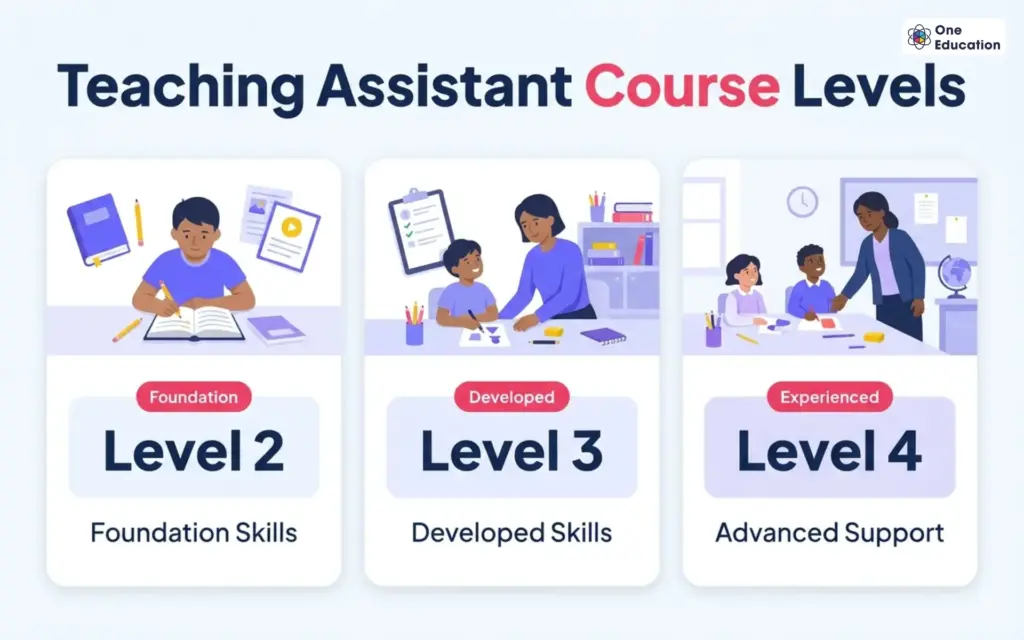
Level 2 Teaching Assistant Courses

Level 2 courses generally introduce foundational knowledge relating to classroom support, communication, safeguarding and children’s learning.

They may suit beginners or individuals developing the knowledge needed for entry-level school support work.

Some regulated Level 2 qualifications involve practical assessment, so check the specific course requirements.

Level 3 Teaching Assistant Courses

Level 3 courses typically cover more developed knowledge and responsibilities, including supporting learning activities, understanding pupil development and responding to individual needs.

Regulated Level 3 qualifications may require evidence of workplace competence. By contrast, a non-regulated Level 3 training course may focus entirely on theoretical learning.

Always compare the actual qualification outcomes rather than relying on the advertised level.

Level 4 and Higher Level Teaching Assistant Training

Level 4 training is generally aimed at more experienced support staff interested in further development.

Higher Level Teaching Assistants (HLTAs) may take on additional responsibilities, such as supporting lesson delivery and working with groups under appropriate teacher direction.

However, completing a course labelled Level 4 does not automatically establish HLTA status or meet an employer’s requirements.

LevelLearner suitabilityTypical focusPlacement considerations
Level 2Beginners and developing support staffFoundational classroom knowledgeDepends on the qualification
Level 3Learners seeking more developed knowledge or formal competenceTeaching and learning supportSome qualifications require workplace evidence
Level 4Experienced support staffAdvanced classroom support and developmentDepends on the programme
Comparison of Level 2, Level 3 and Level 4 teaching assistant training for learners with different experience and professional development goals.

Are Online Teaching Assistant Courses Recognised in the UK?

Yes, some online teaching assistant courses lead to recognised, regulated qualifications. Others provide non-regulated training and certificates of completion.

The important question is what kind of recognition the course offers.

Regulated Qualifications vs CPD and Course Certificates

An Ofqual-regulated qualification has a defined qualification title, awarding organisation and regulatory status.

CPD certificates generally demonstrate participation in or completion of professional development. They can provide evidence of learning, but are not automatically equivalent to regulated qualifications.

Similarly, a course endorsed by the Quality Licence Scheme (QLS) may provide evidence of learning through a non-regulated programme. QLS endorsement does not itself make the course Ofqual-regulated.

These distinctions matter when applying for positions that specify particular qualifications.

If you’re unsure what proof of learning you’ll receive, our guide to teaching assistant certificates explains the different certificate types and what they represent.

How to Check Whether a Qualification Is Regulated

Before choosing a course marketed as a recognised qualification:

  1. Check the full qualification title. Look beyond the course’s promotional name.
  2. Identify the awarding organisation. Establish who issues the qualification.
  3. Verify its regulatory status. Search the official Register of Regulated Qualifications for qualifications regulated in England and Northern Ireland. The government page also directs learners to the relevant bodies for Wales and Scotland.
  4. Review the assessment requirements. Confirm whether coursework, practical observation or workplace evidence is necessary.

Remember that qualification frameworks and arrangements differ across the UK.

If recognition is central to your decision, verify the precise outcome before paying.

Can You Complete a Teaching Assistant Course Entirely Online?

Yes, many teaching assistant courses can be studied online. However, whether you can complete every requirement remotely depends on the course.

Self-Paced Study, Assessments and Tutor Support

Online teaching assistant training often uses recorded lessons, reading materials, activities and assessments.

Self-paced courses allow learners to organise study around work, family responsibilities or other commitments. Some programmes also provide tutor feedback and structured deadlines.

Before enrolling, check how long you’ll have access to the materials, how assessments work and what support is available.

A fully online course should clearly explain how learning and assessment are delivered.

When Do Teaching Assistant Courses Require School Placements?

Some knowledge-based courses can be completed entirely from home because they assess theoretical understanding.

However, regulated qualifications that assess practical competence may require learners to work in a school or demonstrate relevant skills through workplace observations.

Prospective teaching assistant studying online at home compared with practical classroom support in a UK primary school.

You should therefore ask:

  • Does the course require access to a school?
  • Must I arrange my own placement?
  • Will someone assess my classroom performance?
  • Can I complete the qualification without existing school employment?

These questions are particularly important if you’re considering a teaching assistant course without a placement.

How Much Do Online Teaching Assistant Courses Cost in the UK?

Online teaching assistant course fees vary considerably. A short introductory course may cost much less than a regulated qualification involving tutor assessment and workplace observation.

Learners can also consult the Department for Education’s List of Qualifications Approved for Funding to check whether a particular qualification is approved for public funding in England. Funding approval does not automatically establish an individual’s eligibility.

What Affects Course Fees?

The biggest factors usually include course length, qualification type, assessment arrangements and the support provided.

A programme with individual tutor feedback and workplace assessments may involve different costs from a self-paced course using automated online tests.

The cheapest option isn’t necessarily the most suitable, particularly if an employer requires a specific qualification.

Additional Costs to Check Before Enrolling

Before purchasing, confirm whether the advertised fee includes:

  • Assessments and any resit charges
  • Digital or printed certificates
  • Tutor support and feedback
  • Learning materials and access duration
  • Practical assessment costs, where applicable

If payment plans are offered, check the total amount payable rather than comparing monthly instalments alone.

Are Free Online Teaching Assistant Courses Available?

Yes. Free introductory learning is available from some education providers, while eligible adults in England may also access certain publicly funded qualifications.

However, not every teaching assistant course qualifies for public funding. Availability depends on the programme, location and learner eligibility.

It’s worth exploring funding options before deciding that paid training is your only choice.

How to Choose the Best Online Teaching Assistant Course for You

The best course isn’t necessarily the one with the highest advertised level or the most modules. It’s the one that provides the learning outcome you actually need.

Match the Course to Your Career Goals

Consider these three examples.

If you’re a beginner: A flexible introductory course could help you explore classroom responsibilities before committing to a longer programme. Our comparison of online teaching assistant courses for beginners can help you identify suitable starting options.

If you’re changing careers: Compare course outcomes with the qualifications and experience requested in local school vacancies.

If you’re already a teaching assistant: You may benefit from specialist CPD training or a regulated qualification aligned with your professional goals.

The right choice becomes clearer when you start with your intended outcome rather than the course title.

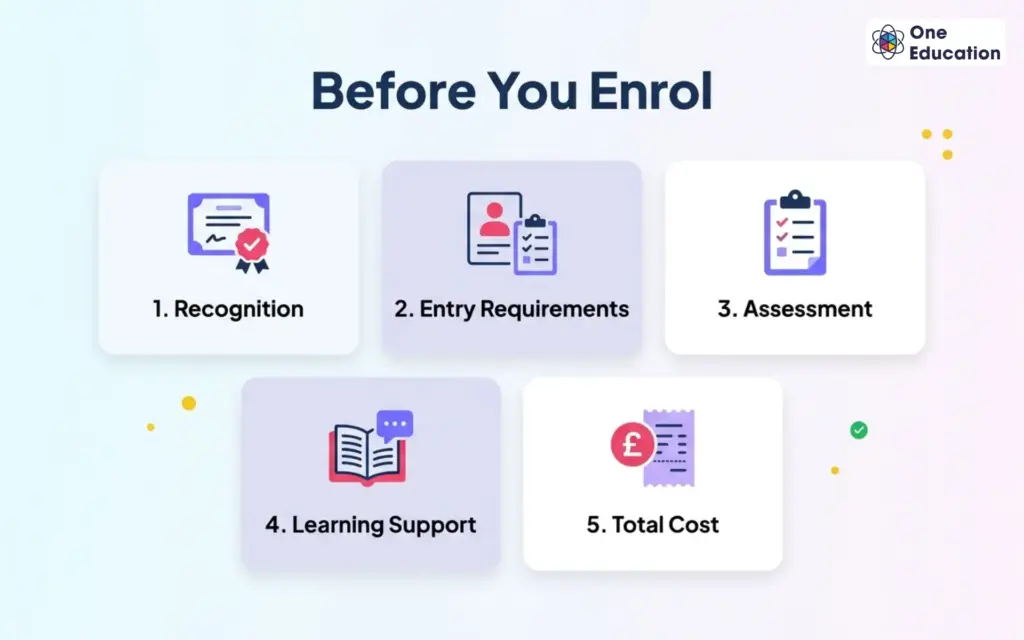
Check These Five Things Before Enrolling

Use this checklist when comparing teaching assistant qualifications online:

  1. Recognition: What certificate or qualification will you receive?
  2. Entry requirements: Do you need previous experience or particular qualifications?
  3. Assessment: Are examinations, assignments or classroom observations involved?
  4. Learning support: Is the course self-paced, and can you access tutor assistance?
  5. Total cost: What is included in the price, and what costs extra?
Five-point checklist for choosing an online teaching assistant course, covering recognition, entry requirements, assessment, learning support and costs.

Reading the full course specification is usually more valuable than relying on promotional descriptions.

Check What UK Schools Expect

Schools may have different recruitment expectations depending on the position and responsibilities involved.

According to the National Careers Service teaching assistant profile, routes into teaching assistant work in England include college study, apprenticeships, volunteering and direct applications.

Individual schools set their own entry requirements. English and maths GCSEs are commonly requested for direct applicants, alongside evidence that candidates can work effectively with children and school staff.

Which Teaching Assistant Course Fits You?

Answer five quick questions to see which type of course matches your goals. No sign-up and no data saved.

Is One Education’s Teaching Assistant Complete Course Right for You?

If your main goal is to develop classroom support knowledge through flexible online study, One Education offers a relevant option.

The Teaching Assistant Complete Course covers child development, professional communication, safeguarding, teaching methods and support for pupils with special educational needs. It also includes learning content on autism, ADHD and dyslexia.

The course uses online lessons, study materials and multiple-choice assessment, allowing learners to study at their own pace.

It is QLS-endorsed, non-regulated training, not an Ofqual-regulated qualification. Following successful assessment, learners can order the QLS-endorsed certificate or One Education’s CPD certificate for the applicable additional fees.

This option may suit beginners exploring classroom support or existing staff wanting to strengthen their theoretical knowledge.

Before making a decision, review the complete curriculum, certificate arrangements and current course availability to ensure it matches your goals.

Online Course

Teaching Assistant Complete Course

Build classroom support knowledge online, at your own pace.

  • Child development, safeguarding and communication
  • SEN support, including autism, ADHD and dyslexia
  • Self-paced online lessons with QLS-endorsed certificate option
View the Course

Conclusion: Choose a Course That Matches Your Goals

Choosing the right online teaching assistant course starts with understanding your career goals. Some courses develop essential classroom knowledge, while others provide regulated qualifications. Your experience and intended career path should guide your decision.

Before enrolling, compare course recognition, assessment methods, placement requirements and total costs. Check whether the training matches the expectations of your preferred employers. Taking time to review these details can help you make a more informed choice.

Online learning offers a flexible way to develop knowledge and practical understanding of classroom support. Whether you’re starting out or developing existing skills, choose training that suits your needs. The right course can provide a useful foundation for your next learning or career step.

FAQs About Teaching Assistant Courses Online

Online training can help you develop relevant knowledge, but completing a course doesn’t guarantee a teaching assistant position. Employers consider qualifications, experience and suitability for the role. Some applicants enter through volunteering or apprenticeships, while others complete relevant training before applying.

Some are Ofqual-regulated qualifications, while others provide CPD or non-regulated certificates. Recognition depends on the specific course and awarding arrangements. If you need a formal qualification, verify its regulatory status and confirm that it meets your intended employer’s requirements.

Yes. Some introductory and knowledge-based teaching assistant courses can be completed entirely online without a school placement. However, qualifications involving practical competence assessment may require workplace access or observation. Always check the requirements before enrolling.

Not necessarily. Many introductory online teaching assistant courses welcome beginners without previous classroom experience. Regulated qualifications may have different entry or assessment requirements. Check the course description to establish whether school employment, volunteering or placement access is necessary.

Duration depends on the course content, level and assessment requirements. Short introductory courses may take several hours or weeks, while more extensive qualifications can take months. Self-paced courses offer flexibility, but you should still check the access period and completion requirements.

Yes. Some providers offer free introductory courses, and eligible adults in England may access certain funded qualifications. The government’s Free Courses for Jobs eligibility guidance explains relevant funding conditions. Check that a funded programme covers the training or qualification you actually need.

top
Home Courses Search

Chat with us