Specialist Skills SEN Teaching Assistants Can Develop

November 05, 2026 | By Sophie johnson | 11 minutes | 23 Readers

Strengthen SEN teaching assistant skills in communication, adaptive teaching, behaviour support, sensory awareness and pupil progress monitoring with practical classroom examples.

Supporting pupils with special educational needs (SEN) takes more than patience and a caring attitude. Every pupil learns differently, and the right support can make classroom activities more accessible, manageable and meaningful.

SEN teaching assistant specialist skills include communication support, adaptive teaching, positive behaviour support, sensory awareness, progress monitoring and professional collaboration. These are practical abilities that teaching assistants can develop through training, experience and feedback.

Whether you already work in a school or are considering an SEN support role, understanding these skills can help you identify where to focus your professional development.

What Makes an SEN Teaching Assistant Skill Specialist?

Every teaching assistant benefits from patience, empathy, adaptability and strong communication. Specialist SEN skills go further by applying specific strategies to support pupils with additional learning needs. Strong foundational skills are equally important. Our guide to what makes a wonderful teaching assistant explains how communication, adaptability and inclusive classroom support contribute to effective practice.

For example, patience helps when a pupil needs extra time to complete an activity. Specialist knowledge helps you recognise when visual instructions, smaller learning steps or different communication approaches may improve their understanding.

In England, the SEND Code of Practice provides statutory guidance on supporting children and young people with special educational needs and disabilities.

Effective SEN support focuses on each pupil’s individual needs rather than making assumptions based on a diagnosis. Developing specialist skills also requires an understanding of classroom responsibilities, professional boundaries and the importance of following individual support plans.

Six Specialist Skills SEN Teaching Assistants Can Develop

The following six skills are particularly valuable for teaching assistants supporting pupils with different communication, learning, emotional and physical needs.

Infographic showing six specialist SEN teaching assistant skills including communication, scaffolding, behaviour support, sensory awareness, progress monitoring and collaboration.

1. Communication and Interaction Support

Communication is not always straightforward. Some pupils find spoken instructions difficult to process, while others may use alternative ways to express their needs.

SEN teaching assistants can develop skills in adapting communication to help pupils understand instructions, participate in activities and express themselves.

Useful approaches include:

  • Giving short, clear instructions and allowing processing time.
  • Using visual timetables, pictures or communication boards.
  • Checking understanding without repeatedly asking the same question.
  • Recognising non-verbal communication and individual preferences.
  • Following agreed communication strategies.

For example, a pupil who struggles with multi-step instructions might benefit from a visual sequence showing what to complete first, next and last.

Teaching assistants may also develop awareness of augmentative and alternative communication (AAC), including communication devices and symbol-based systems.

These approaches should follow the pupil’s individual support arrangements and relevant professional advice. Understanding different communication preferences and individual needs can help teaching assistants provide more appropriate and inclusive support.

How to develop this skill: Observe experienced colleagues, practise agreed communication techniques and seek feedback from teachers or speech and language professionals.

2. Adaptive Teaching and Learning Scaffolding

Not every pupil can approach a learning activity in the same way. Some need additional explanations, alternative resources or carefully structured support.

Adaptive teaching involves responding to learning differences, while scaffolding provides temporary assistance that helps pupils work towards greater independence.

SEN teaching assistants can develop skills such as:

• Breaking complex activities into manageable stages.

• Modelling tasks before asking pupils to attempt them.

• Using visual prompts and accessible learning materials.

• Providing reminders without immediately giving answers.

• Gradually reducing assistance as confidence develops.

Consider a pupil who struggles to begin a writing activity. Instead of completing the work for them, the teaching assistant might demonstrate a starting sentence, provide a prompt and encourage the pupil to continue independently.

The Education Endowment Foundation’s guidance on deploying teaching assistants highlights effective support practices, including scaffolding pupils’ independent learning.

How to develop this skill: Practise different scaffolding techniques under teacher guidance. Notice when pupils require additional help and when they can manage with less assistance.

The aim is not simply to finish the activity. It is to help pupils participate more independently over time.

3. Positive Behaviour and Emotional Regulation Support

Behaviour can communicate frustration, uncertainty, distress or difficulty coping with a particular situation.

Developing positive behaviour support skills helps teaching assistants respond thoughtfully rather than focusing only on the behaviour itself.

Important abilities include recognising possible triggers, maintaining calm communication, supporting predictable routines and following individual behaviour-support plans.

For example, a pupil may become unsettled when moving between activities. An agreed visual countdown, clear explanation and familiar routine might help make the transition more manageable.

Teaching assistants may also learn co-regulation approaches, where a supportive adult helps a pupil manage difficult emotions through calm interaction and appropriate reassurance. For more practical guidance on recognising emotional triggers and responding to distress, see how to support dysregulated students.

However, effective strategies depend on the individual. A technique that supports one pupil may not suit another.

How to develop this skill: Participate in relevant school-based training, observe experienced staff and discuss successful approaches with teachers or SENCOs.

Always follow school policies and individual support plans rather than independently introducing restrictive interventions. Consistent communication, clear expectations and an understanding of each pupil’s needs can help create a calmer, more supportive learning environment.

4. Sensory Awareness and Accessible Learning Support

Classroom environments can create different challenges for pupils with sensory or physical needs.

Background noise, bright lighting, crowded spaces or inaccessible resources may make participation more difficult.

Sensory awareness helps teaching assistants recognise potential barriers and support appropriate adjustments.

This can involve:

  • Recognising signs of sensory discomfort.
  • Using agreed visual or auditory adjustments.
  • Supporting access to suitable classroom resources.
  • Following individual arrangements for movement or seating.
  • Helping pupils use approved assistive equipment.

For instance, a pupil who finds noisy group activities overwhelming may benefit from an agreed quieter working arrangement.

Teaching assistant supporting a pupil in a calm classroom learning area with accessible resources and reduced visual distractions.

A teaching assistant’s responsibility is to follow appropriate support plans, communicate concerns and seek guidance when unfamiliar needs arise.

Specialist equipment, physical support procedures and therapeutic interventions may require additional training or professional involvement.

How to develop this skill: Learn about different accessibility needs, observe individual responses and work with teachers and relevant specialists.

The most useful question is not whether a particular adjustment works for every pupil, but whether it helps the individual access learning safely and comfortably. Understanding inclusive education can also help teaching assistants recognise barriers and support appropriate classroom adjustments. 

5. Observing, Recording and Reviewing Pupil Progress

Specialist SEN support involves more than providing assistance during lessons. Teaching assistants also need to recognise how pupils respond to different approaches.

Careful observation can help teachers understand whether agreed support strategies are working.

Useful skills include:

• Recording factual observations about learning activities.

• Noticing changes in participation and independence.

• Monitoring responses to agreed prompts or adaptations.

• Sharing relevant information with teachers and SENCOs.

• Maintaining confidentiality when handling pupil information.

For example, a teaching assistant might observe that a pupil initially needs several reminders to complete a task but gradually manages with fewer prompts.

Sharing that observation helps the teacher review the support being provided.

Records should remain objective and relevant. Teaching assistants should not independently diagnose learning difficulties or make formal assessment decisions outside their responsibilities.

How to develop this skill: practise concise record-keeping, request feedback and learn how your school reviews individual learning targets.

6. Collaboration, Safeguarding and Professional Boundaries

SEN teaching assistants work alongside teachers, SENCOs, families and other professionals to provide consistent support.

Effective collaboration means understanding agreed strategies, communicating clearly and recognising when specialist advice is needed. Effective teamwork also depends on understanding how SENCOs coordinate support across the school. These best practices for collaborating with SENCOs offer further guidance on professional communication and shared responsibilities.

It also requires awareness of safeguarding responsibilities and professional boundaries.

In England, the Department for Education’s Keeping Children Safe in Education 2026 provides statutory safeguarding guidance for schools and colleges.

Teaching assistants must understand their school’s safeguarding procedures, including how to report concerns.

For example, if a pupil discloses something concerning, the teaching assistant should follow the school’s reporting procedures rather than investigate independently.

How to develop this skill: Complete relevant safeguarding and child protection training, participate in staff discussions and seek clarification about professional responsibilities

How Can SEN Teaching Assistants Develop Specialist Skills?

Developing specialist skills is an ongoing process. Classroom experience matters, but learning becomes more useful when it includes observation, feedback and reflection.

If you are thinking about your longer-term career goals, SEN Teaching Assistant Career Progression: Next Steps offers guidance on building experience and planning further professional development.

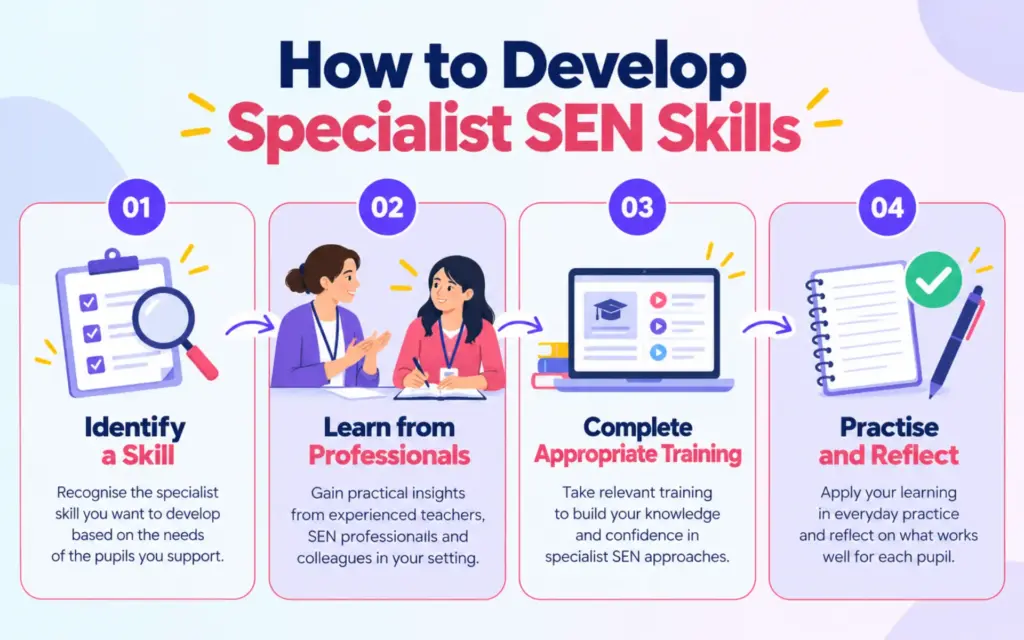
A practical development approach involves four steps.

1. Identify a skill to improve

Consider which situations you find challenging. You might want to communicate more effectively, improve learning adaptations or better understand sensory needs.

2.Learn from experienced professionals

Observe teachers, SENCOs and experienced teaching assistants. Ask why particular strategies are used and what outcomes they are intended to support.

3.Undertake relevant training

School-based learning and continuing professional development (CPD) can strengthen your understanding of SEN approaches.

When considering further training, How to Compare SEN CPD Courses for Teaching Assistants can help you review course content, assessment methods and certification before enrolling.

These approaches should follow the pupil’s individual support arrangements and relevant professional advice. Teaching assistants can strengthen their communication support by understanding individual speech and language needs and adapting classroom strategies accordingly.

For those interested in developing their SEN knowledge through online study, One Education offers the SEN Teaching Diploma Level 5. The course covers SEN support, teaching methodologies, communication and interaction, cognition and learning, sensory or physical needs, and working in partnership.

If you are unsure which training option fits your goals, SEN Teaching Diploma vs SEN TA Course: Key Differences can help you examine differences in course content, learning objectives and certification.

It provides CPD-accredited training and a certificate upon successful completion. However, it does not replace a regulated Level 5 qualification or mandatory employer-required training.

4.Practise and reflect

Apply appropriate strategies under school guidance. Observe how pupils respond, ask for feedback and identify what you could improve.

Developing one skill consistently is often more useful than attempting several unfamiliar approaches at once.

Final Thoughts

Developing specialist SEN teaching assistant skills can help you provide more thoughtful, individualised support in the classroom.

Communication, scaffolding, behaviour support, sensory awareness, observation and professional collaboration each contribute to inclusive learning.

These skills develop through knowledge, practical experience and reflection. They also require an understanding of individual needs and professional responsibilities.

Whether you are beginning your SEN career or already supporting pupils, choosing one area to improve is a practical starting point. For those ready to take their skills further, How to Choose Advanced SEN Teaching Assistant Training offers guidance on identifying suitable professional development options.

Frequently Asked Questions

SEN teaching assistants need patience, empathy, communication, adaptability, teamwork and organisational skills.

Specialist abilities may include communication support, adaptive teaching, positive behaviour strategies, sensory awareness and pupil progress observation.

The skills required depend on the role, school setting and individual pupils being supported. Relevant experience, professional development and the ability to follow agreed support plans are also valuable.

There is no single specialist SEN qualification required for every teaching assistant position. Entry expectations vary by employer and role.

The National Careers Service SEN teaching assistant profile identifies college courses, apprenticeships, volunteering and direct applications as possible entry routes.

Additional SEN training can support professional development, but CPD certificates should not be confused with regulated qualifications. Always check the requirements of individual vacancies.

Start by identifying a practical skill relevant to your current responsibilities.

Observe experienced colleagues, undertake suitable training and practise agreed strategies under supervision.

Ask teachers for feedback, reflect on pupils’ responses and adjust your approach when appropriate.

Keeping a simple professional development record can help you recognise progress and identify areas where further learning would be useful.

top
Home Courses Search