The best teaching assistant CPD courses in the UK help you develop skills you can use in the classroom. Popular training areas include special educational needs and disabilities (SEND), safeguarding, behaviour management, phonics, literacy and classroom support.
However, the right course depends on your experience, the pupils you support and the skills you want to develop. A new teaching assistant may benefit from broad introductory training, while someone already working with pupils with SEND might prefer a specialist course.
This guide compares relevant teaching assistant CPD courses, explains how to choose suitable training and clarifies the difference between CPD certificates and regulated qualifications.
Why Is CPD Important for Teaching Assistants?
Continuing Professional Development (CPD) helps teaching assistants maintain and develop the knowledge and skills relevant to their work.
Teaching assistants support teachers, help pupils with learning activities and contribute to inclusive classroom environments. Their responsibilities can vary considerably between schools, year groups and individual roles.
Regular professional development can help teaching assistants:
- Strengthen their understanding of classroom practices.
- Develop approaches for supporting pupils with additional needs.
- Improve communication with teachers and pupils.
- Stay informed about relevant school policies and safeguarding expectations.
- Identify areas for further professional growth.
The professional standards for teaching assistants provide a useful reference for professional conduct, knowledge and development in England.
These standards are guidance rather than a universal statutory CPD-hours requirement. Training expectations may also depend on your employer, responsibilities and location.
7 Key Teaching Assistant CPD Training Areas
Teaching assistant CPD covers several areas, from general classroom support to specialist SEND, safeguarding and phonics training. The seven areas below explain who each type of training suits, what skills it develops and what to consider before choosing a course.
1. General Teaching Assistant CPD Courses
Best for: Beginners, aspiring teaching assistants and existing staff who want to refresh their foundational knowledge.
General teaching assistant CPD introduces the responsibilities, working practices and communication skills involved in supporting classroom learning. For a broader understanding of effective classroom practice, our guide to what makes a wonderful teaching assistant explains how communication, adaptability and pupil support contribute to the role.
Common subjects include:
- Teaching assistant roles and responsibilities.
- Classroom organisation and learning activities.
- Supporting pupils with different learning needs.
- Literacy and numeracy support.
- School policies and professional communication.
Broad training can be particularly useful when you are unfamiliar with the role or want to identify areas for further specialisation. If you are deciding between introductory training and a more comprehensive programme, Complete vs Basic Teaching Assistant Courses can help you assess differences in course content, learning depth and suitability for your goals.
For example, One Education’s Teaching Assistant Complete Course provides self-paced online learning covering classroom responsibilities, pupil communication, literacy, numeracy and SEND-related topics, including autism, ADHD and dyslexia.
The course includes an automatically marked multiple-choice assessment and an advertised free digital CPD-accredited certificate following successful completion.
It is a knowledge-based CPD course, not a regulated Level 2 or Level 3 Supporting Teaching and Learning qualification. Learners should consider that distinction when choosing training for employment or formal qualification purposes.
2. SEND and Inclusive Classroom Support Courses
Best for: Teaching assistants supporting pupils with special educational needs and disabilities.
SEND-focused CPD helps learners develop awareness of the different barriers pupils may experience and approaches that can support participation in classroom activities.
Relevant training topics include:
- Autism awareness.
- ADHD awareness.
- Dyslexia and literacy difficulties.
- Inclusive classroom communication.
- Supporting pupils with sensory or communication needs.
- Adapting learning support appropriately.
For example, a teaching assistant working with a pupil who experiences difficulties processing instructions may benefit from training on clear communication, visual prompts and structured support.
However, SEND training should not be treated as a substitute for individual support plans, school procedures or advice from appropriately qualified specialists.
The focus should remain on understanding pupils’ needs and supporting their access to learning.
3. Safeguarding and Child Protection Training
Best for: Teaching assistants working directly with children and young people.
Safeguarding training is an important area of professional development for school staff.
Relevant learning includes recognising possible safeguarding concerns, understanding reporting procedures, maintaining professional boundaries and knowing how to respond appropriately when a child raises a concern. For a practical explanation of safeguarding responsibilities, our guide to the 5 Rs of safeguarding outlines key steps for recognising concerns and following appropriate reporting procedures.
In England, the Department for Education’s Keeping Children Safe in Education 2026 sets out statutory safeguarding guidance for schools and colleges. The 2026 version came into force on 1 September 2026.
Teaching assistants should understand their school’s safeguarding policies and know how to contact the designated safeguarding lead.
An online CPD course may provide additional knowledge, but it should not be assumed to replace required safeguarding induction, school-specific training or other applicable obligations.
Safeguarding arrangements differ across the UK’s education systems, so learners should follow the requirements relevant to their setting.
4. Behaviour Management and Pupil Wellbeing Courses
Best for: Teaching assistants who regularly support pupils with behaviour, communication or emotional regulation needs.
Behaviour management CPD can develop understanding of positive classroom relationships, consistent expectations and appropriate responses to challenging situations.
Useful subjects include:
- Positive behaviour support.
- Classroom routines and expectations.
- Communication and de-escalation approaches.
- Supporting emotional regulation.
- Understanding factors that may influence behaviour.
- Working within school behaviour policies.
For instance, training may help a teaching assistant understand why a predictable routine or clear instruction can be useful when supporting a pupil who struggles with transitions between activities.
Understanding emotional regulation is another important part of pupil support. Our guide on how to support dysregulated students explains how recognising triggers, using calm communication and following appropriate classroom strategies can help.
The aim is not to diagnose behaviour or replace specialist support. Teaching assistants should apply their learning within school policies and under appropriate professional guidance.
5. Literacy, Numeracy and Phonics Support Courses
Best for: Teaching assistants supporting reading, writing, mathematics and early learning activities.
Curriculum-related CPD can help teaching assistants understand how to reinforce learning planned by teachers.
Phonics training may be particularly relevant for those supporting early reading activities. Literacy and numeracy courses can also develop knowledge of common learning difficulties and appropriate classroom support techniques.
Potential learning areas include:
- Phonemic awareness and phonics terminology.
- Reading and comprehension support.
- Early writing activities.
- Basic numeracy concepts.
- Using teacher-directed learning resources.
- Supporting pupils during structured practice.
A teaching assistant supporting a phonics group, for example, may benefit from understanding the terminology and teaching sequence used by their school.
The purpose is to help pupils engage with planned learning, not to replace qualified teachers or independently determine curriculum expectations.
6. Classroom Scaffolding and Learning Intervention Courses
Best for: Teaching assistants delivering structured learning support or helping pupils become more independent.
Scaffolding means providing temporary support that helps a pupil complete a learning task, then reducing that assistance as their understanding develops.
Relevant CPD may cover prompting, modelling, questioning, structured interventions and supporting independent problem-solving.
The Education Endowment Foundation’s guidance on the deployment of teaching assistants highlights the importance of effective classroom deployment, appropriate preparation and supporting pupil independence.
For example, rather than immediately supplying an answer, a teaching assistant might use a carefully chosen prompt to help a pupil work through the next step.
Training in these techniques can be particularly relevant when working with small groups or delivering teacher-planned interventions.
7. Communication and Collaborative Working Courses
Best for: Teaching assistants who want to strengthen teamwork and professional communication.
Effective classroom support involves communication with teachers, pupils and other relevant school staff.
CPD can address active listening, constructive feedback, professional boundaries and collaborative preparation.
These skills are useful when discussing pupils’ progress, clarifying instructions or coordinating classroom activities.
Training should reinforce appropriate information-sharing and confidentiality practices rather than encourage staff to work outside their responsibilities.
Teaching Assistant CPD Course Comparison
| CPD area | Best suited to | What to look for |
|---|---|---|
| General teaching assistant training | Beginners and existing TAs refreshing knowledge | Classroom responsibilities, pupil support and assessment methods |
| SEND and inclusion | Staff supporting pupils with additional needs | Practical inclusion strategies, communication and adapting support |
| Safeguarding | School staff working with children | Current guidance, reporting procedures and school-specific responsibilities |
| Behaviour management | TAs supporting behaviour and wellbeing | Positive behaviour approaches, de-escalation and practical scenarios |
| Literacy, numeracy and phonics | TAs supporting curriculum activities | Age-appropriate content and alignment with classroom teaching approaches |
| Scaffolding and interventions | TAs delivering targeted learning support | Modelling, prompting, structured interventions and pupil independence |
| Communication and teamwork | New and experienced TAs | Teacher–TA collaboration, professional boundaries and constructive feedback |
These categories are recommendations based on relevant learning needs, not a ranking of individual training providers.
How to Choose the Right Teaching Assistant CPD Course
The most useful CPD course is one that addresses a genuine development need and offers knowledge you can apply appropriately.
Match the Course to Your Role and Development Needs
Start by identifying the areas of your work where additional knowledge could help.
If you are new to classroom support, broad teaching assistant training may be suitable. If you regularly support pupils with communication difficulties, SEND-focused training may be more relevant.
Consider three questions:
- What do I need to improve? Identify a specific skill or knowledge gap.
- Who will benefit from this learning? Consider the pupils and colleagues you support.
- How will I use the learning? Look for a realistic opportunity to apply it.
Existing teaching assistants may also find it useful to discuss professional development priorities with a teacher, line manager or SENCO.
Those considering more specialist responsibilities can review Advanced Teaching Assistant CPD: Choosing Training rather than treating every introductory course as a pathway to advanced practice.
Compare Course Content, Flexibility, Cost and Assessment
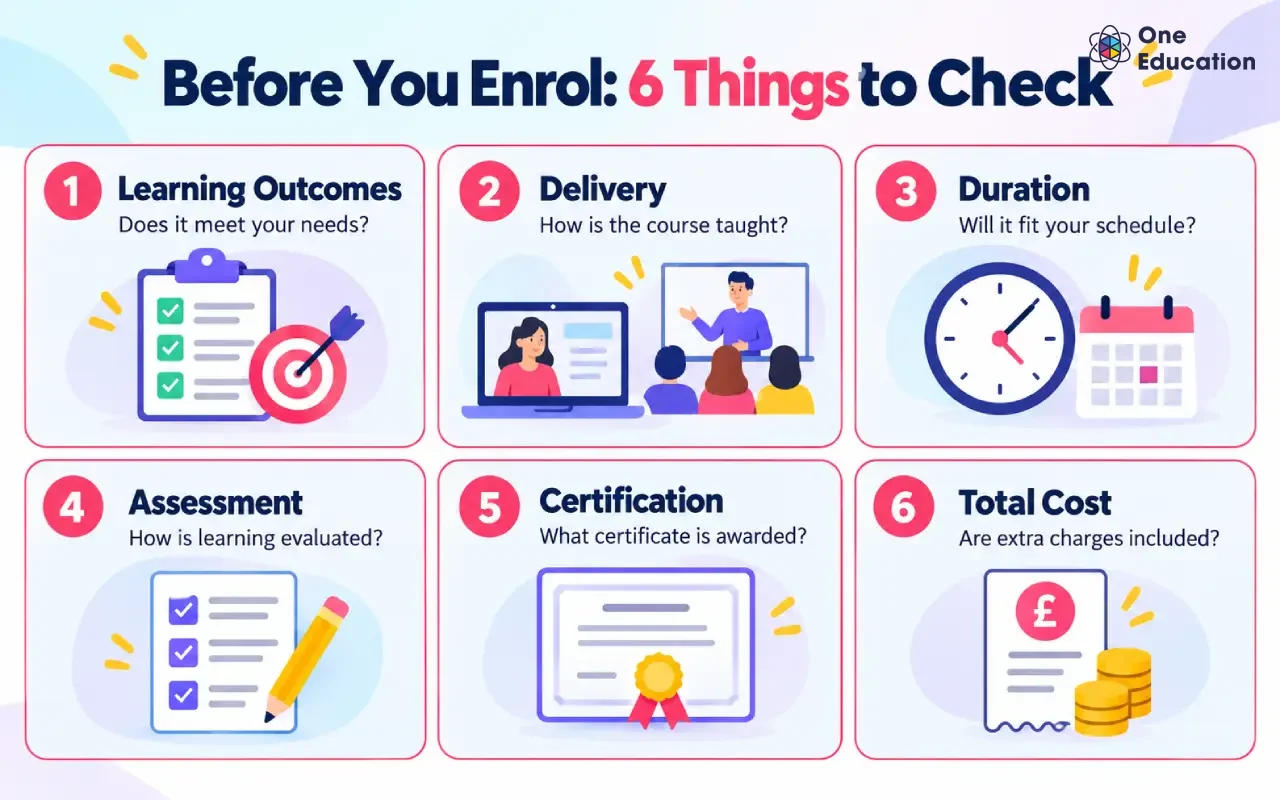
Before enrolling, examine more than the course title.
Check the following:
- Learning outcomes: Does the content address your development needs?
- Delivery: Is the course self-paced, instructor-led or workplace-based?
- Duration: Can you complete the learning alongside your other responsibilities?
- Assessment: How is your understanding evaluated?
- Certification: What certificate is awarded, and what does it represent?
- Total cost: Are assessment, certificate or administration charges additional?
Online CPD courses for teaching assistants can offer flexibility, particularly when study needs to fit around work or family commitments.
However, practical training, observation and discussion with experienced colleagues can also be valuable.
Free CPD may be worth considering, but check whether the course materials, assessments and certificates are all free. Some providers separate access to learning from certificate charges.
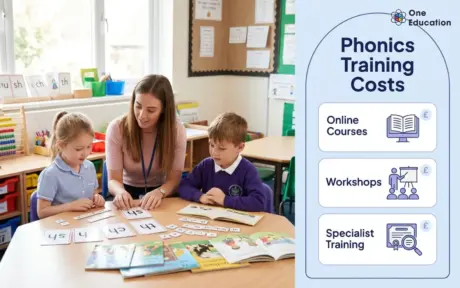
For those considering more advanced professional development, Advanced Teaching Assistant Training: Costs Compared explains how fees and additional expenses can differ between training routes.

93% OFFBuild Confident Classroom Support Skills
For aspiring and current teaching assistants who want one course covering SEND, communication, curriculum and assessment support.
- 12 hours of self-paced learning
- Free CPD-accredited certificate
- Tutor assessment and feedback
CPD Certificates vs Regulated Teaching Assistant Qualifications
Understanding the difference between CPD and formal qualifications is essential when choosing training.
What Does a CPD Certificate Show?
A CPD certificate generally records participation in, completion of or successful assessment of professional learning, depending on the provider and certification scheme.
It can help demonstrate that you have undertaken training in a relevant subject.
However, CPD accreditation does not automatically mean a course awards a government-regulated qualification.
Similarly, an advertised course level, number of CPD points or learning hours does not independently establish formal qualification recognition.
Before enrolling, check who issues the certificate, what assessment is required and whether the training has recognition relevant to your goals. If you are unsure how much value a certificate could offer, Is a Teaching Assistant CPD Certificate Worth It? examines what to consider before paying for certification.
When Might You Need a Regulated Qualification Instead?
If you are preparing to apply for a teaching assistant position, check the requirements of the actual vacancy.
Some employers may prefer or require particular qualifications or experience. Others may consider different combinations of training, relevant skills and practical experience.
Qualifications in Supporting Teaching and Learning are examples of formal routes worth investigating.
In England and Northern Ireland, the GOV.UK Register of Regulated Qualifications allows learners to verify whether a qualification is regulated. The service also directs users towards the appropriate qualification information for Wales and Scotland.
Remember that completing introductory CPD does not automatically qualify someone for a specific school role.
How to Make Teaching Assistant CPD Useful in Practice
Professional development becomes more valuable when you can connect new knowledge with your responsibilities.
After completing a course, consider these steps:
- Record your learning: Note the course, completion date and subjects covered.
- Identify a practical application: Select one relevant technique or area of knowledge.
- Discuss implementation: Check that the approach aligns with your school’s expectations.
- Reflect on your experience: Consider what worked and what needs improvement.
- Plan further development: Identify any remaining knowledge gaps.
For example, after completing scaffolding training, you could discuss appropriate prompting techniques with the classroom teacher and reflect on how they support pupil independence.
CPD should be an ongoing process of learning, application and reflection rather than simply collecting certificates.
Conclusion
The best teaching assistant CPD courses are those that address your learning needs and support your classroom responsibilities.
Whether you choose general training, SEND awareness, safeguarding or curriculum support, prioritise relevant content, credible information and clear certification terms.
Start with the skills you want to develop, check the course requirements and consider how you can apply your learning. Meaningful professional development is about improving understanding and practice, not simply obtaining another certificate.
Frequently Asked Questions
Suitable options include SEND awareness, safeguarding, behaviour management, phonics, literacy support and classroom scaffolding. The best choice depends on your experience, responsibilities and development needs. Beginners may benefit from broad training, while experienced teaching assistants may prefer more focused subjects.
There is no generally prescribed annual CPD-hours target for all teaching assistants across the UK. However, schools have specific staff-training obligations, including applicable safeguarding requirements. Employers may also expect teaching assistants to complete professional development relevant to their roles.
Yes. Many teaching assistant CPD courses offer online, self-paced learning. Check the course content, assessment arrangements and certificate conditions before enrolling. Online training can supplement professional knowledge but may not replace required workplace instruction, practical experience or school-specific training.
Free CPD learning opportunities may be available through professional organisations, education initiatives and training providers. Availability and conditions vary. Check whether access, assessments and certificates are included, as a free course does not necessarily mean every associated service is free.
No. A CPD certificate records professional learning according to the provider’s scheme. A regulated Level 3 qualification has a specific recognised qualification status. An online course described as Level 3 is not necessarily regulated, so always verify its exact credential.
Requirements depend on the employer, vacancy and location. Relevant qualifications, English and maths skills, and experience working with children may be considered. The National Careers Service teaching assistant profile explains entry routes in England, including college courses, apprenticeships, volunteering and direct applications.
Related Articles
Get a FREE Course
- Learn useful skills online free
- Get CPD accredited certificate
- Add it to your CV today!