What Is Project Management and Why Is It Important?

June 25, 2026 | 16 minutes | 10 Readers

Every successful product, event, construction project, software launch, or marketing campaign relies on effective project management. It provides a structured approach to planning, organising, and coordinating tasks to ensure objectives are achieved on time and within budget. Without proper project management, even the most promising ideas can face delays, increased costs, and operational challenges. However, project management is much more than creating schedules and tracking deadlines. It involves managing resources, mitigating risks, improving communication, and ensuring that teams work efficiently

Every successful product, event, construction project, software launch, or marketing campaign relies on effective project management. It provides a structured approach to planning, organising, and coordinating tasks to ensure objectives are achieved on time and within budget. Without proper project management, even the most promising ideas can face delays, increased costs, and operational challenges.

However, project management is much more than creating schedules and tracking deadlines. It involves managing resources, mitigating risks, improving communication, and ensuring that teams work efficiently towards a common goal. As organisations across industries continue to undertake more complex projects, the demand for skilled project managers is growing rapidly, making project management an essential discipline for business success and career development.

What Is Project Management?

Project management is the process of planning, organising, and controlling resources, tasks, budgets, and timelines to achieve a specific goal within a defined period. Unlike routine operations, which involve ongoing and repetitive activities that keep an organisation running, a project is a temporary effort designed to deliver a unique outcome. Whether it is launching a new mobile app, constructing a building, or organising a corporate event, every project has a clear objective, a set timeframe, and specific deliverables.

The core purpose of project management is to ensure that all aspects of a project work together efficiently to achieve the desired results. It provides a structured approach for coordinating people, resources, schedules, and costs while managing potential risks and challenges. Effective project management helps organisations complete projects successfully, meet stakeholder expectations, and maximise the value of their investments.

The Five Key Stages of Project Management

Every successful project follows a structured process. The five key stages of project management help teams stay organised, manage resources effectively, and achieve project goals.

1. Initiation

The initiation stage determines whether a project is viable and worth pursuing.

Key Activities:

  • ♦  Defining project goals and objectives
  • ♦  Assessing feasibility
  • ♦  Identifying key stakeholders

This stage lays the foundation for the entire project.

2. Planning

During planning, a roadmap is created to guide the project from start to finish.

Key Activities:

  • ♦  Creating schedules and timelines
  • ♦  Allocating resources
  • ♦  Budgeting project costs
  • ♦  Planning for potential risks

Effective planning helps minimise uncertainty and keeps the project on track.

3. Execution

The execution stage involves carrying out the project plan and completing the required work.

Key Activities:

  • ♦  Completing project tasks
  • ♦  Encouraging team collaboration
  • ♦  Managing communication among stakeholders and team members

This is where project deliverables are produced.

4. Monitoring and Controlling

This stage runs alongside execution and ensures the project remains aligned with its objectives.

Key Activities:

  • ♦  Tracking progress and performance
  • ♦  Managing changes to scope, schedule, or budget
  • ♦  Solving issues and addressing challenges

Regular monitoring helps prevent delays and maintain quality.

5. Closing

The closing stage marks the formal completion of the project.

Key Activities:

  • ♦  Delivering final outcomes
  • ♦  Reviewing project performance
  • ♦  Documenting lessons learned

A proper project closure helps improve future projects and ensures all objectives have been met.

If you’d like to deepen your knowledge of PRINCE2® project management and earn a recognised certification, consider enrolling in the PRINCE2® 7 Foundation & Practitioner Course (with Official Exam + Re-Sit). The course is designed to help learners build practical project management skills while preparing for the official examinations. Start your learning journey today at One Education.

Improves Organisational Efficiency

Improves Organisational Efficiency

Project management improves efficiency by creating clear processes and responsibilities. It streamlines workflows, reduces wasted effort, and helps teams work more productively towards shared goals.

Helps Deliver Projects on Time

Effective project management establishes clear timelines, milestones, and accountability. By tracking progress regularly, teams can identify delays early and keep projects on schedule.

Controls Costs and Resources

Project management supports better budget management by monitoring costs and allocating resources effectively. This helps organisations avoid overspending and maximise resource utilisation.

Reduces Risks

Project management helps identify potential challenges early and develop strategies to address them. Contingency planning reduces disruptions and increases the chances of project success.

Enhances Communication

Clear communication processes keep stakeholders informed throughout the project. Regular updates and collaboration help prevent misunderstandings and ensure everyone remains aligned with project objectives.

Improves Customer Satisfaction

By ensuring consistent delivery and maintaining quality standards, project management helps organisations meet customer expectations. This leads to better outcomes, stronger relationships, and higher customer satisfaction.

Real-World Examples of Project Management

Real-World Examples of Project Management

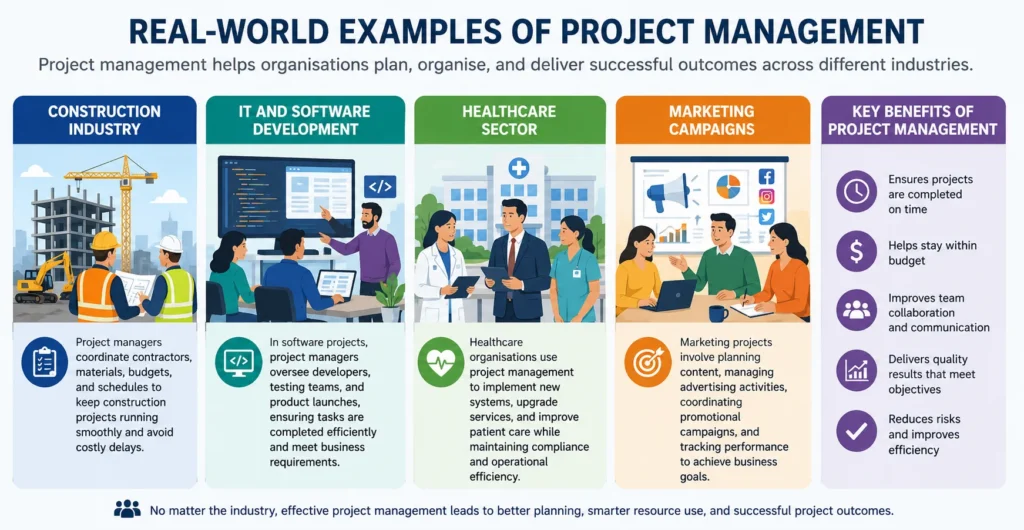
Project management is used across many industries to ensure projects are completed on time, within budget, and according to objectives. Here are some common examples:

Construction Industry

Project managers coordinate contractors, materials, budgets, and schedules to keep construction projects running smoothly and avoid costly delays.

IT and Software Development

In software projects, project managers oversee developers, testing teams, and product launches, ensuring tasks are completed efficiently and meet business requirements.

Healthcare Sector

Healthcare organisations use project management to implement new systems, upgrade services, and improve patient care while maintaining compliance and operational efficiency.

Marketing Campaigns

Marketing projects involve planning content, managing advertising activities, coordinating promotional campaigns, and tracking performance to achieve business goals.

These examples show how project management helps organisations organise resources, manage timelines, and deliver successful outcomes across different sectors.

Essential Skills Every Project Manager Needs

Essential Skills Every Project Manager Needs

Successful project managers need a blend of technical, leadership, communication, and problem-solving skills to deliver projects successfully.

Technical Skills

Scheduling

Project managers must create and manage schedules to keep projects on track and ensure deadlines are met.

Budget Management

Managing project budgets helps control costs and ensures resources are used effectively.

Risk Management

Identifying and addressing potential risks helps minimise disruptions and improve project outcomes.

Leadership Skills

Team Management

Effective team management promotes collaboration, productivity, and goal achievement.

Decision-Making

Project managers must make informed decisions to keep projects moving forward efficiently.

Conflict Resolution

Resolving conflicts quickly helps maintain positive team relationships and project progress.

Communication Skills

Stakeholder Management

Strong stakeholder management ensures clear expectations and effective collaboration throughout the project.

Presentation Skills

Project managers need to present updates, plans, and results clearly and confidently.

Problem-Solving Skills

Critical Thinking

Critical thinking helps analyse challenges and identify the most effective solutions.

Adaptability

Adaptability enables project managers to respond effectively to changing project requirements and circumstances.

Popular Project Management Methodologies

Popular Project Management Methodologies

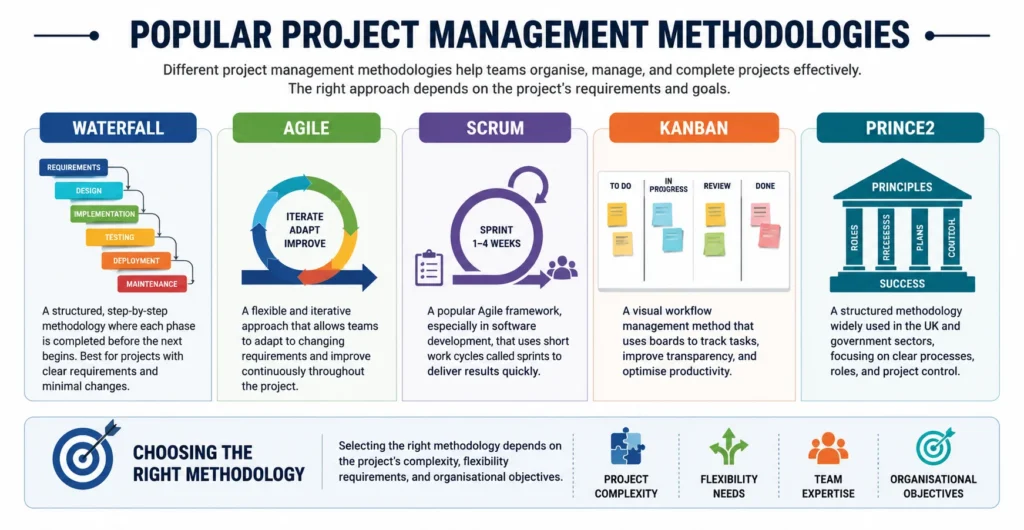
Different project management methodologies help teams organise, manage, and complete projects effectively. The right approach depends on the project’s requirements and goals.

Waterfall

A structured, step-by-step methodology where each phase is completed before the next begins. Best for projects with clear requirements and minimal changes.

Agile

A flexible and iterative approach that allows teams to adapt to changing requirements and improve continuously throughout the project.

Scrum

A popular Agile framework, especially in software development, that uses short work cycles called sprints to deliver results quickly.

Kanban

A visual workflow management method that uses boards to track tasks, improve transparency, and optimise productivity.

PRINCE2

A structured methodology widely used in the UK and government sectors, focusing on clear processes, roles, and project control.

Choosing the Right Methodology

Selecting the right methodology depends on the project’s complexity, flexibility requirements, and organisational objectives.

Common Challenges in Project Management

Common Challenges in Project Management

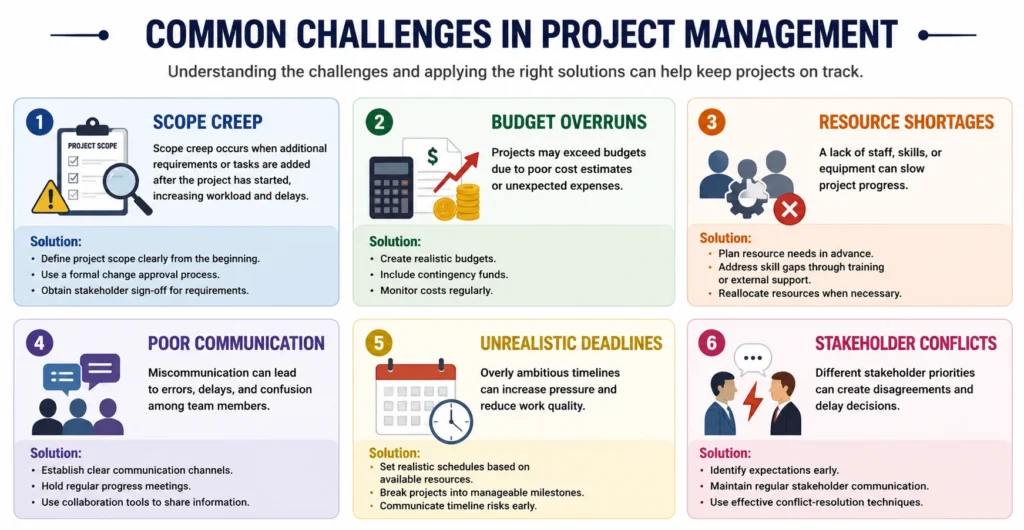
Project management involves balancing people, resources, budgets, and timelines. Despite careful planning, projects often face challenges that can affect success. Understanding these issues and applying the right solutions can help keep projects on track.

Scope Creep

Scope creep occurs when additional requirements or tasks are added after the project has started, increasing workload and delays.

Solution:

  • ♦  Define project scope clearly from the beginning.
  • ♦  Use a formal change approval process.
  • ♦  Obtain stakeholder sign-off for requirements.

Budget Overruns

Projects may exceed budgets due to poor cost estimates or unexpected expenses.

Solution:

  • ♦  Create realistic budgets.
  • ♦  Include contingency funds.
  • ♦  Monitor costs regularly.

Resource Shortages

A lack of staff, skills, or equipment can slow project progress.

Solution:

  • ♦  Plan resource needs in advance.
  • ♦  Address skill gaps through training or external support.
  • ♦  Reallocate resources when necessary.

Poor Communication

Miscommunication can lead to errors, delays, and confusion among team members.

Solution:

  • ♦  Establish clear communication channels.
  • ♦  Hold regular progress meetings.
  • ♦  Use collaboration tools to share information.

Unrealistic Deadlines

Overly ambitious timelines can increase pressure and reduce work quality.

Solution:

  • ♦  Set realistic schedules based on available resources.
  • ♦  Break projects into manageable milestones.
  • ♦  Communicate timeline risks early.

Stakeholder Conflicts

Different stakeholder priorities can create disagreements and delay decisions.

Solution:

  • ♦  Identify expectations early.
  • ♦  Maintain regular stakeholder communication.
  • ♦  Use effective conflict-resolution techniques.
Career Opportunities in Project Management

Career Opportunities in Project Management

Project management offers excellent career prospects across multiple industries. As organisations continue to invest in digital transformation and business growth, the demand for skilled project management professionals continues to rise.

Key Project Management Roles

  • ♦  Project Coordinator – Supports project teams by managing schedules, documentation, and communication.
  • ♦  Project Manager – Plans, executes, and delivers projects while managing budgets, timelines, and resources.
  • ♦  Programme Manager – Oversees multiple related projects to achieve broader organisational goals.
  • ♦  Portfolio Manager – Manages a collection of projects and programmes, ensuring alignment with business strategy.
  • ♦  Scrum Master – Facilitates Agile practices, removes obstacles, and helps teams improve performance.

Industries Hiring Project Managers

Project managers are in demand across many sectors, including:

  • ♦  IT – Software development, system implementation, and digital transformation.
  • ♦  Construction – Building projects and infrastructure development.
  • ♦  Healthcare – Service improvements and technology implementation.
  • ♦  Finance – Compliance, digital banking, and process improvement projects.
  • ♦  Education – Curriculum, technology, and institutional development projects.
  • ♦  Manufacturing – Product development and operational improvement initiatives.

Salary and Demand Outlook

Project management professionals benefit from strong career growth and competitive salaries. Demand continues to increase as organisations invest in digital transformation, innovation, and business expansion. With companies becoming increasingly project-focused, roles such as Project Manager, Programme Manager, Portfolio Manager, and Scrum Master are expected to remain highly sought after in the coming years.

How to Start a Career in Project Management

Project management offers excellent career opportunities across many industries. To get started, focus on building the right knowledge, skills, and experience.

Step 1: Learn Project Management Fundamentals

Develop an understanding of key project management concepts, including project planning, risk management, budgeting, scheduling, and stakeholder management.

Step 2: Develop Leadership and Communication Skills

Project managers need strong leadership, communication, problem-solving, and organisational skills to manage teams and keep projects on track.

Step 3: Gain Practical Experience

Look for opportunities to work on projects, support project teams, or take on project coordination responsibilities. Hands-on experience helps you apply your knowledge in real-world situations.

Step 4: Earn Recognised Certifications

Professional certifications can enhance your credibility and career prospects. Popular options include:

  • ♦  PRINCE2®
  • ♦  PMP® (Project Management Professional)
  • ♦  AgilePM®
  • ♦  Scrum Master Certification

By combining project management knowledge, practical experience, essential soft skills, and recognised certifications, you can build a strong foundation for a successful project management career.

The Future of Project Management

The Future of Project Management

Project management is evolving as organisations adopt new technologies, flexible working models, and data-driven approaches. Future project managers will focus more on delivering strategic value, driving innovation, and leading teams through change.

Emerging Trends

AI-Powered Project Planning
Artificial intelligence is helping teams improve planning, resource allocation, risk management, and project forecasting.

Predictive Analytics
Data analytics can identify potential risks, delays, and budget issues before they occur, enabling proactive decision-making.

Remote Project Management
Remote and hybrid teams are becoming increasingly common, supported by digital collaboration and communication tools.

Hybrid Project Methodologies
Many organisations now combine Agile, Waterfall, and other frameworks to create flexible approaches tailored to project needs.

Automation Tools
Automation is reducing time spent on routine tasks such as scheduling, reporting, and progress tracking.

Data-Driven Decision-Making
Real-time project data helps managers make faster, more informed decisions and improve project outcomes.

Looking Ahead

As automation takes over administrative tasks, project managers will spend less time on paperwork and more time on leadership, strategy, stakeholder engagement, and innovation. Those who embrace technology and adapt to changing business needs will be well-positioned for future success.

Conclusion

Project Management is a structured approach to planning, organising, and controlling resources to achieve specific goals within a set timeframe and budget. It plays a vital role in ensuring projects are completed efficiently, risks are managed effectively, and objectives are aligned with organisational priorities. By improving communication, resource allocation, and decision-making, project management helps businesses deliver successful outcomes, enhance productivity, and adapt to changing demands. Whether in small teams or large organisations, effective project management is essential for turning ideas into measurable results and achieving long-term success. 

FAQs — What Is Project Management and Why Is It Important?

1. What is project management?
Project management is the process of planning, organising, managing, and monitoring resources and tasks to achieve specific goals within a set timeframe and budget.

2. Why is project management important?
Project management helps organisations complete projects efficiently, control costs, reduce risks, and achieve desired outcomes.

3. What are the main phases of project management?
The main phases are initiation, planning, execution, monitoring and control, and project closure.

4. What does a project manager do?
A project manager leads the project team, manages resources, tracks progress, communicates with stakeholders, and ensures project objectives are met.

5. What skills are needed for project management?
Key skills include leadership, communication, organisation, problem-solving, time management, and risk management.

6. What is the difference between a project and ongoing operations?
A project is a temporary effort with a specific goal, while ongoing operations are continuous activities that support daily business functions.

Sam Walker

Article by

Sam Walker

Sam Walker is an education specialist and author at One Education, bringing over 4 years of experience in creating practical resources and strategies to support teachers and enhance student learning.

top
Home Courses Search