What is Secure Internal Communication? What You Need to Know

April 19, 2026 | 15 minutes | 707 Readers

A mid-sized company shared a confidential document with what seemed like the right team. Within hours, sensitive client data had been forwarded—accidentally—to the wrong department. By the end of the day, the file had been downloaded externally, triggering a full-scale data breach investigation. No hackers broke in. No systems were “attacked.” The breach came from within. This scenario is far more common than many organisations realise. While businesses invest heavily in firewalls, antivirus software, and external threat protection, internal communication

rating

Bestselling Course

View Details SAVE 94% NOW

A mid-sized company shared a confidential document with what seemed like the right team. Within hours, sensitive client data had been forwarded—accidentally—to the wrong department. By the end of the day, the file had been downloaded externally, triggering a full-scale data breach investigation. No hackers broke in. No systems were “attacked.” The breach came from within.

This scenario is far more common than many organisations realise. While businesses invest heavily in firewalls, antivirus software, and external threat protection, internal communication often remains overlooked. Employees share files over unsecured channels, reuse weak passwords, or send sensitive information without proper verification—creating silent vulnerabilities within the organisation itself.

The truth is, the biggest risk to your data may not be outside your company—it may be sitting in your inbox. Secure internal communication is no longer optional; it is essential. Without proper controls, training, and secure systems in place, even a simple message can turn into a costly mistake.

Why Secure Internal Communication Matters (The “Hidden Risk” Angle)

Organisations often focus on external cyberattacks, yet the real danger frequently comes from within. Internal communication channels—such as emails, messaging apps, and shared platforms—can quietly expose sensitive data if not properly secured. In fact, most breaches originate from internal vulnerabilities, often caused by human error rather than sophisticated hacking. Insider threats, whether intentional or accidental, remain one of the most overlooked risks, where employees may unknowingly share confidential information or misuse access privileges.

Another major concern lies in weak passwords and unsecured devices, which create easy entry points for unauthorised access. Employees using simple or repeated passwords, combined with personal or unprotected devices, significantly increase the likelihood of data leaks. At the same time, the misuse of communication tools—such as forwarding sensitive emails, using unapproved chat apps, or sharing data without encryption—can quickly escalate minor mistakes into serious security incidents that compromise business operations.

Beyond these operational risks, organisations must also consider the impact of regulatory compliance. Regulations like the General Data Protection Regulation impose strict data protection requirements, and failure to secure internal communication can result in substantial fines and reputational damage. Ultimately, ignoring these hidden risks is far more costly than addressing them, making secure internal communication a critical priority for long-term business protection.

Types of Internal Communication That Need Protection

Types of Internal Communication That Need Protection

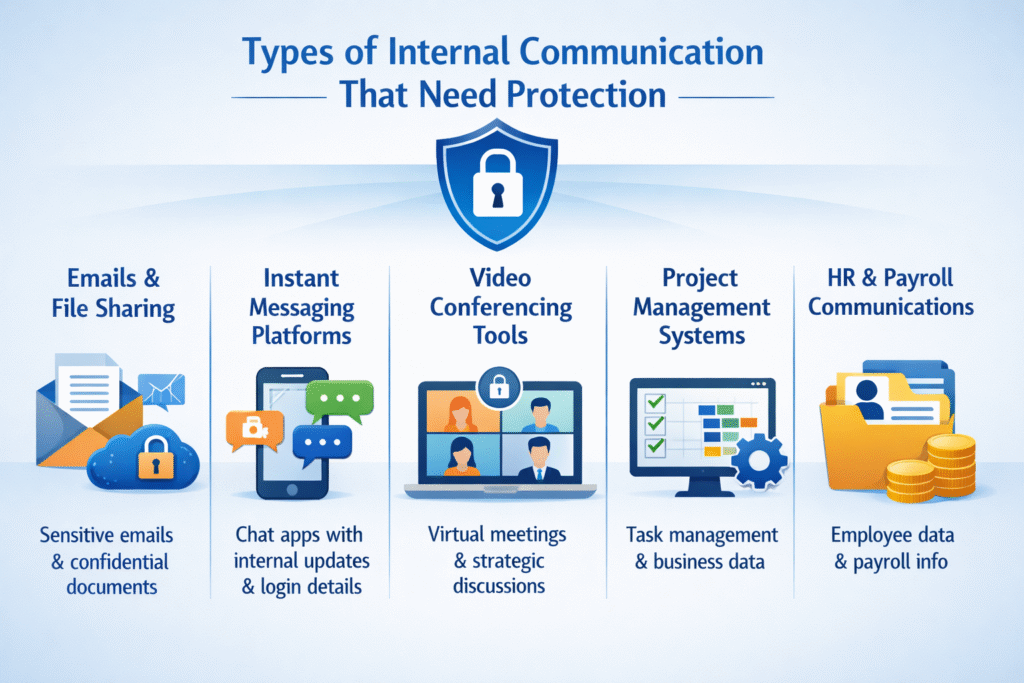
Internal communication is not limited to a single channel—it spans multiple tools and platforms used across an organisation every day. Each of these carries sensitive information, and without proper protection, they can expose the business to security breaches, financial risks, and compliance issues. Understanding the scope of these communication types highlights how broad and critical the risk truly is.

Emails and File Sharing

Emails are one of the most common forms of workplace communication, often containing confidential discussions, contracts, financial data, and client details. Similarly, file-sharing systems—especially cloud-based platforms—are used to store and exchange important documents. Without encryption, secure access controls, and proper user awareness, these channels are highly vulnerable to phishing attacks, data leaks, and unauthorised access.

Instant Messaging Platforms

Instant messaging tools enable fast and convenient communication among teams, but they can also create security risks. Employees may share sensitive information casually, including internal updates, documents, or login details. If these platforms are not secured with proper authentication and monitoring, they can become easy targets for cyber threats, particularly when accessed across multiple devices.

Video Conferencing Tools

Video conferencing platforms are now essential for remote collaboration, client meetings, and internal discussions. These sessions often involve strategic or sensitive conversations. Weak security measures—such as open meeting links or lack of participant verification—can allow unauthorised individuals to join, potentially leading to information leaks or disruptions.

Project Management Systems

Project management tools centralise workflows, tasks, and team communication. They often contain confidential business data, including project plans, internal strategies, and performance tracking. If access is not properly controlled or systems are not securely configured, this information can be exposed to internal misuse or external threats.

HR and Payroll Communications

HR and payroll communications involve highly sensitive employee information, including personal data, salary details, contracts, and performance records. A breach in this area can lead to serious legal consequences and damage employee trust. Strong data protection policies, restricted access, and compliance with data regulations are essential to safeguard this type of communication.

Key Features of Secure Internal Communication Systems

Key Features of Secure Internal Communication Systems

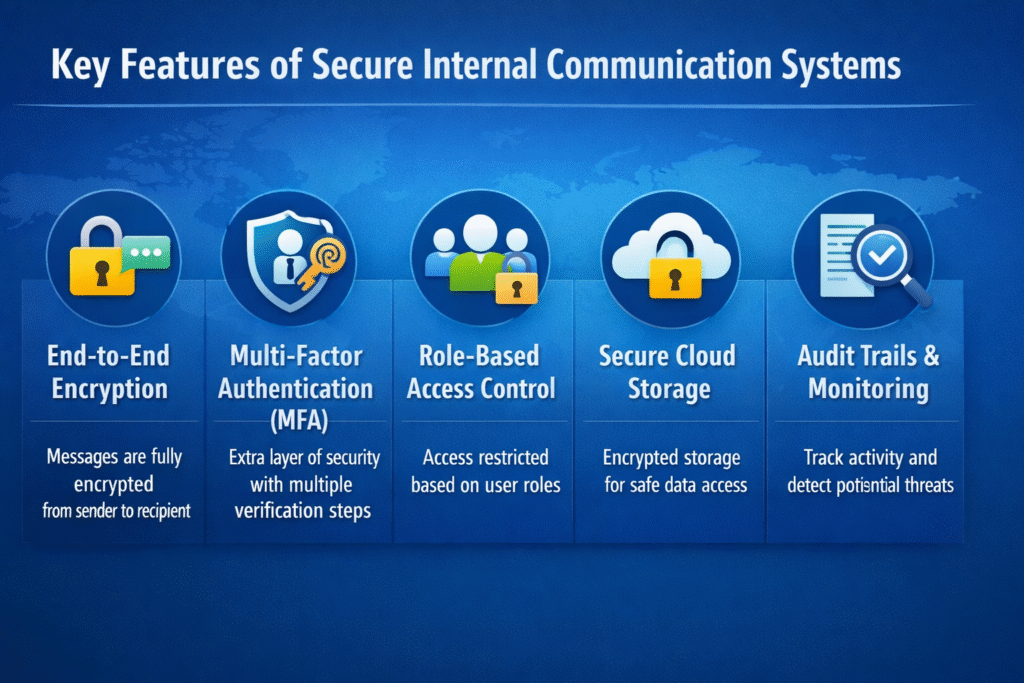
A strong internal communication system is built on security-first features that protect sensitive data while ensuring smooth collaboration across teams. Below are the essential elements every organisation should prioritise:

  • ♦  End-to-end encryption: Ensures that messages and data are encrypted from sender to recipient, preventing unauthorised access at any stage.
  • ♦  Multi-factor authentication (MFA): Adds an extra layer of protection by requiring multiple verification steps before granting access.
  • ♦  Role-based access control: Restricts information access based on user roles, ensuring employees only see what is relevant to their responsibilities.
  • ♦  Secure cloud storage: Safeguards data in encrypted cloud environments, allowing safe access from anywhere without compromising security.
  • ♦  Audit trails and monitoring: Tracks user activity and system changes, helping organisations detect risks, maintain compliance, and respond quickly to threats.

These features work together to create a secure, transparent, and reliable communication environment within any organisation.

Common Mistakes Organisations Make (Make It Relatable)

Common Mistakes Organisations Make (Make It Relatable)

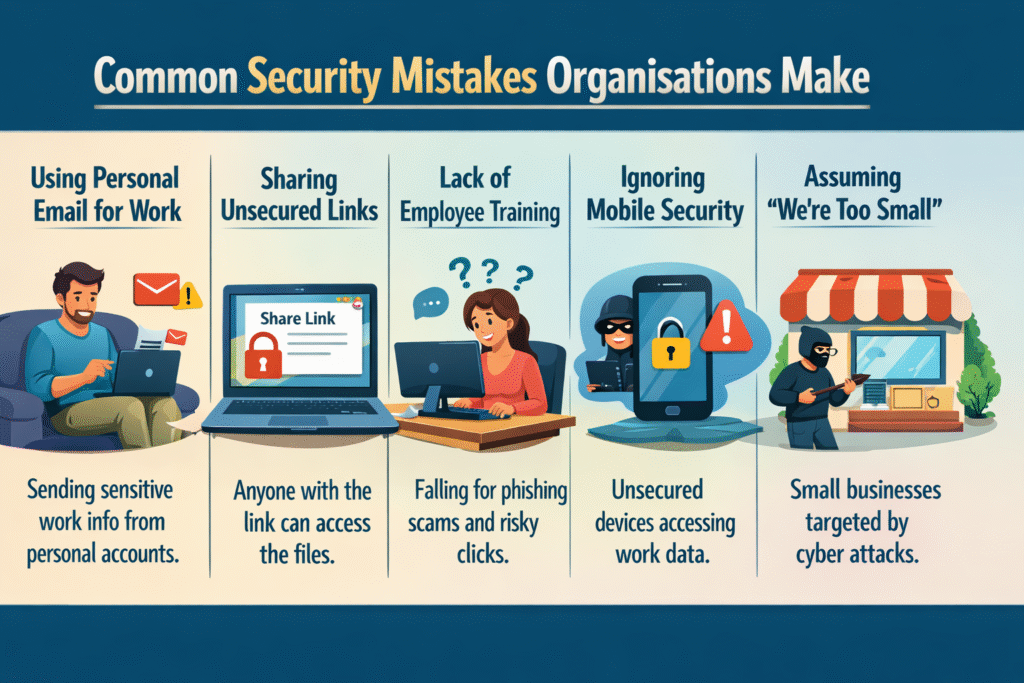
Even organisations with the best intentions often overlook simple communication habits that quietly create serious security risks. The challenge is not always a lack of tools—it’s the everyday decisions employees make without realising the consequences. Here are some common “what goes wrong” scenarios many organisations will recognise:

Using personal email for work

It might seem convenient to send a quick document from a personal email account, especially when working remotely. However, this bypasses organisational security controls, making sensitive data harder to monitor, protect, or recover if compromised.

Sharing sensitive files via unsecured links

Uploading files to free platforms and sharing open-access links is a common shortcut. The problem? Anyone with the link can potentially access the information, leaving confidential data exposed without proper encryption or access control.

Lack of employee training

Many organisations invest in security systems but overlook regular staff training. Without awareness, employees may unknowingly click phishing links, mishandle data, or ignore best practices—turning human error into the weakest link.

Overlooking mobile device security

With hybrid and remote work becoming the norm, employees frequently access work data on personal phones or tablets. Without proper security measures like device encryption or secure apps, these devices can become easy entry points for cyber threats.

Assuming small businesses are not targets

 A common misconception is that only large corporations face cyber risks. In reality, smaller organisations are often targeted because they tend to have fewer security measures in place, making them more vulnerable to attacks.

These mistakes are not rare—they’re everyday habits. Recognising them is the first step towards building a more secure and resilient internal communication culture.

Real-World Example or Mini Case Study

A mid-sized company fell victim to a phishing email that appeared to be from a trusted supplier. An employee unknowingly shared login credentials, allowing attackers to access confidential client data. Around the same time, another employee mistakenly uploaded a sensitive internal document to a public platform, exposing private information.

The consequences were severe. The company faced significant financial losses due to system recovery, regulatory fines, and compensation claims. Its reputation suffered as clients lost trust in its ability to protect sensitive data. Additionally, legal complications arose from data protection breaches, forcing the organisation to undergo strict compliance reviews and long-term corrective measures.

Best Practices to Secure Internal Communication

Best Practices to Secure Internal Communication

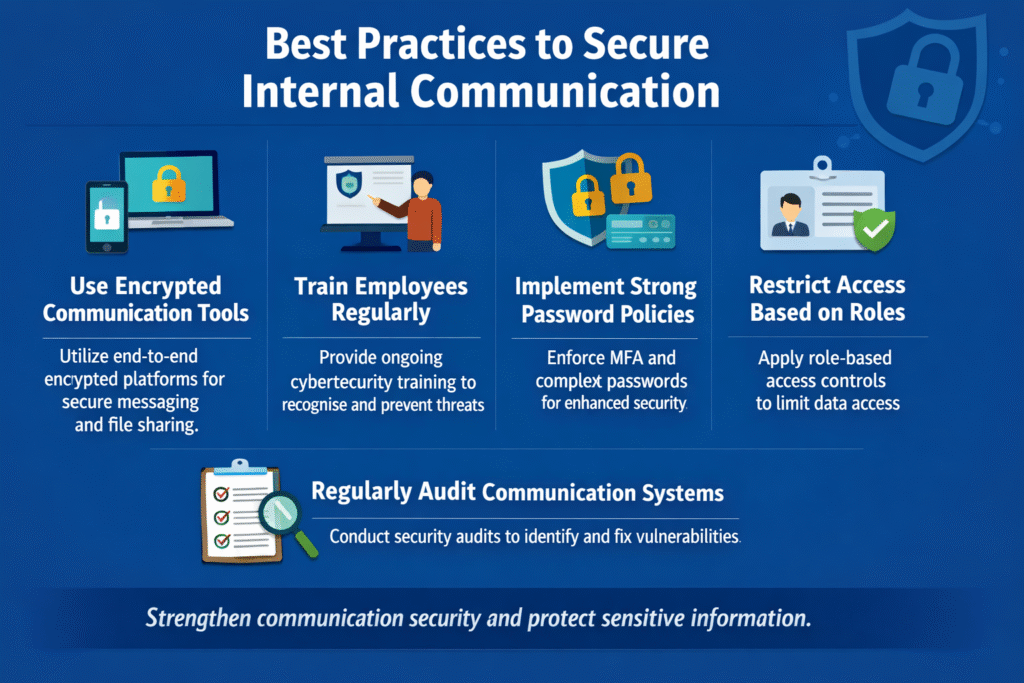
Securing internal communication is essential to protect sensitive business information, maintain trust, and ensure operational continuity. The following best practices are practical, actionable steps that organisations can implement immediately:

Use encrypted communication tools

Adopt secure platforms with end-to-end encryption to ensure that messages, files, and data remain protected from unauthorised access. Prioritise tools that offer secure file sharing, authentication controls, and compliance with recognised security standards.

Train employees regularly

  • Conduct ongoing cybersecurity training to help employees recognise risks such as phishing, social engineering, and unsafe data-sharing practices. Well-informed staff are your first line of defence against communication breaches.

Implement strong password policies

Enforce the use of complex passwords, multi-factor authentication (MFA), and regular password updates. Avoid password reuse and encourage the use of password managers to strengthen overall account security.

Restrict access based on roles

Apply role-based access control (RBAC) to ensure employees only have access to the information necessary for their job responsibilities. This reduces the risk of internal data exposure and limits potential damage from compromised accounts.

Regularly audit communication systems

Perform routine security audits to identify vulnerabilities in communication channels, tools, and processes. Monitoring and reviewing system activity helps detect unusual behaviour early and ensures compliance with internal policies.

Implementing these practices consistently will significantly strengthen your organisation’s internal communication security while reducing the risk of data breaches and unauthorised access.

Secure Communication in Remote & Hybrid Work

Secure Communication in Remote & Hybrid Work

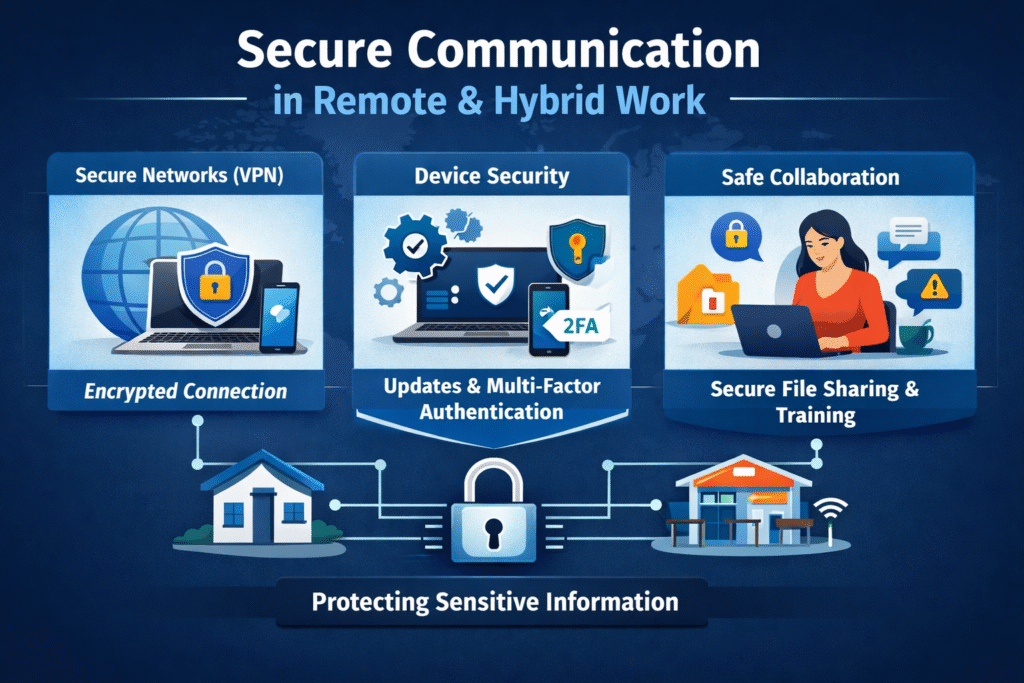
Remote and hybrid work have increased flexibility, but they also bring higher security risks. Employees often connect from home or public networks using different devices, which creates more opportunities for cyber threats such as data breaches, phishing, and unauthorised access. As a result, secure communication has become essential for protecting sensitive business information.

One of the key protections is using secure networks like VPNs. A VPN encrypts data and ensures safe communication, even on unsecured connections. Alongside this, organisations must implement strong device management policies, including regular updates, multi-factor authentication, and access controls to ensure only secure devices can connect to company systems.

Safe collaboration practices are equally important. Teams should use trusted communication tools, avoid sharing sensitive information over unsecured channels, and manage permissions carefully when sharing files. Training employees to recognise risks and follow secure practices helps reduce vulnerabilities.

Overall, combining secure networks, effective device management, and safe collaboration habits allows organisations to maintain strong communication security in remote and hybrid work environments.

Future Trends in Secure Internal Communication

Future Trends in Secure Internal Communication

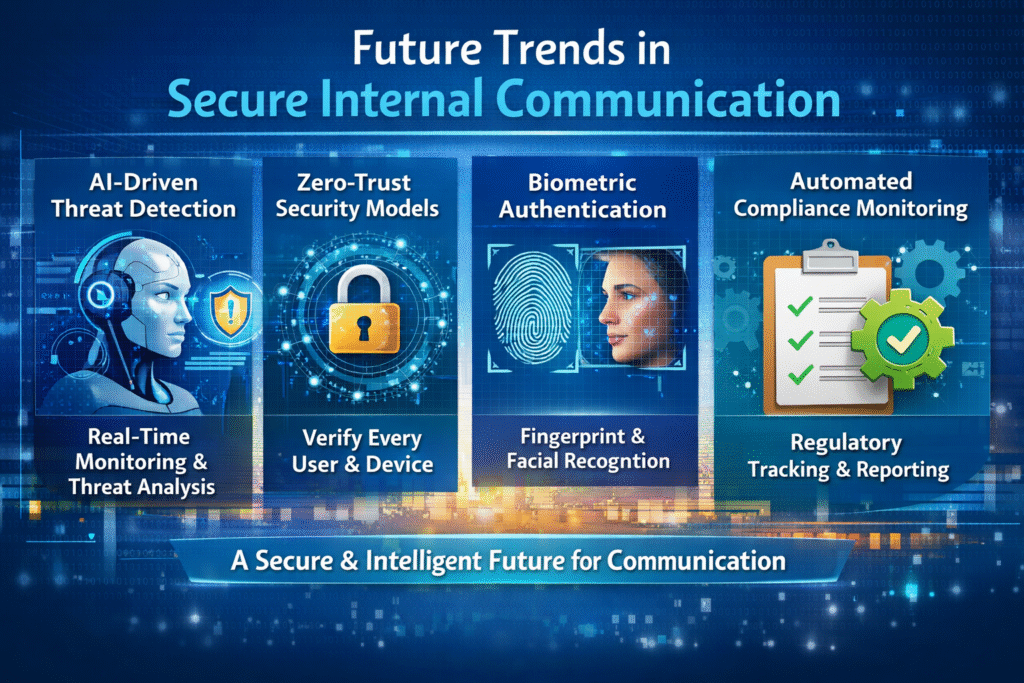
Secure internal communication is rapidly advancing as organisations face growing cyber risks and stricter data regulations. Modern security is no longer just about protection—it’s about being proactive, intelligent, and seamless. Emerging technologies are reshaping how businesses safeguard their internal communication while maintaining efficiency.

AI-Driven Threat Detection

Artificial intelligence enables real-time monitoring of communication activities, helping detect unusual behaviour and potential threats early. This reduces response time and strengthens overall security without heavy manual effort.

Because compromised credentials remain a primary entry point for attackers, an AI-powered account takeover solution can preemptively block unauthorized access to sensitive internal systems.

Zero-Trust Security Models

Zero-trust eliminates automatic trust within systems. Every user and device must be verified continuously, making it highly effective in preventing unauthorised access, especially in remote and hybrid workplaces.

Biometric Authentication

Biometric methods like fingerprint and facial recognition offer stronger security than traditional passwords. They improve both protection and user convenience by relying on unique personal traits.

Automation in Compliance Monitoring

Automation simplifies regulatory compliance by tracking communication, generating reports, and flagging risks instantly. This ensures organisations stay compliant while reducing administrative workload.

Looking Ahead

Combining these trends will create a more secure, efficient, and future-ready communication environment for organisations.

Conclusion

Secure internal communication is no longer optional—it is a critical safeguard against modern security threats, as even everyday workplace interactions can expose sensitive information if left unprotected. Organisations must recognise internal communication as a key risk area and prioritise proactive measures such as robust security systems, employee awareness, and continuous monitoring rather than relying on reactive fixes after a breach occurs. By taking action now to strengthen internal communication practices and investing in the right training and tools, businesses can build a more secure, resilient, and trustworthy working environment.

FAQs — How Many Litres in a Gallon? Quick Conversion Explained

1. What is secure internal communication in simple terms?
Secure internal communication refers to the safe exchange of information within an organisation using protected systems that prevent unauthorised access, data leaks, or cyber threats.

2. Why is internal communication security important?
It protects sensitive business data, maintains employee privacy, prevents financial loss, and ensures compliance with data protection regulations, helping organisations operate safely and efficiently.

3. What tools are used for secure communication?
Common tools include encrypted messaging platforms, secure email services, VPNs (Virtual Private Networks), collaboration tools with end-to-end encryption, and access-controlled internal systems.

4. How can companies prevent internal data leaks?
Businesses can prevent leaks by implementing strong access controls, using encryption, training employees on data security, monitoring systems regularly, and enforcing clear communication policies.

5. Is email a secure communication method?
Email can be secure if encryption and security protocols are used; however, standard email without protection is vulnerable to cyber threats and should not be relied on for highly sensitive information.

Sam Walker

Article by

Sam Walker

Sam Walker is an education specialist and author at One Education, bringing over 4 years of experience in creating practical resources and strategies to support teachers and enhance student learning.

top
Home Courses Search