What Is Social Responsibility? Meaning, Types and Advantages

April 20, 2026 | 12 minutes | 711 Readers

Should businesses focus only on profit, or do they owe something to society? Today, both individuals and organisations are increasingly expected to give back, not just take. From the brands we choose to support to the way companies impact the environment and local communities, social responsibility has become part of our everyday decision-making. Social responsibility refers to the ethical obligation of individuals and businesses to act in ways that benefit society as a whole. It goes beyond profit-making and focuses

rating

Bestselling Course

View Details SAVE 94% NOW
What Is Social Responsibility?

Should businesses focus only on profit, or do they owe something to society? Today, both individuals and organisations are increasingly expected to give back, not just take. From the brands we choose to support to the way companies impact the environment and local communities, social responsibility has become part of our everyday decision-making.

Social responsibility refers to the ethical obligation of individuals and businesses to act in ways that benefit society as a whole. It goes beyond profit-making and focuses on sustainable practices, community well-being, and responsible behaviour that creates a positive impact.

In this article, you will explore the meaning of social responsibility, its key types, and the advantages it offers to businesses, individuals, and society at large.

What Is Social Responsibility?

Social responsibility is the idea that individuals, businesses, and governments should act in ways that benefit society as a whole, not just their own interests. It involves making ethical choices, being accountable for actions, and considering the impact on people, communities, and the environment.

This concept applies to individuals, who are expected to behave responsibly in their daily lives—such as respecting others, reducing waste, and contributing positively to society. For businesses, social responsibility means operating ethically, treating employees fairly, supporting communities, and minimising environmental harm while conducting profitable activities. Governments also play a crucial role by creating laws, policies, and systems that protect public welfare, promote fairness, and ensure sustainable development.

At its core, social responsibility is about ethical behaviour and accountability. It encourages decision-making that goes beyond personal or organisational gain and considers long-term consequences for society. Being socially responsible means recognising that every action has an impact and taking ownership of those outcomes.

A helpful way to understand this is by comparing two approaches:

  •      ♦  Profit-driven mindset: Focuses primarily on maximising financial gain, often without considering social or environmental consequences.
  •      ♦  Responsible mindset: Balances profit with ethical considerations, ensuring actions contribute positively to society while maintaining sustainable success.

In today’s world, social responsibility is increasingly important, as people expect greater transparency, fairness, and integrity from individuals, organisations, and governments alike.

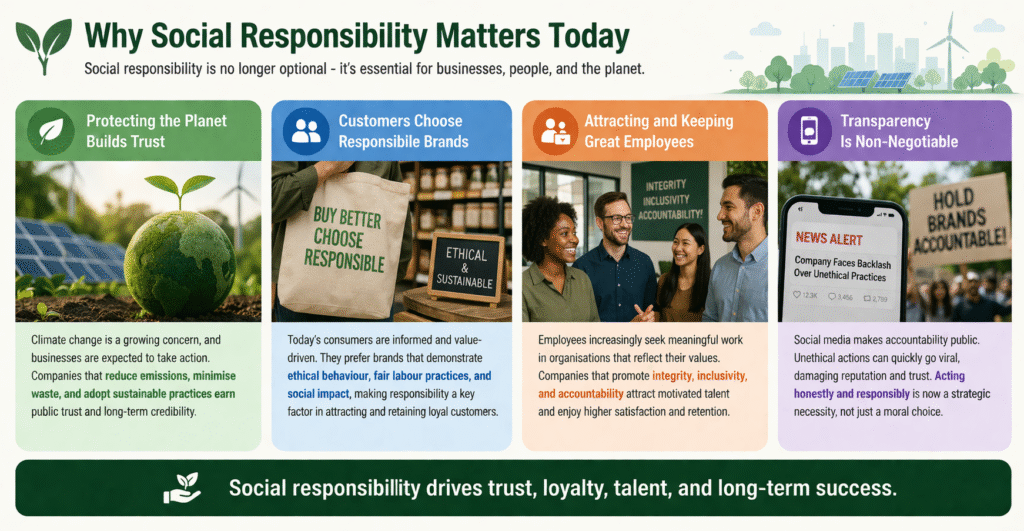
Why Social Responsibility Matters Today

Why Social Responsibility Matters Today

Social responsibility has become increasingly important in today’s world, driven largely by growing concerns around climate change. Businesses are now expected to take active steps towards sustainability, whether by reducing emissions, minimising waste, or adopting environmentally friendly practices. Organisations that show genuine commitment to protecting the planet are more likely to gain public trust and long-term credibility.

At the same time, consumer awareness is higher than ever. Modern customers are informed, value-driven, and selective about the brands they support. They often prefer companies that demonstrate ethical behaviour, fair labour practices, and social impact. As a result, businesses that prioritise responsibility are better positioned to attract and retain loyal customers in a competitive marketplace.

Ethical expectations have also expanded beyond customers to employees. Today’s workforce increasingly seeks meaningful employment in organisations that reflect their values. Companies that promote integrity, inclusivity, and accountability tend to attract motivated professionals and maintain higher levels of employee satisfaction and retention.

Furthermore, social media has made transparency unavoidable. Any unethical practice can quickly become public, affecting reputation and trust. This has made social responsibility not just a moral choice but a strategic necessity, as organisations must consistently act with honesty and accountability to maintain their standing in the public eye.

Types of Social Responsibility​

Types of Social Responsibility

Social responsibility means acting in ways that benefit society while maintaining business success. It includes environmental, ethical, philanthropic, and economic responsibilities, all of which help organisations build trust and achieve sustainable growth.

Environmental Responsibility

This focuses on reducing environmental impact through lower pollution, sustainable resource use, and effective waste management.
For example, a company may use renewable energy, reduce plastic packaging, or recycle materials to minimise waste and protect natural resources.

Ethical Responsibility

Ethical responsibility involves fair treatment, honesty, and transparency in all operations.
For instance, businesses ensuring equal pay, safe working conditions, and clear communication with customers demonstrate strong ethical standards and build long-term trust.

Find the Course That Suits You!

We create outstanding professionals in Employability, Business, Health Care, Marketing, Language, and Functional Skills. Whether you're starting or advancing your career, we turn your passion into success as the UK’s most trusted e-learning course provider.
5000+ course

Philanthropic Responsibility

This refers to giving back to society through donations, charity work, and community initiatives.
For example, organisations may support education programmes, donate to charities, or encourage employees to volunteer, helping improve community well-being.

Economic Responsibility

Economic responsibility is about balancing profit with ethical decision-making and focusing on long-term sustainability over short-term gains.
For example, a business may invest in sustainable materials or maintain fair pricing to ensure responsible growth while meeting customer expectations.

Key Advantages of Social Responsibility​

Key Advantages of Social Responsibility

Social responsibility is no longer just a moral choice—it is a strategic approach that delivers meaningful benefits for organisations, employees, customers, and society as a whole. Businesses that actively embrace ethical practices and sustainability are better positioned to succeed in today’s value-driven marketplace. Below are the key advantages of social responsibility:

Builds Trust and Reputation

Organisations that demonstrate social responsibility earn greater trust from customers and stakeholders. By acting ethically, supporting communities, and being transparent in operations, businesses can strengthen their reputation and establish long-term credibility in the market.

Increases Customer Loyalty

Modern consumers are more conscious of the values behind the brands they support. When a company aligns with social and environmental causes, customers are more likely to remain loyal, recommend the brand to others, and engage more deeply with its products or services.

Improves Employee Satisfaction

 Employees take pride in working for organisations that prioritise ethical practices and social impact. A strong commitment to social responsibility can boost morale, enhance workplace culture, and improve employee retention by creating a sense of purpose and belonging.

Supports Long-Term Growth

Sustainable and responsible practices help organisations reduce risks, manage resources efficiently, and adapt to regulatory changes. This forward-thinking approach not only protects the business but also supports consistent and long-term growth.

Positive Impact on Society

Socially responsible organisations contribute to building better communities and a healthier environment. Whether through reducing environmental impact, supporting social causes, or promoting fair practices, businesses can create lasting positive change beyond their immediate operations.

Real-World Examples of Social Responsibility​

Real-World Examples of Social Responsibility

Social responsibility becomes far more meaningful when we see how it is applied in everyday life. Across the world, organisations and individuals are taking practical steps to create positive social and environmental impact. Here are a few concise yet powerful examples:

Companies Reducing Plastic Use

Many forward-thinking companies are actively cutting down on plastic waste by redesigning their packaging. For example, brands are replacing single-use plastics with biodegradable materials or encouraging customers to use refillable containers. This not only reduces environmental harm but also promotes sustainable consumer habits.

Businesses Supporting Local Communities

Businesses are increasingly investing in the communities they operate in. This includes sourcing products from local suppliers, funding education programmes, or organising community development projects. Such efforts strengthen local economies while building trust and long-term relationships with customers.

Individuals Making a Difference

Social responsibility is not limited to organisations—individual actions matter just as much. People contribute by volunteering for social causes, reducing waste through recycling, or adopting eco-friendly habits like using reusable bags and conserving energy. These small, consistent actions collectively lead to meaningful change.

Challenges of Social Responsibility

Businesses often face higher costs when adopting socially responsible practices, such as sustainable sourcing and fair labour standards, which can impact profitability—especially for smaller organisations.

There is also a risk of greenwashing, where companies make misleading claims about their ethical efforts. This can damage consumer trust and reduce the credibility of genuine initiatives.

Another key challenge is balancing profit with ethics. Organisations must meet financial goals while maintaining responsible practices, which requires careful strategy and long-term commitment.

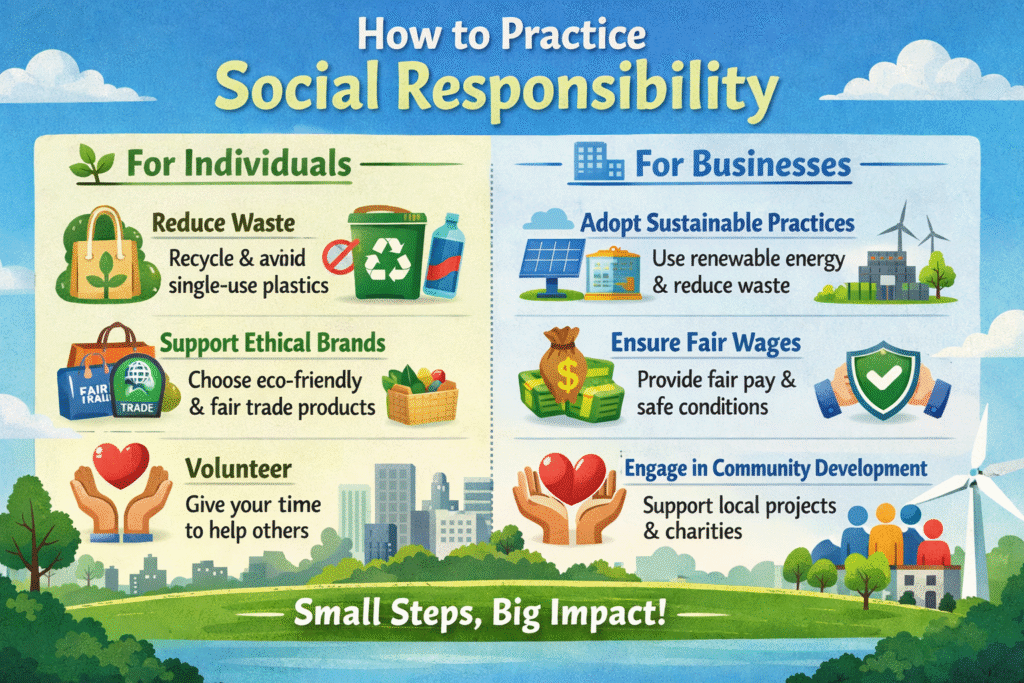
How to Practice Social Responsibility

How to Practice Social Responsibility

Social responsibility is about making conscious choices that benefit society, the environment, and future generations. Whether as an individual or a business, small, consistent actions can create meaningful impact.

For Individuals

Reduce Waste

Adopting simple habits like reusing items, recycling properly, and avoiding single-use plastics can significantly reduce your environmental footprint. Choosing sustainable alternatives helps conserve natural resources and minimise pollution.

Support Ethical Brands

Be mindful of where you spend your money. Supporting companies that prioritise fair trade, eco-friendly production, and ethical sourcing encourages responsible business practices and promotes a more sustainable economy.

Volunteer

Giving your time to community initiatives, charities, or local organisations helps address social issues directly. Volunteering not only benefits others but also builds empathy and strengthens community connections.

For Businesses

Adopt Sustainable Practices

Businesses can reduce their environmental impact by using renewable energy, minimising waste, and implementing sustainable supply chains. These efforts not only protect the environment but also improve brand reputation.

Ensure Fair Wages

Providing fair compensation and safe working conditions is essential for ethical business operations. Valuing employees fosters trust, increases productivity, and contributes to long-term organisational success.

Engage in Community Development

Actively supporting local communities through partnerships, donations, or development programmes demonstrates genuine commitment to social responsibility. It also strengthens relationships and builds a positive brand image.

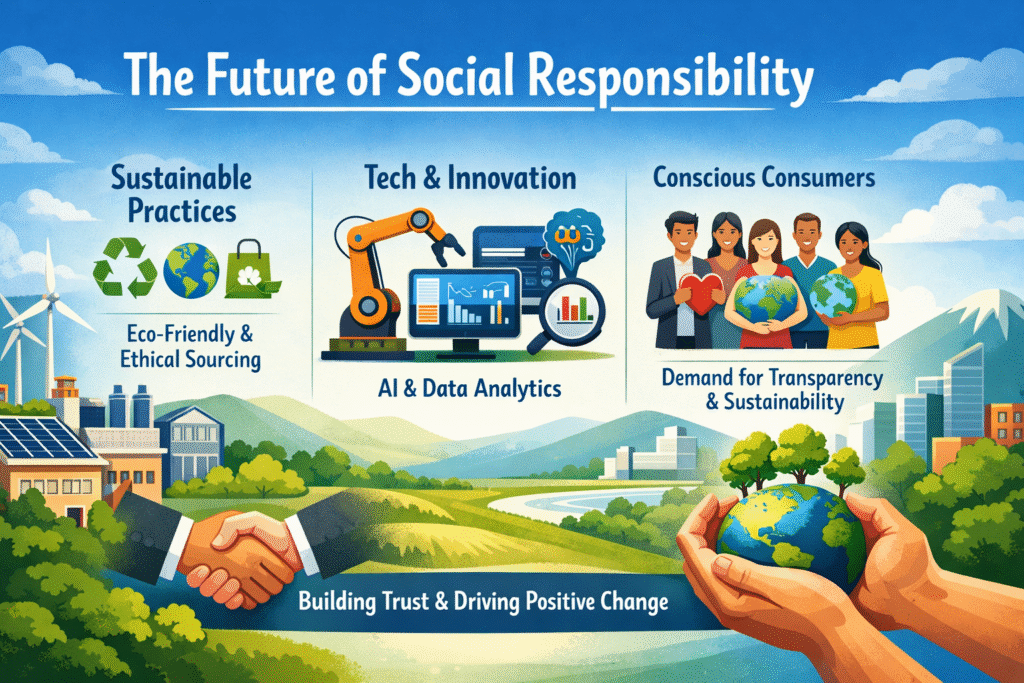
Future of Social Responsibility

Future of Social Responsibility

The future of social responsibility is being shaped by a strong shift towards sustainability and ethical accountability. Organisations are increasingly expected to go beyond profit and actively contribute to environmental protection and social well-being. Sustainable practices, such as reducing waste and promoting responsible sourcing, are no longer optional but essential for maintaining credibility and long-term success.

Technology and innovation are playing a vital role in advancing social responsibility. Tools like artificial intelligence and data analytics help organisations monitor their impact, improve transparency, and ensure ethical operations across their processes. This enables businesses to make more informed decisions and create meaningful, measurable change on a larger scale.

At the same time, growing global awareness is driving higher expectations from consumers and stakeholders. People are more informed and conscious of social and environmental issues, leading them to support organisations that align with their values. As a result, social responsibility is becoming a necessity rather than a choice, forming a key foundation for trust, reputation, and sustainable growth.

Conclusion

Social responsibility goes beyond a simple business concept—it reflects a broader commitment to ethical practices, environmental care, and positive societal impact. By understanding its meaning and types, individuals and organisations can make informed decisions that benefit not only their own growth but also the wider community. From environmental initiatives to ethical business practices, embracing social responsibility creates long-term value, builds trust, and strengthens reputation in an increasingly conscious world. Ultimately, adopting responsible actions is no longer optional but essential for sustainable success. True success today is not just measured by profit, but by impact.

FAQs — What Is Social Responsibility? Meaning, Types and Advantages

  1. 1. What is social responsibility in simple terms?
    Social responsibility refers to the ethical duty of individuals and organisations to act in ways that benefit society as a whole. It involves making decisions that positively impact the environment, community, and economy while avoiding harm.
  2. 2. What are the 4 types of social responsibility?
    The four main types of social responsibility are environmental responsibility, ethical responsibility, philanthropic responsibility, and economic responsibility. Together, these focus on sustainable practices, fair treatment, community support, and maintaining profitability with integrity.
  3. 3. Why is social responsibility important?
    Social responsibility is important because it promotes sustainable development, builds trust with stakeholders, and improves brand reputation. It also helps create a positive social and environmental impact while encouraging ethical behaviour in both individuals and organisations.
  4. 4. How can individuals be socially responsible?
    Individuals can practise social responsibility by making eco-friendly choices, supporting ethical businesses, volunteering in their communities, and being mindful of their social and environmental impact in everyday decisions.
  5. 5. What is corporate social responsibility (CSR)?
    Corporate social responsibility (CSR) is a business approach where companies take accountability for their social, environmental, and economic impact. It includes initiatives such as reducing carbon footprints, supporting communities, and ensuring ethical labour practices.

Find the Course That Suits You!

We create outstanding professionals in Employability, Business, Health Care, Marketing, Language, and Functional Skills. Whether you're starting or advancing your career, we turn your passion into success as the UK’s most trusted e-learning course provider.
5000+ course

Article by

Sam Walker

Sam Walker is an education specialist and author at One Education, bringing over 4 years of experience in creating practical resources and strategies to support teachers and enhance student learning.

top

Hear What Our Learners Say About Us

Home Search Cart