Nipah Virus is rare but highly dangerous, capable of causing severe illness and rapid outbreaks. Early detection, awareness of symptoms, and preventive measures can save lives. This guide highlights the 7 alarming symptoms, treatment steps, prevention tips, and trusted health guidelines to help you stay safe and protect your community.
What is Nipah Virus?
Nipah Virus poses a serious health risk. Severe brain inflammation and breathing problems can occur. Symptoms range from fever and headache to seizures in severe cases. Awareness of the virus can save lives before exposure becomes dangerous.
Belongs to the Henipavirus family. Spreads from animals to humans and sometimes from person to person. Dangerous outbreaks often appear suddenly and require rapid response.
First identified in Malaysia in 1999. Subsequent outbreaks appeared in Bangladesh, India, and Singapore. Fast spread in communities emphasizes the need for awareness and early action.
The virus remains rare but deadly. Understanding its nature and transmission protects families and communities. Knowledge of symptoms and transmission helps protect you and your family. Early detection saves lives.
| Fact | Details |
|---|---|
| Virus type | Henipavirus family |
| Transmission | Animal-to-human, human-to-human |
| First identified | Malaysia, 1999 |
| Outbreak regions | Bangladesh, India, Singapore |
| Severity | Rare but deadly |
How Nipah Virus Spreads?
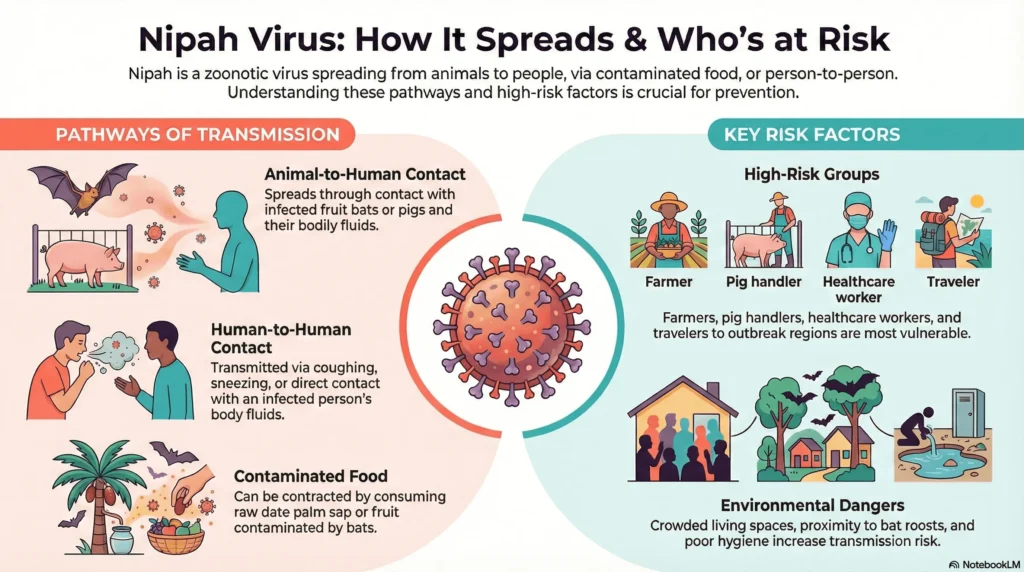
Understanding transmission serves as the first defense against infection. The virus can jump from animals to humans, humans to humans, or through contaminated food. Being aware of these pathways can reduce risk significantly.
Animal transmission:
- Fruit bats carry the virus.
- Pigs may also harbor it.
- Contact with animal fluids can transmit the virus to humans.
Human-to-human transmission:
- Coughing and sneezing spread the virus.
- Touching blood, saliva, or body fluids increases risk.
Food transmission:
- Raw date palm sap carries the virus.
- Partially eaten or contaminated fruits pose a risk.
High-risk groups:
- Farmers and pig handlers
- Healthcare workers
- Travelers to outbreak regions
Environmental risk factors:
- Crowded living spaces
- Presence of bat roosts
- Poor hygiene conditions
Avoiding sick animals, practicing hygiene, and staying alert in outbreak zones helps reduce risk. Awareness of surroundings and habits is critical to prevention. Awareness of surroundings and habits is critical to Health & Safety courses for prevention.
Why Early Detection of the Nipah Virus Matters
Spotting warning signs quickly saves lives and prevents complications. Symptoms can progress rapidly from mild fever and headache to life-threatening brain and respiratory issues. Early recognition allows faster hospital care, improving chances of survival.
Hospital care works best when symptoms appear early. Nipah Virus spreads rapidly among families and communities. Quarantine measures also rely on early detection.
Ignoring mild symptoms can lead to severe complications. Paying attention allows faster intervention, reducing risks for yourself and those around you. Acting promptly keeps the community safer and prevents outbreaks from escalating. Awareness of exposure and early symptoms can make all the difference.
Although the virus has not appeared in the UK, awareness remains important for travellers or anyone who may come into contact with people or animals from outbreak regions. Understanding the symptoms and acting quickly can help ensure prompt medical care and prevent potential spread.
UK health authorities have strict protocols for rare imported diseases like Nipah. Anyone showing symptoms after travelling to an affected region should seek urgent medical care and report their travel history.
Even though the UK has had no cases, knowing the signs and being prepared is the best defense for you and your community.
7 Alarming Symptoms to Spot Nipah Virus Early
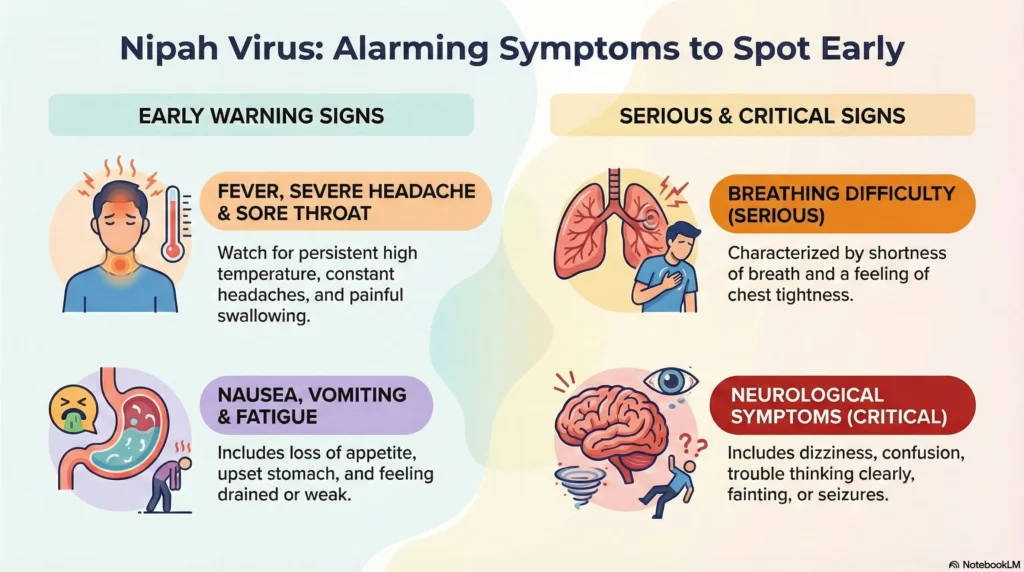
Early recognition provides the best chance for treatment. Symptoms often appear subtly and can be confused with flu or common infections. Tracking onset and combination of symptoms is essential for timely action.
| # | Symptom | What to Watch For | Urgency Level |
|---|---|---|---|
| 1 | Fever | Persistent high temperature | Early warning |
| 2 | Severe headache | Pounding, draining, constant | Early warning |
| 3 | Sore throat | Painful swallowing, scratchy feeling | Early warning |
| 4 | Nausea / Vomiting | Loss of appetite, upset stomach | Early warning |
| 5 | Fatigue | Feeling drained, weak, heavy-headed | Early warning |
| 6 | Cough / Breathing difficulty | Shortness of breath, chest tightness | Serious |
| 7 | Dizziness / Confusion / Seizures | Trouble thinking clearly, fainting, seizures | Critical |
Quick Tips:
- Avoid ignoring mild symptoms.
- Track onset of symptoms and patterns.
- Isolate if multiple signs appear.
- Seek medical attention immediately for severe symptoms.
Early recognition reduces risk of complications and prevents further spread in communities. Observing even subtle changes can save lives.
Severe Symptoms of Nipah Virus
Symptoms worsen rapidly as the virus progresses. Breathing becomes difficult, neurological issues appear, and seizures may occur. Awareness of these signs is crucial for urgent medical attention.
| Symptom | Meaning |
|---|---|
| Cough & breathing trouble | Shortness of breath, chest tightness |
| Dizziness or confusion | Virus affecting the brain, difficulty thinking clearly |
| Seizures or unconsciousness | Medical emergency requiring immediate attention |
Immediate action prevents complications and improves survival chances. Delaying treatment can result in serious, sometimes irreversible outcomes. Severe symptoms demand hospitalization and close monitoring.
What To Do If Nipah Virus Symptoms Appear?
Quick action is essential. Every minute counts when Nipah Virus is suspected. Prompt isolation and treatment protect both you and others. Avoid contact with pets or livestock until tested. Keep a record of symptoms, including their start time and severity. Sharing accurate details with doctors improves care.
Steps to take:
- Stay isolated to prevent infecting others.
- Wear a mask covering mouth and nose.
- See a doctor and report: Contact with sick people, Contact with animals, Recent travel to outbreak areas.
- Follow medical instructions carefully.
- Monitor symptoms and seek emergency care if they worsen.
Recording symptom progression helps doctors decide treatment quickly. Notify family and close contacts to minimize exposure. Avoid public transport or gatherings until cleared by a healthcare professional. Early reporting also protects the wider community.
How to Prevent Infection?
Prevention reduces the risk of contracting Nipah Virus and protects families and communities. Simple daily habits, careful food practices, and avoiding high-risk animals make a big difference. Consistency is key—prevention works only if measures are followed diligently. Awareness of surroundings and outbreak alerts enhances safety. Infection Prevention Training should teach participants practical prevention habits, safe food handling, and outbreak awareness so they can reduce risk and protect themselves and their communities.
Personal safety:
- Wash hands frequently with soap and water.
- Avoid touching face, especially mouth, nose, and eyes.
- Wear a mask in crowded or high-risk areas.
For more tips on proper hygiene, check out our handwashing techniques to reduce the risk of infection.
Food safety:
- Avoid raw date palm sap.
- Wash fruits thoroughly before eating.
- Peel fruits when possible.
- Skip damaged or partially eaten fruits.
You can enrol in the Food Safety Level 3 course to learn more about keeping food safe.
Animal safety:
- Stay away from bats, pigs, and wild animals.
- Avoid contact with sick or dead animals.
- Use gloves if handling animals becomes necessary.
Community safety:
- Avoid close contact with sick individuals.
- Don’t share utensils, towels, or bedding.
- Follow local health advisories during outbreaks.
Awareness:
- Educate yourself and others about symptoms and risks.
- Avoid myths and unverified remedies.
- Early reporting to authorities prevents larger outbreaks.
Simple, consistent precautions reduce infection risk and protect those around you. Awareness and vigilance are your strongest defenses.
Treatment & Recovery for Nipah Virus
No confirmed cure exists. Treatment focuses on supportive care to reduce symptoms and prevent complications. Quick medical attention significantly improves survival. Hospitals may provide oxygen support, IV fluids, and medications to manage fever and pain. Monitoring vital signs prevents sudden deterioration.
Supportive care includes:
- Hydration and proper nutrition to maintain strength.
- Fever and pain management using prescribed medication.
- Breathing support for patients with respiratory difficulty.
- Intensive care if complications worsen.
Recovery:
| Aspect | Details |
|---|---|
| Time | Recovery may take weeks to months, depending on severity |
| Long-term effects | Some survivors face neurological issues such as memory loss, fatigue, or motor problems |
| Follow-up | Regular medical check-ups post-recovery ensure lingering symptoms are managed |
Following doctor instructions, resting adequately, and avoiding stress supports recovery. Mental health support may help cope with post-illness fatigue and anxiety. Monitoring recovery closely ensures early detection of complications, enabling full rehabilitation and better long-term health outcomes.
Health Authorities & Guidelines
Following trusted guidance prevents misinformation and ensures safety during outbreaks. Accurate information allows proper prevention and rapid response. Communities that follow authority instructions reduce infection risk and support containment efforts.
Global organizations:
- World Health Organization (WHO): Updates and outbreak alerts.
- Centers for Disease Control (CDC): Protocols for prevention, diagnosis, and reporting.
Local authorities:
- Ministries of Health provide region-specific instructions and updates.
- Hospitals provide isolation facilities, treatment plans, and emergency protocols.
Policy measures:
- Quarantine and contact tracing help contain the virus.
- Public health advisories guide communities on high-risk areas and necessary precautions.
Relying on verified sources ensures safe practices. Avoid rumors and share correct information to help others stay safe. Community cooperation is critical during outbreaks.
Conclusion
Nipah Virus is rare but extremely dangerous. Awareness, prevention, and rapid action reduce risk significantly. Staying informed, following precautions, and reporting symptoms early can save lives. Knowledge empowers communities to prevent outbreaks before they escalate.
Even small, consistent actions make a big difference. Every precaution, no matter how minor, adds up. Staying prepared, informed, and vigilant protects both you and those around you. Awareness can prevent a single infection from becoming a community outbreak.
FAQ: Common Questions About Nipah Virus
How does Nipah differ from flu?
Nipah Virus can start like the flu with fever, headache, and fatigue. Unlike regular flu, it can quickly progress to severe brain inflammation, respiratory failure, seizures, and even death. Flu is usually mild to moderate and seasonal, while Nipah is rare, highly deadly, and can spread through animals and human-to-human contact.
Can the Virus spread casually?
Nipah does not spread casually like a cold. Transmission occurs through direct contact with infected animals (bats, pigs), contaminated food, or close contact with sick people. Touching blood, saliva, or body fluids can transmit the virus. Casual contact like passing someone on the street does not typically spread it.
Are vaccines available for Nipah Virus?
Currently, no vaccines or specific antiviral treatments exist for Nipah Virus. Supportive care in hospitals—like hydration, fever management, and respiratory support—is the main treatment. Researchers are working on vaccines, but prevention relies on hygiene, avoiding high-risk animals, and early detection.
Find the Course That Suits You!
Related Articles
Get a FREE Course
- Learn useful skills online free
- Get CPD accredited certificate
- Add it to your CV today!

Jan, 21, 2026