Top 7 Benefits of Learning British Sign Language in the UK

March 29, 2026 | 11 minutes | 527 Readers

Communication barriers still affect thousands of Deaf and hard-of-hearing people across the UK, making everyday interactions challenging in workplaces, education, and public spaces. British Sign Language (BSL) is a recognised visual language that uses hand gestures, facial expressions, and body movement to convey meaning. For many members of the Deaf community, BSL is their first or preferred language, playing a vital role in ensuring effective communication and social inclusion. As awareness of accessibility and equality continues to grow, the importance of learning

rating

Bestselling Course

View Details SAVE 94% NOW
British Sign Language

Communication barriers still affect thousands of Deaf and hard-of-hearing people across the UK, making everyday interactions challenging in workplaces, education, and public spaces. British Sign Language (BSL) is a recognised visual language that uses hand gestures, facial expressions, and body movement to convey meaning. For many members of the Deaf community, BSL is their first or preferred language, playing a vital role in ensuring effective communication and social inclusion.

As awareness of accessibility and equality continues to grow, the importance of learning BSL is becoming more evident across different sectors in the UK. From improving career prospects to supporting inclusive communities, this valuable skill offers both personal and professional advantages. In this article, you will explore the top seven benefits of learning British Sign Language and understand why it is an increasingly relevant skill today.

What is British Sign Language?

British Sign Language (BSL) is a recognised language in the United Kingdom, used mainly by Deaf and hard-of-hearing people to communicate effectively in daily life. It has its own grammar, structure, and vocabulary, which are different from spoken and written English. BSL was officially recognised as a language in the UK, highlighting its cultural and social importance within the Deaf community.

BSL communication is visual rather than spoken. It uses a combination of hand gestures, facial expressions, body movements, and lip patterns to convey meaning and emotions clearly. Many Deaf individuals, their families, interpreters, educators, and support professionals use BSL to interact, access services, and participate fully in society. Learning BSL helps improve inclusivity, communication skills, and awareness of Deaf culture.

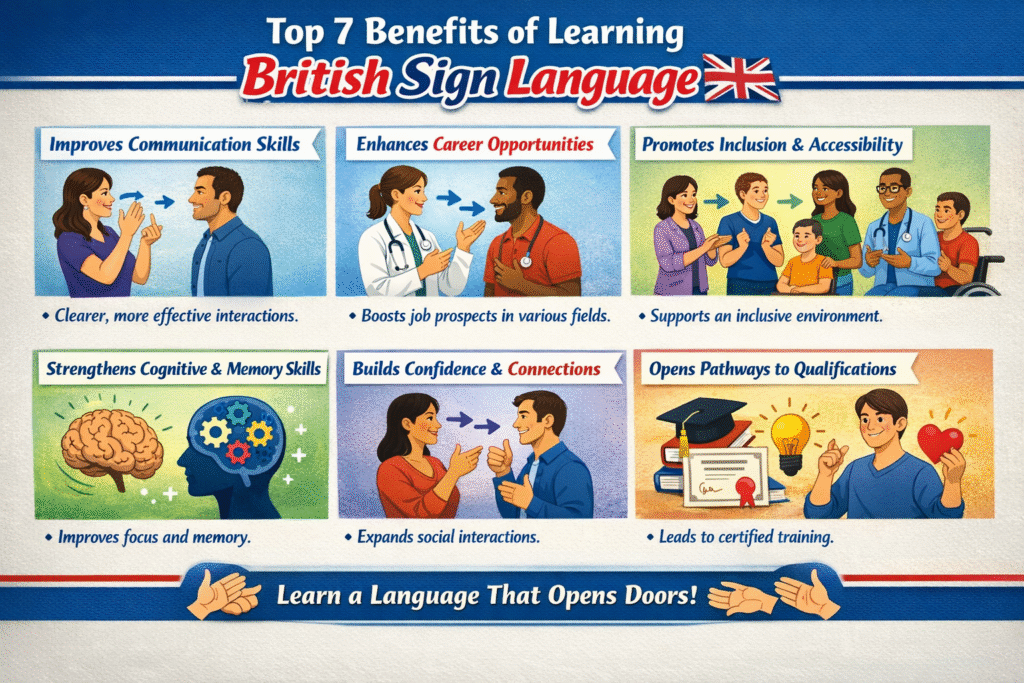
Top 7 Benefits of Learning British Sign Language

Top 7 Benefits of Learning British Sign Language

Learning British Sign Language offers many valuable benefits for both personal and professional development. It improves communication skills, enhances career opportunities in education and healthcare, and helps you connect with the Deaf community. Learning this language also strengthens memory, boosts confidence, and promotes inclusivity. Additionally, it supports cultural awareness and can make your CV more attractive to employers in various sectors.

Benefit 1 – Improves Communication Skills

Learning sign language helps you interact more confidently with Deaf individuals and strengthens your ability to express ideas without relying only on spoken words. It also builds awareness of body language, facial expressions, and visual cues, making your overall communication clearer and more effective in both personal and professional settings.

  • ♦  Helps communicate with Deaf individuals confidently and respectfully.
  • ♦  Enhances overall non-verbal communication and visual expression skills.
  • ♦  Improves listening, observation, and interpersonal understanding.
  • ♦  Builds confidence in social and workplace interactions.
  • ♦  Supports inclusive communication in diverse environments.

Benefit 2 – Enhances Career Opportunities

Developing inclusive communication skills can significantly improve your career prospects across various industries. Employers increasingly look for professionals who can interact confidently with diverse individuals and support inclusive environments. These skills demonstrate empathy, adaptability, and professionalism in the workplace.

  • ♦  Valuable in healthcare settings when supporting patients with communication needs
  • ♦  Helpful in education roles to assist learners from diverse backgrounds
  • ♦  Strengthens customer service by improving client interaction and satisfaction
  • ♦  Supports effective communication in social care and community support roles
  • ♦  Shows employers your commitment to inclusion and professional development

Find the Course That Suits You!

We create outstanding professionals in Employability, Business, Health Care, Marketing, Language, and Functional Skills. Whether you're starting or advancing your career, we turn your passion into success as the UK’s most trusted e-learning course provider.
5000+ course

Benefit 3 – Promotes Inclusion and Accessibility

Promoting inclusion and accessibility helps create fair environments where everyone can participate, contribute, and succeed. It encourages understanding of diverse needs and supports the removal of barriers in workplaces, education, and communities.

  • ♦  Strengthens equality and diversity practices across organisations and social settings.
  • ♦  Encourages accessible communication, facilities, and learning opportunities for all.
  • ♦  Supports inclusive workplace cultures that value different abilities and backgrounds.
  • ♦  Helps build welcoming communities where everyone feels respected and supported.

Benefit 4 – Strengthens Cognitive and Memory Skills

Learning a visual language activates different areas of the brain, helping learners process and retain information more effectively. It encourages sharper focus, better coordination, and stronger mental flexibility in everyday tasks.

  • ♦  Enhances brain activity through visual processing and spatial awareness.
  • ♦  Improves concentration during communication and learning situations.
  • ♦  Develops multitasking skills by combining movement, memory, and observation.
  • ♦  Strengthens short-term and long-term memory through consistent practice.

Benefit 5 – Builds Confidence and Social Connections

Building confidence and forming social connections is a key benefit of developing new communication skills. As individuals become more comfortable expressing themselves, they find it easier to engage with others, participate in group activities, and create supportive relationships. This not only improves personal wellbeing but also enhances opportunities in education, work, and everyday life.

  • ♦  Encourages meaningful interactions with wider communities.
  • ♦  Helps overcome communication anxiety and social hesitation.
  • ♦  Improves self-esteem through successful conversations and participation.
  • ♦  Supports stronger relationships in personal and professional settings.
  • ♦  Creates a sense of belonging and social inclusion

Benefit 6 – Opens Pathways to Professional Qualifications

Gaining foundational knowledge in this subject helps learners progress towards recognised professional qualifications and structured career development routes. It creates a clear academic and vocational pathway for those aiming to specialise further or enter related industries with confidence.

  • ♦  Progression opportunities to Level 2 and Level 3 accredited qualifications.
  • ♦  Direct preparation for advanced interpreter and communication training programmes.
  • ♦  Access to specialised career routes in education and support services.
  • ♦  Strong foundation for professional development within inclusive workplace environments.
  • ♦  Increased chances of pursuing sector-specific certifications and training.

Benefit 7 – Supports Personal Development

Learning new skills plays a vital role in personal growth by helping individuals become more self-aware, confident, and adaptable in different situations. It also strengthens communication abilities and encourages a more open and understanding mindset in both personal and professional environments.

  • ♦  Develops empathy through better understanding of diverse people and perspectives
  • ♦  Builds awareness of social, cultural, and communication differences
  • ♦  Improves confidence in everyday interactions and teamwork situations
  • ♦  Enhances personal profile with valuable transferable life skills
  • ♦  Adds credibility and practical strengths that support long-term self-development
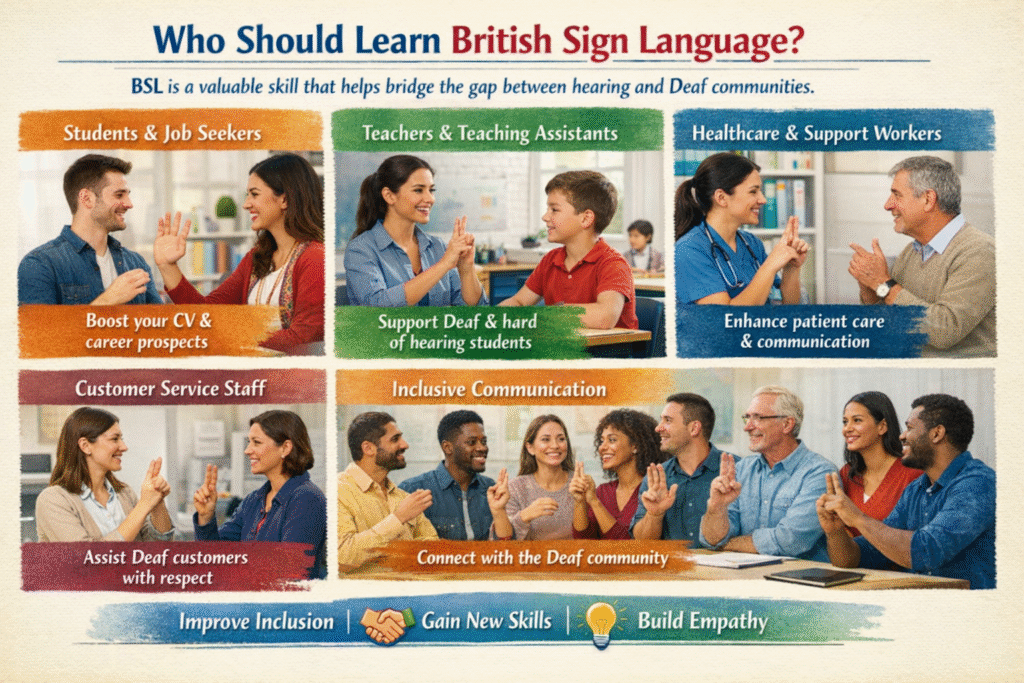
Who Should Learn British Sign Language?

Who Should Learn British Sign Language?

British Sign Language (BSL) is a valuable skill that supports inclusive communication and helps bridge gaps between hearing and Deaf communities. Learning BSL can benefit people from many backgrounds, especially those who want to improve their communication abilities, enhance career prospects, or develop meaningful social connections. As awareness around accessibility and inclusion continues to grow in the UK, BSL skills are becoming increasingly relevant in both professional and personal settings.

Students and job seekers can gain a competitive advantage by adding BSL to their CV, showing employers their commitment to diversity and communication. Teachers and teaching assistants can better support Deaf or hard-of-hearing learners in classrooms, creating a more inclusive learning environment. Healthcare and support workers can improve patient care by communicating more effectively and building trust with service users.

Customer service professionals benefit from BSL by offering accessible and respectful support to Deaf customers, improving overall service quality. Finally, anyone interested in inclusive communication can learn BSL to connect with new communities, develop empathy, and contribute positively to a more inclusive society.

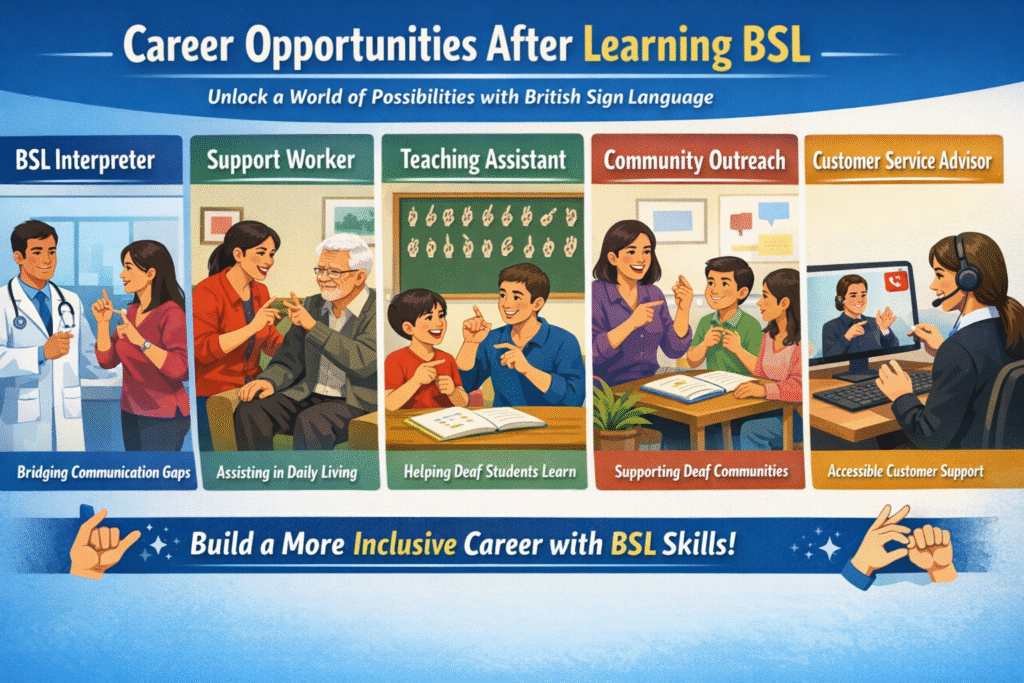
Career Opportunities After Learning BSL​

Career Opportunities After Learning BSL

Learning British Sign Language (BSL) can open doors to a wide range of meaningful and rewarding career opportunities. As awareness around accessibility and inclusive communication continues to grow in the UK, professionals with BSL skills are increasingly valued across education, healthcare, customer service, and community support sectors. Whether you aim to work directly with deaf individuals or enhance your employability in people-focused roles, BSL can strengthen both your professional profile and interpersonal skills.

BSL Interpreter

BSL interpreters play a vital role in bridging communication gaps between deaf and hearing individuals. They work in settings such as hospitals, courts, schools, and public events, ensuring accurate and respectful communication. With experience and further qualifications, interpreters can access freelance or specialist opportunities.

Support Worker

Support workers with BSL skills can assist deaf or hard-of-hearing individuals in daily activities, education, or independent living. This role is highly valued in care homes, supported housing services, and community organisations focused on inclusion and wellbeing.

Teaching Assistant

Schools and educational institutions often seek teaching assistants who can use BSL to support deaf learners. This role involves helping students understand lessons, encouraging participation, and promoting a positive learning environment.

Community Outreach Worker

Community outreach workers engage with deaf communities to provide guidance, organise programmes, and connect individuals with essential services. BSL skills help build trust and improve access to education, employment, and healthcare support.

Customer Service Advisor

Organisations are increasingly prioritising accessible customer support. Advisors who understand BSL can assist deaf customers through in-person interactions or video relay services, enhancing service quality and customer satisfaction.

Developing BSL skills not only creates diverse career pathways but also contributes to building a more inclusive society where communication barriers are reduced.

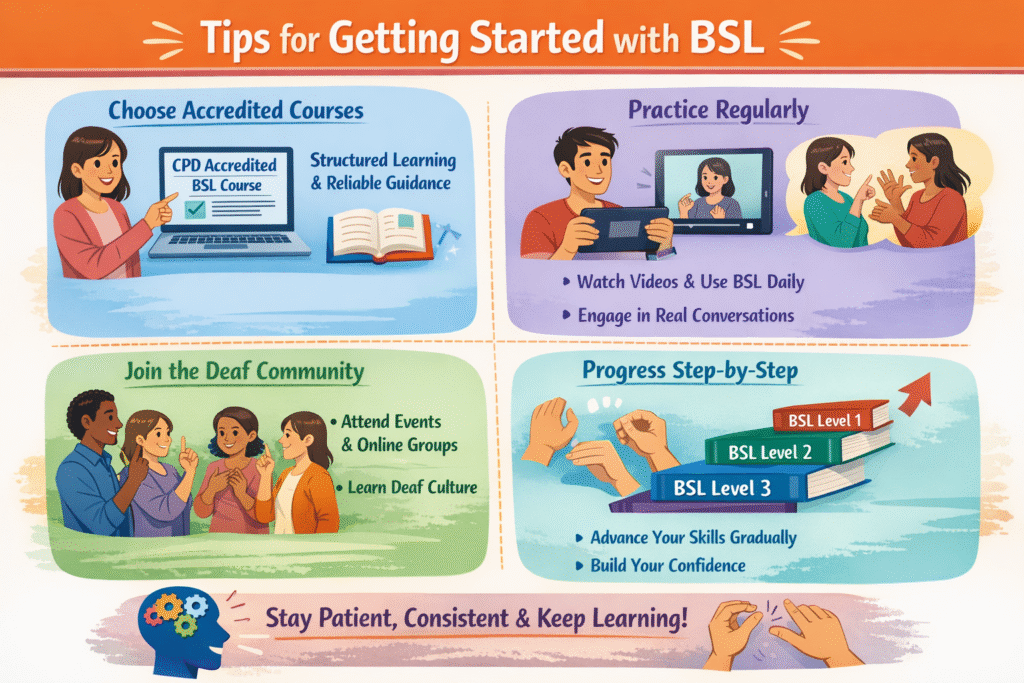
Tips for Getting Started with BSL​

Tips for Getting Started with BSL

Starting your journey in British Sign Language (BSL) can be both exciting and rewarding. One of the first steps is to choose CPD-accredited or recognised courses that provide structured learning and reliable guidance. These courses help you understand basic signs, grammar, and communication techniques while building confidence from the beginning. A clear learning path ensures you stay motivated and make consistent progress.

Regular practice is essential when learning BSL. Watching videos, repeating signs, and engaging in real conversations can significantly improve your fluency. Try to use BSL daily, even in short sessions, to strengthen memory and hand coordination. Joining Deaf community events or online groups also provides valuable real-world exposure and helps you understand Deaf culture and communication styles.

Progressing step-by-step through qualification levels allows you to build skills gradually. As your confidence grows, you can move from basic conversations to more advanced signing. Staying patient, consistent, and open to learning will make your BSL journey more enjoyable and effective.

Conclusion

Learning British Sign Language (BSL) holds growing importance in modern UK society as awareness of accessibility and inclusive communication continues to rise. By understanding BSL, individuals can help bridge communication gaps, support the Deaf community, and contribute to a more equal and connected environment. As public services, workplaces, and educational institutions increasingly value inclusive skills, BSL knowledge is becoming both socially meaningful and professionally relevant.

Beyond its societal value, learning BSL offers strong career advantages, particularly in education, healthcare, social care, and customer-facing roles. It also enriches personal development by improving communication skills, empathy, and cultural understanding. Whether aiming to enhance employability or build meaningful connections, starting to learn BSL today can open doors to rewarding opportunities and make a lasting positive impact.

FAQs – Top 7 Benefits of Learning British Sign Language in the UK

  1. 1. Is British Sign Language difficult to learn?
    British Sign Language (BSL) is not considered difficult, but it requires consistent practice. Since it is a visual language with its own grammar and structure, learners usually find it engaging and rewarding.
  2. 2. How long does it take to learn basic BSL?
    Basic BSL skills can often be developed within a few weeks to a few months. The learning speed depends on study time, regular practice, and exposure to real-life communication situations.
  3. 3. Can learning BSL improve job prospects in the UK?
    Yes, BSL skills can enhance employability in sectors such as education, healthcare, social care, and customer service. Employers value communication skills that support inclusion and accessibility.
  4. 4. Is BSL recognised as an official language?
    British Sign Language is legally recognised as a language in the UK. This recognition highlights its importance in supporting Deaf communities and promoting inclusive communication.
  5. 5. Can I learn BSL online?
    Yes, many online BSL courses are available that allow flexible learning. Online study enables learners to build signing skills through video lessons, practice exercises, and assessments at their own pace.

Find the Course That Suits You!

We create outstanding professionals in Employability, Business, Health Care, Marketing, Language, and Functional Skills. Whether you're starting or advancing your career, we turn your passion into success as the UK’s most trusted e-learning course provider.
5000+ course
Sam Walker

Article by

Sam Walker

Sam Walker is an education specialist and author at One Education, bringing over 4 years of experience in creating practical resources and strategies to support teachers and enhance student learning.

top

Hear What Our Learners Say About Us

Home Courses Search