Who Should Consider a Career in Health and Social Care?

June 22, 2026 | 14 minutes | 10 Readers

Have you ever felt fulfilled after helping someone through a difficult situation? Do you enjoy supporting others, solving problems, and making a positive difference in people’s lives? If so, a career in health and social care could be more suitable for you than you realise. Health and social care is a diverse and rewarding sector dedicated to improving people’s physical, emotional, and social wellbeing. While many people associate the field with doctors and nurses, it actually offers a wide range

Have you ever felt fulfilled after helping someone through a difficult situation? Do you enjoy supporting others, solving problems, and making a positive difference in people’s lives? If so, a career in health and social care could be more suitable for you than you realise.

Health and social care is a diverse and rewarding sector dedicated to improving people’s physical, emotional, and social wellbeing. While many people associate the field with doctors and nurses, it actually offers a wide range of career opportunities, including care workers, support workers, counsellors, social workers, occupational therapists, and community support professionals. These roles all play a vital part in helping individuals live healthier, safer, and more independent lives.

Whether you are passionate about caring for others, advocating for vulnerable individuals, or supporting communities, health and social care provides meaningful career paths that allow you to make a lasting impact every day. But who is best suited to work in this sector? In this article, we explore the qualities, interests, and strengths that make health and social care an excellent career choice.

What Does a Career in Health and Social Care Involve?

A career in health and social care focuses on supporting people of all ages to live healthier, safer, and more independent lives. While many people associate the sector with medical treatment, much of the work is about improving wellbeing and helping individuals maintain their quality of life.

Professionals support children, adults, older people, and vulnerable individuals by promoting independence, providing practical and emotional support, and safeguarding those at risk. They work in a variety of settings, including hospitals, care homes, schools, community services, and private homes.

Health and social care workers also collaborate with healthcare professionals, social workers, teachers, and families to ensure individuals receive the support they need. Through their work, they help people overcome challenges, stay connected to their communities, and lead more fulfilling lives.

10 Signs Health and Social Care Could Be the Right Career for You

Choosing the right career means finding a role that matches your strengths, values, and interests. Health and social care is a rewarding sector that allows you to make a real difference in people’s lives. Here are 10 signs it could be the right career path for you.

1. You Genuinely Enjoy Helping Others

Health and social care is centred on supporting people and improving their quality of life. Whether helping elderly individuals, people with disabilities, or vulnerable children, your work can have a lasting positive impact.

2. You Are a Good Listener

Professionals in this sector spend a lot of time listening to people’s concerns and experiences. Active listening helps build trust, understand individual needs, and provide effective support.

3. You Have Strong Empathy

Many individuals face challenges such as illness, mental health difficulties, bereavement, or isolation. Empathy helps you understand their experiences and provide compassionate, meaningful care.

4. You Stay Calm Under Pressure

Unexpected situations can arise at any time, including emergencies, safeguarding concerns, or challenging behaviours. Remaining calm helps you make sound decisions and support others effectively.

5. You Want a Career With Purpose

Many people choose health and social care because it offers meaningful work. Helping others achieve greater wellbeing and independence can provide a strong sense of fulfilment beyond financial rewards.

6. You Enjoy Working With Diverse People

You’ll work with individuals from different ages, cultures, backgrounds, and life experiences. This variety keeps the role engaging and ensures that no two days are the same.

7. You Are Interested in Mental Health and Wellbeing

Modern health and social care focuses on more than physical health. Professionals play an important role in supporting mental wellbeing, emotional health, community care, and holistic support.

8. You Are Patient and Resilient

Many individuals require long-term support. Patience, consistency, and encouragement are essential qualities that help people make progress over time.

9. You Want Excellent Career Progression Opportunities

The sector offers a wide range of career paths, including Care Assistant, Healthcare Assistant, Senior Support Worker, Social Care Coordinator, Care Manager, Social Worker, and Occupational Therapy Assistant. Continuous professional development supports long-term career growth.

10. You Want Job Security in a Growing Sector

Growing healthcare demands, ageing populations, increasing social care needs, and greater awareness of mental health are driving demand for skilled professionals. This makes health and social care one of the most stable and secure career sectors.

If you want to expand your knowledge and gain a recognised qualification, you can enrol on this course and complete it through our website. This programme is designed to help you build strong skills in health and social care while working towards certification.

Start your learning journey today and boost your career opportunities with flexible online study.

Course: ATHE Level 3 Diploma in Health and Social Care

Health and Social Care Careers You May Not Know About

Health and Social Care Careers You May Not Know About

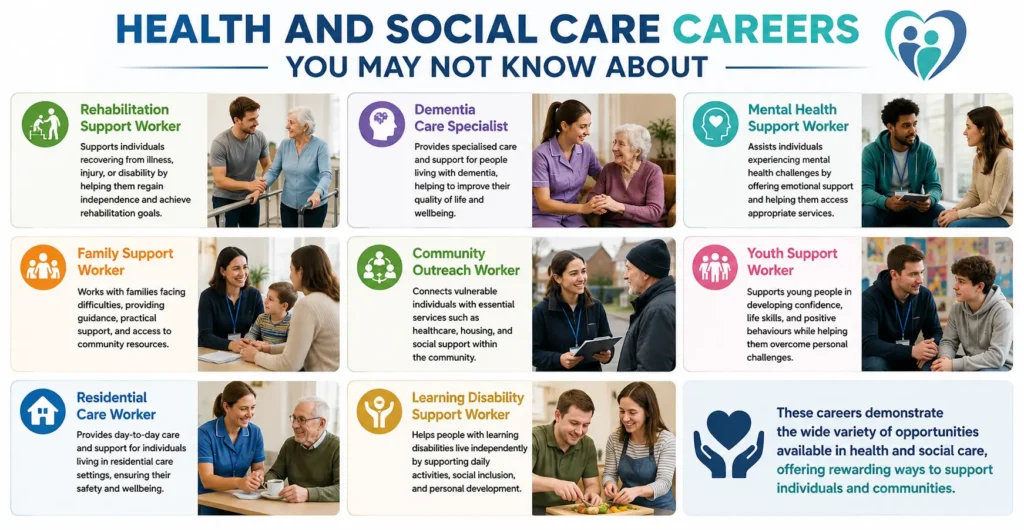
While many people associate health and social care with nursing or care assistant roles, the sector offers many lesser-known career paths that make a significant difference in people’s lives.

Rehabilitation Support Worker

Supports individuals recovering from illness, injury, or disability by helping them regain independence and achieve rehabilitation goals.

Dementia Care Specialist

Provides specialised care and support for people living with dementia, helping to improve their quality of life and wellbeing.

Mental Health Support Worker

Assists individuals experiencing mental health challenges by offering emotional support and helping them access appropriate services.

Family Support Worker

Works with families facing difficulties, providing guidance, practical support, and access to community resources.

Community Outreach Worker

Connects vulnerable individuals with essential services such as healthcare, housing, and social support within the community.

Youth Support Worker

Supports young people in developing confidence, life skills, and positive behaviours while helping them overcome personal challenges.

Residential Care Worker

Provides day-to-day care and support for individuals living in residential care settings, ensuring their safety and wellbeing.

Learning Disability Support Worker

Helps people with learning disabilities live independently by supporting daily activities, social inclusion, and personal development.

These careers demonstrate the wide variety of opportunities available in health and social care, offering rewarding ways to support individuals and communities.

Who May Find This Career More Challenging

Who May Find This Career More Challenging?

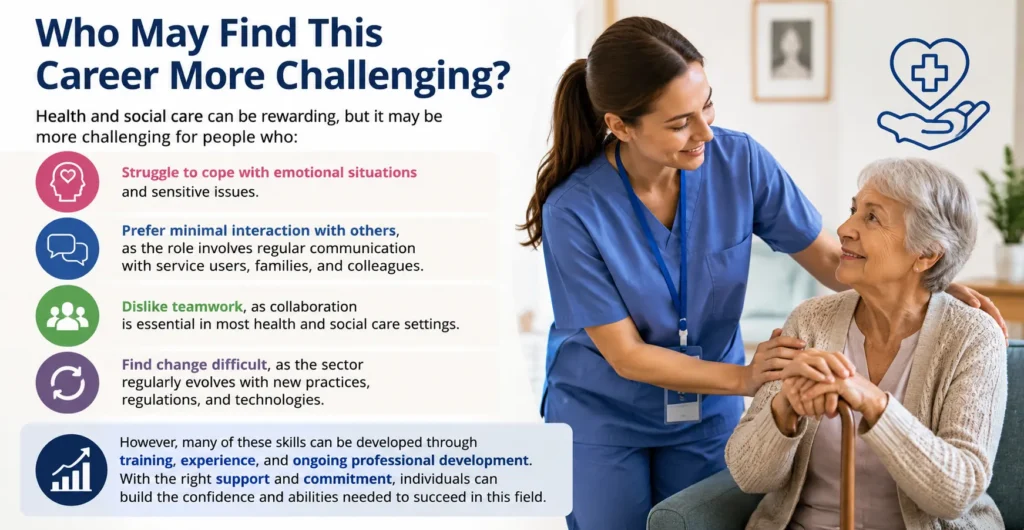
Health and social care can be rewarding, but it may be more challenging for people who:

  • ♦  Struggle to cope with emotional situations and sensitive issues.
  • ♦  Prefer minimal interaction with others, as the role involves regular communication with service users, families, and colleagues.
  • ♦  Dislike teamwork, as collaboration is essential in most health and social care settings.
  • ♦  Find change difficult, as the sector regularly evolves with new practices, regulations, and technologies.

However, many of these skills can be developed through training, experience, and ongoing professional development. With the right support and commitment, individuals can build the confidence and abilities needed to succeed in this field.

Essential Skills for Success in Health and Social Care

Essential Skills for Success in Health and Social Care

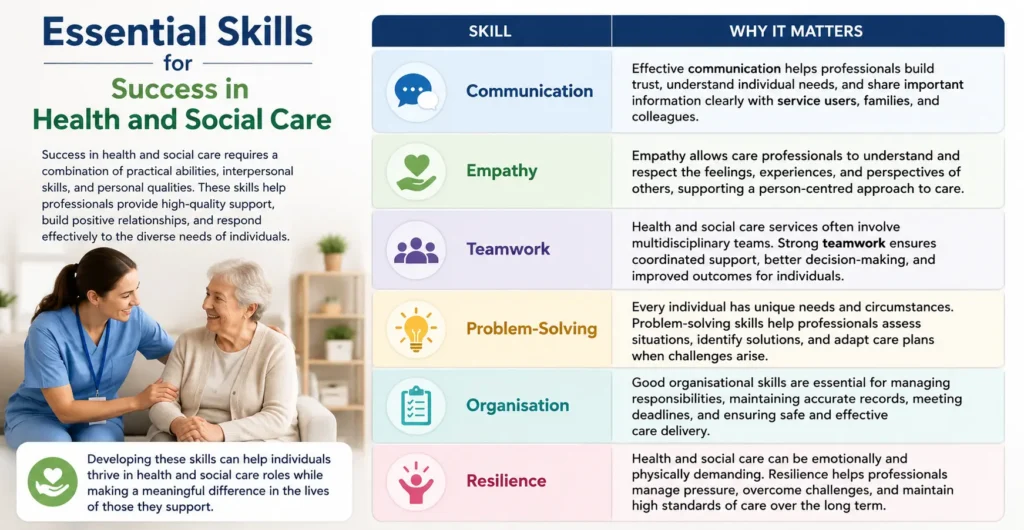
Success in health and social care requires a combination of practical abilities, interpersonal skills, and personal qualities. These skills help professionals provide high-quality support, build positive relationships, and respond effectively to the diverse needs of individuals. Whether working in residential care, community support, healthcare settings, or social services, the following skills are essential for delivering safe, compassionate, and person-centred care.

Skill Why It Matters
Communication Effective communication helps professionals build trust, understand individual needs, and share important information clearly with service users, families, and colleagues.
Empathy Empathy allows care professionals to understand and respect the feelings, experiences, and perspectives of others, supporting a person-centred approach to care.
Teamwork Health and social care services often involve multidisciplinary teams. Strong teamwork ensures coordinated support, better decision-making, and improved outcomes for individuals.
Problem-Solving Every individual has unique needs and circumstances. Problem-solving skills help professionals assess situations, identify solutions, and adapt care plans when challenges arise.
Organisation Good organisational skills are essential for managing responsibilities, maintaining accurate records, meeting deadlines, and ensuring safe and effective care delivery.
Resilience Health and social care can be emotionally and physically demanding. Resilience helps professionals manage pressure, overcome challenges, and maintain high standards of care over the long term.

Developing these skills can help individuals thrive in health and social care roles while making a meaningful difference in the lives of those they support.

How to Start a Career in Health and Social Care

Starting a career in health and social care can be both rewarding and fulfilling. The first step is to build a strong understanding of the sector through health and social care courses, which cover key topics such as safeguarding, communication, and person-centred care.

CPD training can further enhance your knowledge and demonstrate your commitment to professional development. Alongside training, volunteering opportunities with charities, care homes, hospitals, or community organisations can help you gain valuable experience and develop essential skills.

Work placements are another excellent way to gain practical exposure to real care settings and understand day-to-day responsibilities. Many professionals also begin their careers in entry-level roles such as Care Assistant, Support Worker, or Healthcare Assistant, where they can gain hands-on experience while learning on the job.

As the sector continues to evolve, continuous professional development is important for keeping your skills up to date and supporting long-term career growth.

Start Your Journey Today

Build your foundation through recognised health and social care training, gain practical experience through volunteering and placements, and take the first step towards a successful career in health and social care.

Conclusion

A career in health and social care is an excellent choice for individuals who are compassionate, patient, and committed to making a positive difference in the lives of others. Whether you are interested in supporting vulnerable people, promoting wellbeing, or contributing to the healthcare system, this field offers a wide range of rewarding opportunities. With strong demand for skilled professionals and clear pathways for personal and professional growth, health and social care can provide a meaningful and fulfilling career for those who are passionate about helping others and improving communities.

FAQs — Who Should Consider a Career in Health and Social Care?

1. What type of person is suited to a career in health and social care?
People who are compassionate, patient, empathetic, and enjoy helping others are well suited to this field.
2. Do I need previous experience to start a career in health and social care?
No. Many entry-level roles and training programmes are available for beginners.
3. Is health and social care a good career choice?
Yes. It offers meaningful work, strong job demand, and opportunities for career progression.
4. Who can work in health and social care?
School leavers, career changers, graduates, and individuals returning to work can all pursue careers in this sector.
5. What skills are important in health and social care?
Communication, teamwork, problem-solving, empathy, and organisational skills are highly valued.
6. What career opportunities are available in health and social care?
Roles include care worker, support worker, healthcare assistant, social worker, care manager, and many specialised positions.

Sam Walker

Article by

Sam Walker

Sam Walker is an education specialist and author at One Education, bringing over 4 years of experience in creating practical resources and strategies to support teachers and enhance student learning.

top
Home Courses Search