Why Should You Learn British Sign Language?

March 27, 2026 | 11 minutes | 582 Readers

Communication is a basic human need, yet many Deaf and hard-of-hearing individuals face daily challenges because others cannot understand their language. In situations such as healthcare visits, education, or workplace interactions, these communication barriers can lead to frustration, isolation, and limited opportunities. British Sign Language (BSL) is a rich visual language with its own grammar and cultural importance, widely used across the UK Deaf community. Learning BSL helps bridge this gap and supports a more inclusive society where everyone can communicate with

Communication is a basic human need, yet many Deaf and hard-of-hearing individuals face daily challenges because others cannot understand their language. In situations such as healthcare visits, education, or workplace interactions, these communication barriers can lead to frustration, isolation, and limited opportunities. British Sign Language (BSL) is a rich visual language with its own grammar and cultural importance, widely used across the UK Deaf community. Learning BSL helps bridge this gap and supports a more inclusive society where everyone can communicate with confidence and dignity.

In addition to promoting accessibility, learning BSL offers strong personal and professional benefits. It can improve memory, concentration, and non-verbal communication skills while boosting confidence in social interactions. From a career perspective, BSL knowledge is valuable in sectors such as teaching, healthcare, customer service, and social care, where clear communication is essential. Developing BSL skills not only enhances your CV but also allows you to make a meaningful difference by supporting equality and understanding in everyday life.

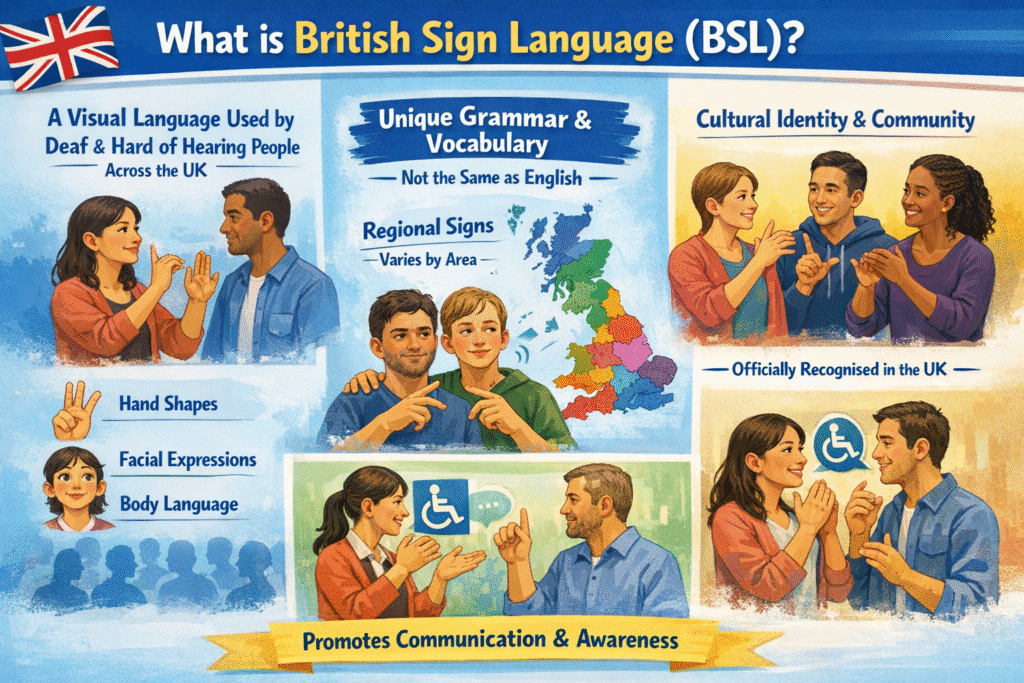
What is British Sign Language (BSL)? British Sign Language (BSL) is a visual language used by many Deaf and hard-of-hearing people across the United Kingdom. Instead of spoken words, BSL communicates meaning through hand shapes, movements, facial expressions, and body language. It enables Deaf individuals to interact, learn, and participate fully in everyday life, education, and work. BSL is not simply a signed version of English. It has its own unique grammar, sentence structure, and vocabulary that differ from spoken and written English. The language also includes regional variations, meaning certain signs can change depending on the area, similar to accents in spoken languages. What is British Sign Language_

What is British Sign Language (BSL)?

British Sign Language (BSL) is a visual language used by many Deaf and hard-of-hearing people across the United Kingdom. Instead of spoken words, BSL communicates meaning through hand shapes, movements, facial expressions, and body language. It enables Deaf individuals to interact, learn, and participate fully in everyday life, education, and work.

BSL is not simply a signed version of English. It has its own unique grammar, sentence structure, and vocabulary that differ from spoken and written English. The language also includes regional variations, meaning certain signs can change depending on the area, similar to accents in spoken languages.

Recognised officially in the UK, BSL holds strong cultural importance within the Deaf community. It represents identity, heritage, and inclusion while promoting better communication between Deaf and hearing people. Learning BSL can help build awareness, improve accessibility, and support more inclusive social and professional environments.

Growing Importance of Learning BSL

Learning British Sign Language (BSL) is becoming increasingly important as societies place greater value on accessibility and inclusion. Awareness around the communication barriers faced by Deaf and hard-of-hearing individuals has grown significantly in recent years. As a result, more organisations, educational institutions, and communities are recognising the need to create environments where everyone can communicate confidently and participate fully. Learning BSL not only supports inclusion but also helps build stronger social connections and mutual understanding.

Demand for BSL communication skills is rising across multiple sectors, including workplaces, healthcare, education, and public services. Professionals who can communicate using BSL are better equipped to provide inclusive support, deliver effective services, and enhance customer or patient experiences. In modern society, inclusive communication is no longer optional—it is an essential skill that promotes equality, improves collaboration, and contributes to more diverse and supportive environments.

Find the Course That Suits You!

We create outstanding professionals in Employability, Business, Health Care, Marketing, Language, and Functional Skills. Whether you're starting or advancing your career, we turn your passion into success as the UK’s most trusted e-learning course provider.
5000+ course

Key Benefits of Learning BSL

Learning BSL helps you communicate with the Deaf community, improve non-verbal skills, and promote inclusivity. It can also enhance career prospects, boost confidence, and add valuable skills to your CV.

Improve Communication Skills

Improve Communication Skills

Improving communication skills plays a vital role in both personal and professional development. Strong communication helps you express ideas clearly, build meaningful relationships, and understand others more effectively. It also enhances your ability to collaborate, resolve conflicts, and present information with confidence. Developing these skills can open new opportunities in education, career growth, and social interactions.

  • ♦  Helps you connect with Deaf and hard-of-hearing individuals.
  • ♦  Builds confidence in non-verbal communication.
  • ♦  Improves listening and understanding in everyday conversations.
  • ♦  Supports clearer expression of thoughts, ideas, and emotions.
  • ♦  Strengthens teamwork and collaboration in professional environments.
  • ♦  Enhances presentation and public speaking abilities.
  • ♦  Reduces misunderstandings and improves problem-solving skills.
  • ♦  Increases self-confidence in social and workplace interactions.

Career Opportunities

Strong communication and specialist language skills can open doors to a wide range of professional pathways. Developing this valuable ability enhances workplace confidence, improves interaction with diverse communities, and significantly strengthens your CV. Employers across multiple sectors actively seek individuals who can communicate effectively and support inclusive environments. As a result, gaining this skill can improve employability prospects and support long-term career growth.

Career Opportunities include:

  • ♦  Education support roles such as teaching assistants and learning support staff.
  • ♦  Healthcare positions assisting patient communication and accessibility needs.
  • ♦  Social care roles supporting individuals with diverse communication requirements.
  • ♦  Customer service jobs requiring clear interaction with varied client groups.
  • ♦  Interpreting opportunities in community services, events, and organisations.
  • ♦  Administrative roles where communication accuracy and empathy are essential.

Boost Cognitive and Social Skills

Boosting cognitive and social skills plays an important role in personal growth, academic success, and professional development. Strengthening these abilities helps individuals process information more effectively, stay attentive in demanding situations, and build meaningful relationships. Improved cognitive functions support better decision-making and problem-solving, while enhanced social skills encourage collaboration, empathy, and adaptability in diverse environments. Developing these skills consistently can lead to greater confidence, improved communication, and a stronger ability to navigate everyday challenges.

  • ♦  Enhances memory retention and improves concentration during learning or tasks.
  • ♦  Strengthens focus and supports sharper visual awareness in daily activities.
  • ♦  Encourages empathy, helping individuals understand others’ perspectives better.
  • ♦  Promotes cultural understanding and respectful interaction in diverse settings.

Personal Development

Personal Development plays an important role in improving both personal and professional life. It helps individuals discover their strengths, develop new skills, and gain a clearer sense of direction. By investing time in self-growth, people can enhance their confidence, communication abilities, and overall wellbeing. Continuous learning also opens doors to new opportunities, allowing individuals to adapt to changes and achieve their goals more effectively. Engaging in meaningful activities such as learning new skills or building positive relationships contributes greatly to long-term success and life satisfaction.

  • ♦  Learn a new language to broaden cultural understanding and career opportunities.
  • ♦  Expand life experiences through travel, hobbies, and continuous learning activities.
  • ♦  Build confidence by setting goals and achieving small personal milestones.
  • ♦  Develop stronger social connections through communication and teamwork skills.
  • ♦  Improve self-awareness and emotional intelligence for better decision-making.
Who Should Learn BSL?

Who Should Learn BSL?

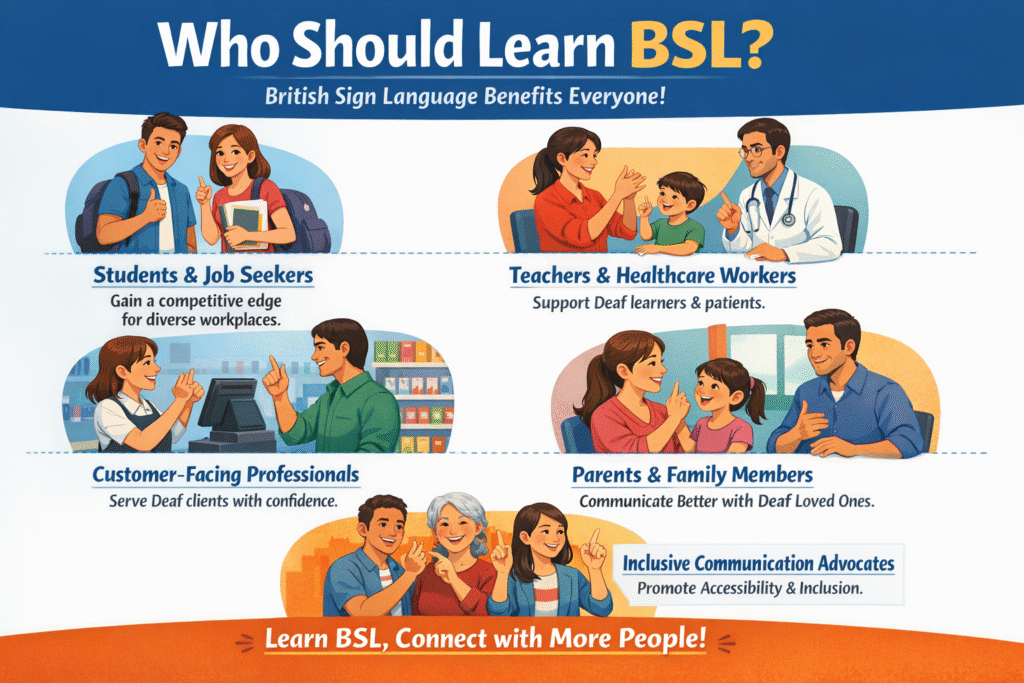
Learning British Sign Language (BSL) can benefit a wide range of individuals who want to improve communication skills, promote inclusivity, and expand personal or professional opportunities. BSL is not only useful for those working directly with Deaf individuals but also for anyone interested in building meaningful connections and enhancing their CV with valuable interpersonal skills.

  • ♦  Students and job seekers – Gain a competitive advantage and develop inclusive communication abilities for diverse workplaces.
  • ♦  Teachers and healthcare workers – Support Deaf learners or patients more effectively through better understanding and interaction.
  • ♦  Customer-facing professionals – Improve service quality by communicating confidently with Deaf customers and clients.
  • ♦  Parents or family members of Deaf individuals – Strengthen relationships and daily communication within the family environment.
  • ♦  Anyone interested in inclusive communication – Promote accessibility, empathy, and social inclusion in personal and community settings.

How to Start Learning BSL

Starting your journey in British Sign Language (BSL) can be both exciting and rewarding. One of the easiest ways to begin is through online courses that offer structured lessons and flexible learning options. These courses allow learners to study at their own pace while building a strong foundation in basic signs, finger spelling, and everyday communication skills. With interactive modules and guided practice, online learning makes BSL more accessible than ever.

To improve fluency, practising regularly with videos, mobile apps, and BSL learning platforms is highly beneficial. Watching native signers helps you understand hand movements, facial expressions, and body language more clearly. Joining local or online community groups can also provide valuable opportunities to practise in real-life settings. Consistent practice and meaningful interaction with the Deaf community are essential for developing confidence and communication skills in BSL.

Challenges Learners May Face

Challenges Learners May Face

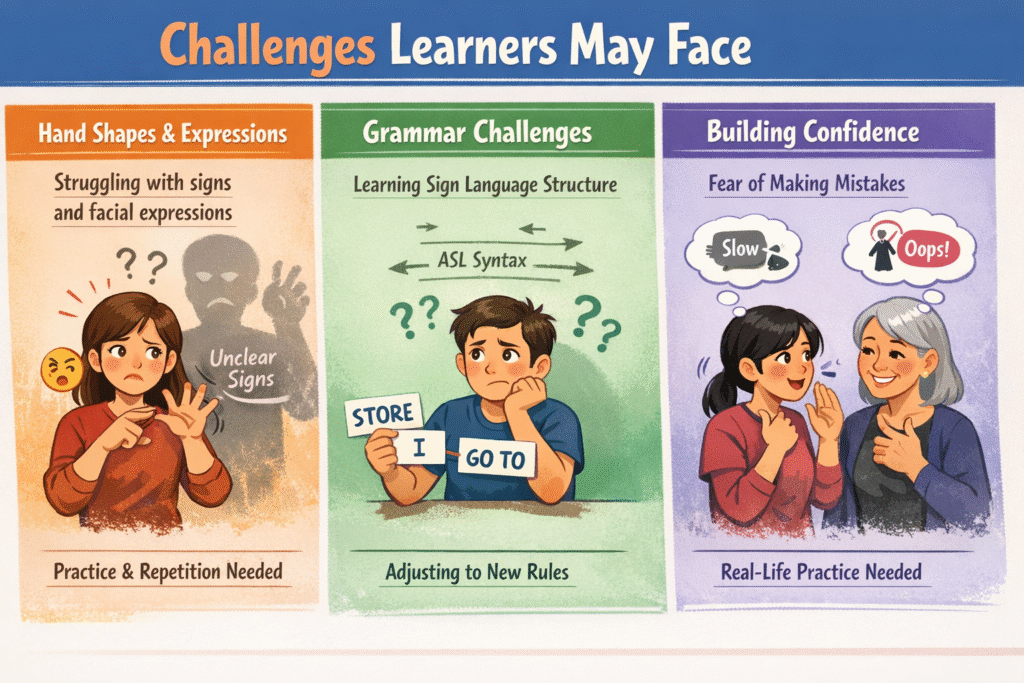
Learning new hand shapes and coordinating accurate facial expressions can feel challenging at the beginning. Many learners need time and consistent practice to develop muscle memory, clarity of movement, and proper expression. Without regular repetition, signs may appear unclear or misunderstood, which can affect communication flow.

Understanding grammar differences is another common difficulty. Sign language follows its own sentence structure and visual grammar rules that may differ significantly from spoken or written language. Adjusting to these patterns requires patience, observation, and guided learning to ensure messages are conveyed correctly and naturally.

Building confidence in real conversations can also take time. Learners may feel hesitant when communicating with fluent signers due to fear of making mistakes or signing too slowly. Engaging in practice sessions, watching real-life interactions, and gradually increasing conversation exposure can help improve confidence and communication skills.

Career Scope and Future Demand

Demand for British Sign Language (BSL) skills continues to grow across the UK as awareness of inclusive communication and accessibility increases. Organisations in education, healthcare, customer service, and public services are actively seeking individuals who can communicate effectively with Deaf and hard-of-hearing communities. Government initiatives, workplace equality policies, and rising demand for specialised support services are also contributing to the need for trained BSL users. Learning BSL can therefore open doors to meaningful career opportunities while helping to build more inclusive environments.

Career prospects include roles such as BSL interpreter, teaching assistant, support worker, and communication support worker, all of which are in steady demand. Opportunities also exist in social care settings, schools, community centres, and corporate accessibility teams. As more organisations prioritise diversity and inclusive communication, professionals with BSL knowledge can enhance their employability and stand out in competitive job markets. With ongoing focus on accessibility and equal opportunities, the future demand for BSL skills is expected to remain strong.

Conclusion

Learning British Sign Language (BSL) is a meaningful step towards building stronger, more inclusive communication in everyday life. It helps you connect with the Deaf community, break down social barriers, and develop valuable interpersonal skills. Beyond communication, BSL can also open new career opportunities in education, healthcare, social care, and customer service roles where inclusive support is highly valued. On a personal level, learning BSL boosts confidence, enhances cognitive abilities, and encourages cultural awareness. Starting your BSL learning journey today can empower you to make a real difference while investing in your own growth and future opportunities.

FAQs – Why You Should Learn British Sign Language (BSL)

  1. 1. Is British Sign Language difficult to learn?
    British Sign Language is not considered difficult, but it does require consistent practice. Learning hand shapes, facial expressions, and grammar rules becomes easier with regular use and exposure.
  2. 2. How long does it take to learn BSL?
    Basic conversational BSL can be learned within a few months. Achieving fluency or professional-level skills may take one to three years, depending on study time and practice.
  3. 3. Can I learn BSL online?
    Yes, many learners study BSL through structured online courses. Video lessons, interactive exercises, and practice sessions make online learning flexible and accessible from anywhere.
  4. 4. Is BSL useful for jobs in the UK?
    BSL skills are valuable in roles such as teaching support, healthcare assistance, social care, and customer service. It helps improve communication with Deaf individuals and enhances employability.
  5. 5. Do I need qualifications to use BSL professionally?
    For casual or supportive communication, formal qualifications are not always required. However, recognised BSL certifications are usually needed for roles involving interpreting or specialist support.
  6. 6. What level of BSL is required for interpreting?
    Professional interpreters typically need advanced BSL qualifications, often Level 6 or equivalent. They must also complete interpreter training and gain practical experience before working independently.
Sam Walker

Article by

Sam Walker

Sam Walker is an education specialist and author at One Education, bringing over 4 years of experience in creating practical resources and strategies to support teachers and enhance student learning.

top
Home Courses Search